

Key Takeaways
- Auto insurance is made up of distinct coverage types, each addressing different categories of risk.
- State law mandates minimum liability coverage, but minimums rarely reflect full financial exposure.
- Deductibles and coverage limits directly affect both your premium and out-of-pocket costs after a claim.
- Exclusions in the policy document define what your insurer will not pay — read them carefully.
- Reviewing your coverage at renewal protects against being over- or under-insured as your situation changes.
How Auto Insurance Is Structured
Auto insurance is not a single blanket protection — it is a policy made up of distinct coverage components, each designed to address a specific category of risk. When you purchase a policy, you are essentially assembling a package of those components, subject to the coverage limits and deductibles you select.
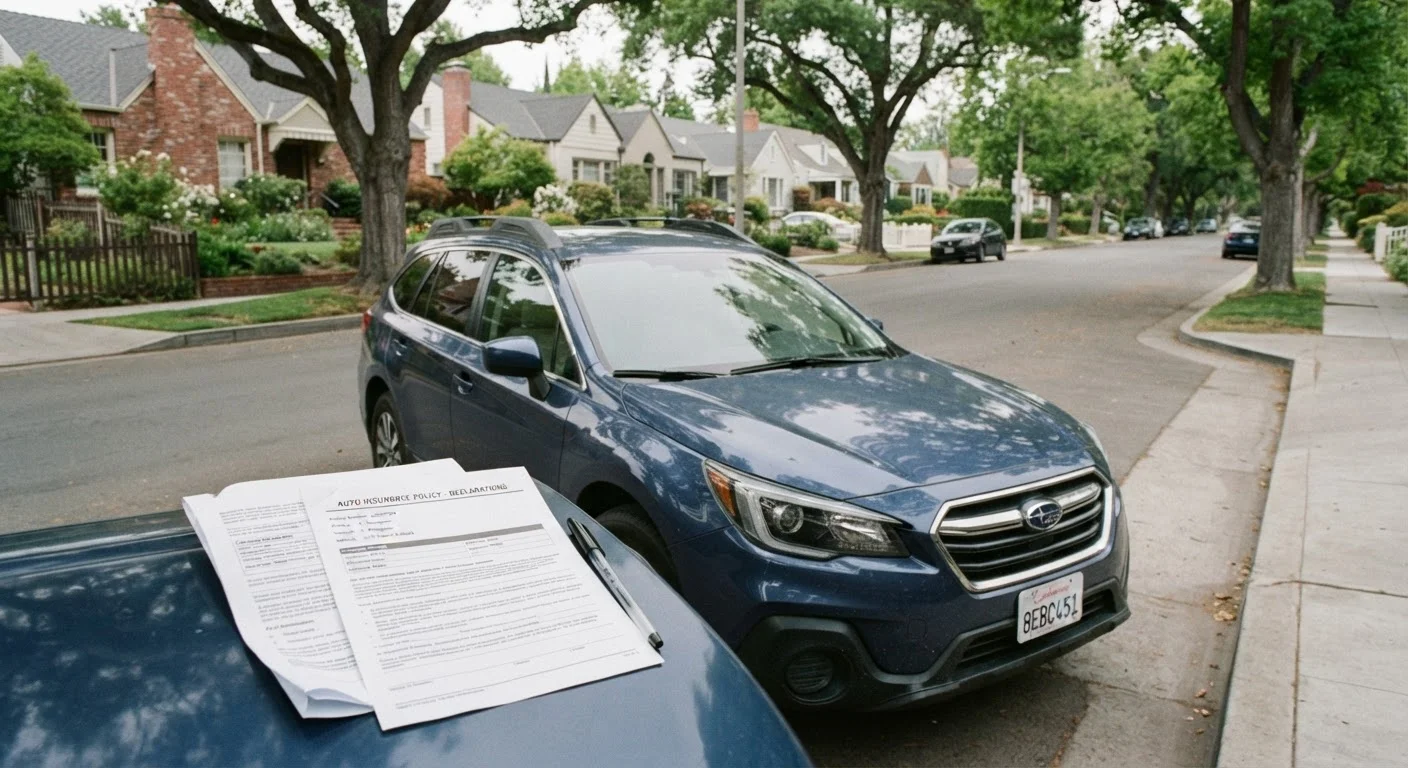
Every policy includes a declarations page (sometimes called the "dec page"), which summarizes your covered vehicles, named drivers, coverage types, limits, deductibles, and premium. Think of it as your policy's table of contents. Behind it, the full policy document defines terms, outlines what is and isn't covered, and specifies conditions that must be met to receive payment.
For a guided approach to reading that policy document, see how to read an insurance policy without getting lost. You can also explore broader insurance explained resources to see how auto coverage fits among other policy types.
Auto Insurance Varies by State
Minimum coverage requirements, no-fault rules, and available coverage types differ by state. What is mandatory in one state may be optional in another. Always verify your state's specific requirements with your insurer or a licensed agent.
Core Coverage Types Explained
Understanding what each coverage type actually does is the foundation of any informed insurance decision.
- Liability coverage — Required in nearly every U.S. state, liability insurance pays for bodily injury and property damage you cause to others in an at-fault accident. It does not cover your own injuries or your vehicle.
- Collision coverage — Pays to repair or replace your vehicle after a collision with another car or object, regardless of fault.
- Comprehensive coverage — Covers non-collision losses: theft, vandalism, weather damage, fire, and animal strikes. Lenders typically require both collision and comprehensive on financed vehicles.
- Uninsured/Underinsured Motorist (UM/UIM) — Protects you when the at-fault driver carries no insurance or insufficient coverage to pay your damages. Many states mandate this coverage.
- Medical Payments (MedPay) / Personal Injury Protection (PIP) — Pays medical expenses for you and your passengers regardless of fault. PIP, required in no-fault states, may also cover lost wages and other related costs.
For optional add-ons beyond these core types — such as roadside assistance, rental reimbursement, and gap coverage — see auto insurance add-ons worth understanding.
When reviewing liability limits, don't anchor to the state minimum — look at your total net worth and income. If a judgment exceeds your liability limit, your personal assets can be pursued to cover the difference.
Minimum liability requirements are set as a legal floor, not as a measure of adequate financial protection. Drivers with meaningful assets are routinely underinsured relative to their actual exposure.
Before declining UM/UIM coverage, check your state's uninsured motorist rate. In states where a significant percentage of drivers are uninsured, this coverage becomes substantially more likely to be used.
The Insurance Research Council has consistently found that roughly 1 in 8 drivers nationally is uninsured, with rates varying widely by state — making UM/UIM a practical safeguard rather than a theoretical one.
Deductibles, Limits, and Premiums
Three variables shape the financial mechanics of any auto policy: the deductible, the coverage limit, and the premium.
- Deductible
- The amount you pay out of pocket before your insurer covers the remainder of a claim. A higher deductible generally lowers your premium but increases your financial exposure when a claim occurs.
- Coverage limit
- The maximum your insurer will pay for a covered loss. Liability limits are often expressed as split limits (e.g., 100/300/100 — $100,000 per person for bodily injury, $300,000 per accident, $100,000 for property damage) or as a single combined limit.
- Premium
- The amount you pay for coverage, typically monthly or semi-annually. Insurers calculate premiums using factors such as driving history, vehicle type, location, age, credit-based insurance score (where permitted by state law), and annual mileage.
~13%
U.S. drivers estimated to be uninsured
According to Insurance Research Council estimates, roughly 1 in 8 drivers on U.S. roads carries no auto insurance.
50 states
States requiring some form of liability coverage
Every U.S. state has a financial responsibility law requiring drivers to demonstrate the ability to cover damages — with New Hampshire and Virginia having distinct frameworks rather than a strict mandate.
Selecting state minimum liability limits keeps costs low but may leave you personally exposed to judgments that exceed those limits. Your total asset picture — not just the minimum legal requirement — should inform the limits you choose. This article is general information and not personalized financial or insurance advice; consult a licensed agent to evaluate your specific situation.
Common Exclusions to Know
Exclusions define the boundaries of your coverage. Misunderstanding them is one of the most common reasons drivers are surprised after a claim is denied.
- Intentional damage — Losses you cause deliberately are not covered.
- Using a personal vehicle for commercial purposes — Standard personal auto policies typically exclude losses that occur while driving for hire (rideshare, delivery) unless a specific endorsement is added.
- Mechanical breakdown — Wear-and-tear repairs are not an insurance claim; they are a maintenance expense. Mechanical breakdown insurance is a separate product.
- Unlisted drivers — A household member who regularly drives your car but is not listed on the policy may be excluded, depending on your insurer and state regulations.
- Racing or track use — Operating your vehicle in any timed race or on a closed course voids coverage in virtually all standard policies.
Don't Assume Coverage You Haven't Confirmed
A common and costly mistake is assuming that a situation is covered simply because it seems reasonable. Coverage exists only when it is explicitly described in your policy and no applicable exclusion applies. When in doubt, call your insurer and ask before an incident occurs — not after.
Always read the exclusions section of your policy before assuming coverage exists. For a broader discussion of how exclusions work across insurance types, see how different insurance types are structured.
Filing a Claim: What to Expect
Knowing the claims process in advance reduces stress and helps you avoid mistakes that could slow payment or result in a denial.
- Report promptly. Most policies require timely notice of a loss. Delays can complicate or jeopardize your claim.
- Document the scene. Photographs, police report numbers, witness contact information, and the other driver's insurance details are all valuable at this stage.
- Contact your insurer. You can file through the insurer's app, website, or by phone. A claims adjuster will be assigned to evaluate the loss.
- Understand the adjuster's role. The adjuster assesses damage, determines fault where relevant, and calculates the payment amount. You have the right to ask questions and, if you disagree with a valuation, to request a re-evaluation or invoke your policy's appraisal process.
- Receive settlement. Payment is issued minus your applicable deductible. For total-loss vehicles, settlement is based on the vehicle's actual cash value (ACV) — its market value immediately before the loss, not its replacement cost.
This article provides general educational information about auto insurance. It is not legal or insurance advice. Coverage terms, claim processes, and outcomes vary by insurer, policy, and state. Consult a licensed insurance professional for guidance specific to your situation.
Policy Renewals and Coverage Reviews
Auto insurance policies typically renew every six or twelve months. Renewal is not automatic approval of unchanged coverage — it is the right moment to reassess whether your current selections still fit your circumstances.
Common reasons to adjust coverage at renewal include:
- A vehicle has depreciated significantly, making comprehensive and collision coverage cost more than the car's ACV
- A new vehicle purchase or a change in how many cars your household operates
- A teen driver joining the household
- A significant change in annual mileage, such as switching to remote work
- Moving to a new state, which may carry different minimum requirements
Review your declarations page, compare your limits to your current asset and income exposure, and confirm that all drivers and vehicles are accurately listed. If your insurer has added endorsements or changed exclusion language in the renewal documents, read those changes carefully before accepting.
Your rights as a policyholder — including notice requirements before cancellation and non-renewal — are worth understanding. The consumer rights hub covers policyholder protections alongside other areas where consumer law applies.
This article is for general informational purposes only and does not constitute personalized insurance, financial, or legal advice. Coverage details, requirements, and regulations vary by state and insurer. Always read your full policy documents and speak with a licensed insurance agent before making coverage decisions.