

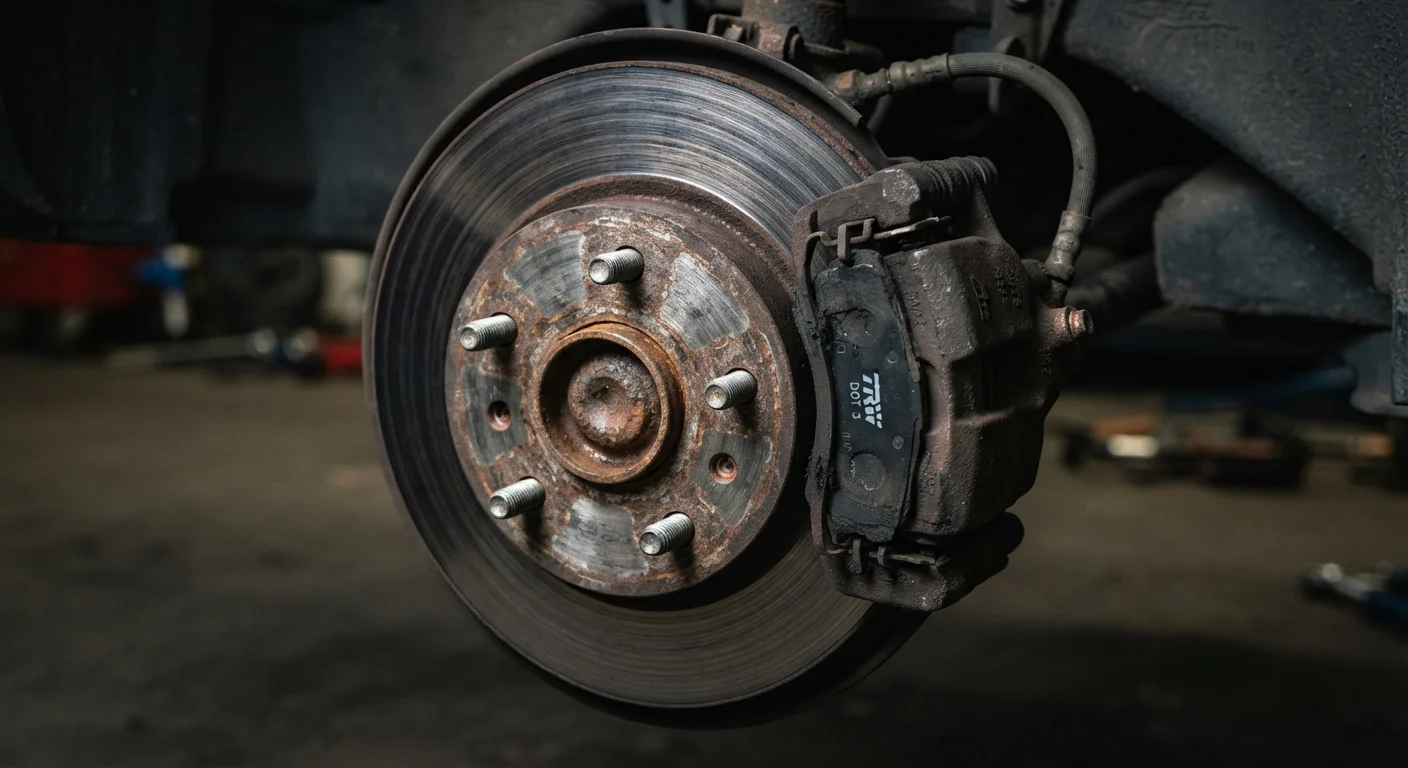
Key Takeaways
- Brake lifespan varies widely based on driving habits, vehicle weight, and environment — not a fixed mileage.
- Squealing brakes can signal normal wear indicator contact, not necessarily imminent brake failure.
- New brakes that feel different after installation are usually undergoing a normal break-in process.
- Brakes on all four wheels do not wear at the same rate — front brakes typically wear faster.
- Waiting for obvious symptoms before inspecting brakes can create serious safety risks.
Why Brake Myths Persist — and Why They Matter
Brakes are one of the most safety-critical systems on any vehicle, yet widespread misconceptions about how they work — and when they fail — continue to give drivers a false sense of security. Unlike engine problems, which can strand you, brake degradation is often gradual and easy to rationalize away. That's precisely what makes these myths dangerous.
Understanding what brake wear actually looks like, sounds like, and feels like puts you in a better position to act before a problem becomes a hazard. The myths below are among the most commonly repeated — each one has the potential to delay a necessary inspection or create unwarranted confidence in a system that deserves more scrutiny.
For a parallel look at how persistent myths in other domains can lead to poor decisions, the pattern is remarkably consistent — see how the same dynamic plays out in product quality misconceptions that keep costing consumers money.
Myth
Brakes should last at least 50,000 miles before needing replacement.
Fact
Brake pad life varies enormously — anywhere from 25,000 to 70,000 miles — depending on driving style, terrain, vehicle weight, and pad material.
The 50,000-mile figure circulates as a rule of thumb, but it's more of a rough midpoint than a reliable expectation. A driver who frequently brakes hard in stop-and-go city traffic will wear pads far faster than someone logging highway miles. Towing heavy loads accelerates wear significantly. Even the type of pad material matters: organic pads wear faster than semi-metallic or ceramic compounds. Mileage alone is a poor substitute for actual inspection.
Myth
If your brakes squeal, you need to replace them immediately.
Fact
Squealing often indicates the wear indicator — a small metal tab — contacting the rotor, signaling it's time to schedule an inspection, not that failure is imminent.
Most modern vehicles include a built-in wear indicator designed to produce a high-pitched squeal when pads reach a low but still-functional thickness. This is an early warning, not an emergency alarm. That said, a grinding or growling noise — rather than a squeal — is a more serious signal that the pad material may be gone entirely, allowing metal contact. Context matters: squealing on first startup in humid weather can also result from light surface rust on the rotor and typically clears after a few stops.
Myth
All four brakes wear at the same rate, so you can replace them all on the same schedule.
Fact
Front brakes typically wear significantly faster than rear brakes due to the forward weight transfer that occurs during braking.
When a vehicle decelerates, momentum shifts weight toward the front axle, placing more braking load on the front wheels. On many passenger cars, the front brakes can wear at roughly twice the rate of the rear brakes. This means front pads may need replacement two or three times before rear pads require attention. Assuming uniform wear across all four corners can lead to overlooked rear brake degradation or unnecessary early front replacements.
Myth
New brakes that feel soft or less responsive right after installation are defective.
Fact
A temporary change in feel after new brake installation is normal and reflects the break-in process required for pads and rotors to mate properly.
New brake pads and rotors require a process called 'bedding in,' during which a thin, even layer of pad material is deposited across the rotor surface. Until this transfer layer is established, braking may feel slightly different than expected. Mechanics typically recommend a series of controlled moderate stops from around 30 mph to complete this process. Drivers who skip or rush break-in risk uneven deposits, which can cause vibration or reduced performance over time.
Myth
If your brake pedal feels firm, your brakes are in good condition.
Fact
Pedal feel reflects hydraulic pressure in the brake system, not the physical condition of brake pads or rotors.
A firm pedal confirms that the hydraulic system — fluid, lines, and calipers — is holding pressure adequately. It tells you nothing about how much friction material remains on your pads or whether your rotors are within specification. Severely worn pads can coexist with a perfectly firm pedal right up until metal-on-metal contact begins. Relying on pedal feel as a proxy for overall brake health is one of the more misleading shortcuts drivers take. See our guide to routine maintenance habits for a broader look at what regular checks should cover.
What You Should Actually Monitor
Replacing the myths above with practical habits is straightforward. Most brake system checks can be incorporated into routine vehicle maintenance without specialized tools.
Visual Inspection Has Real Limits
Many drivers glance at brake pads through wheel spokes and assume they look fine. Pad thickness visible through the wheel may not reflect the actual friction surface remaining, and inner pads are often hidden entirely. A professional inspection that includes removing the wheel gives a far more complete and accurate picture of brake condition.
Listen actively: Note when squealing first appears, whether it clears after a few stops, and whether it escalates to grinding. Grinding warrants prompt professional attention.
Watch for pedal changes: While a firm pedal doesn't confirm pad health, a spongy or sinking pedal can indicate a hydraulic issue requiring immediate inspection — this is separate from pad wear but equally important.
Check brake fluid: Brake fluid absorbs moisture over time, lowering its boiling point. Most manufacturers recommend replacing it at intervals specified in your owner's manual, regardless of how the system feels.
Ask during tire rotations: Because wheels are already removed, tire rotation appointments are an efficient time to request a brake inspection. This aligns well with the foundational maintenance habits every driver should build.
Never Delay a Brake Inspection
If you notice grinding, a sustained pulling sensation when braking, or a pulsating brake pedal, have your brakes inspected by a qualified mechanic promptly. These symptoms can indicate metal-on-metal contact or rotor damage that compromises stopping power. Do not wait until your next scheduled service — braking performance is directly tied to your safety and the safety of others on the road.
Brakes are one component where the cost of acting early is always lower than the cost of acting late — both financially and in terms of safety. For more on how overlooking small warning signs compounds into larger problems, see our piece on why ignoring gradual tyre leaks always ends badly. And if you want to broaden your overall road safety knowledge, the Safe Driving hub covers defensive driving fundamentals that complement good vehicle maintenance habits.
25,000–70,000 mi
Typical brake pad lifespan range
The National Highway Traffic Safety Administration notes that brake wear depends heavily on driving conditions, vehicle type, and driver behavior.
~2x faster
Front vs. rear brake wear rate
Due to forward weight transfer during braking, front brake pads on most passenger vehicles wear approximately twice as fast as rear pads.