

| Primary focus of flexibility | Passive muscle lengthening |
| Primary focus of mobility | Active joint control through full range of motion |
| Best stretch type for warm-ups | Dynamic (movement-based) stretching (Exercise science consensus) |
| Best stretch type for cool-downs | Static stretching (held positions) |
| Equipment needed | None required for most stretching and mobility work |
| Who benefits | All fitness levels and ages |
Two Terms, Two Different Things
Flexibility and mobility show up in fitness conversations constantly, often as if they mean the same thing. They don't — and mixing them up can lead to training gaps that affect how you feel and move daily.
Flexibility refers to a muscle's capacity to lengthen passively. Think of it as how far a muscle can be stretched when an external force — gravity, a strap, or another person — is applied. Mobility, by contrast, is the ability of a joint to move actively through its full range of motion under your own muscular control. You might have flexible hamstrings without the hip mobility to lift your leg with control. Both qualities matter, but they require different approaches to develop.
Flexibility
The ability of a muscle or muscle group to passively lengthen. It describes how far a muscle can be stretched when an external force is applied, without the person actively controlling the movement.
Mobility
The ability of a joint to move actively through its full intended range of motion under its own muscular control. Good mobility combines flexibility with strength and neuromuscular coordination.
Range of Motion (ROM)
The full arc of movement a joint can achieve. ROM can be measured passively (with assistance) or actively (under the individual's own power), and the two values often differ.
Static Stretching
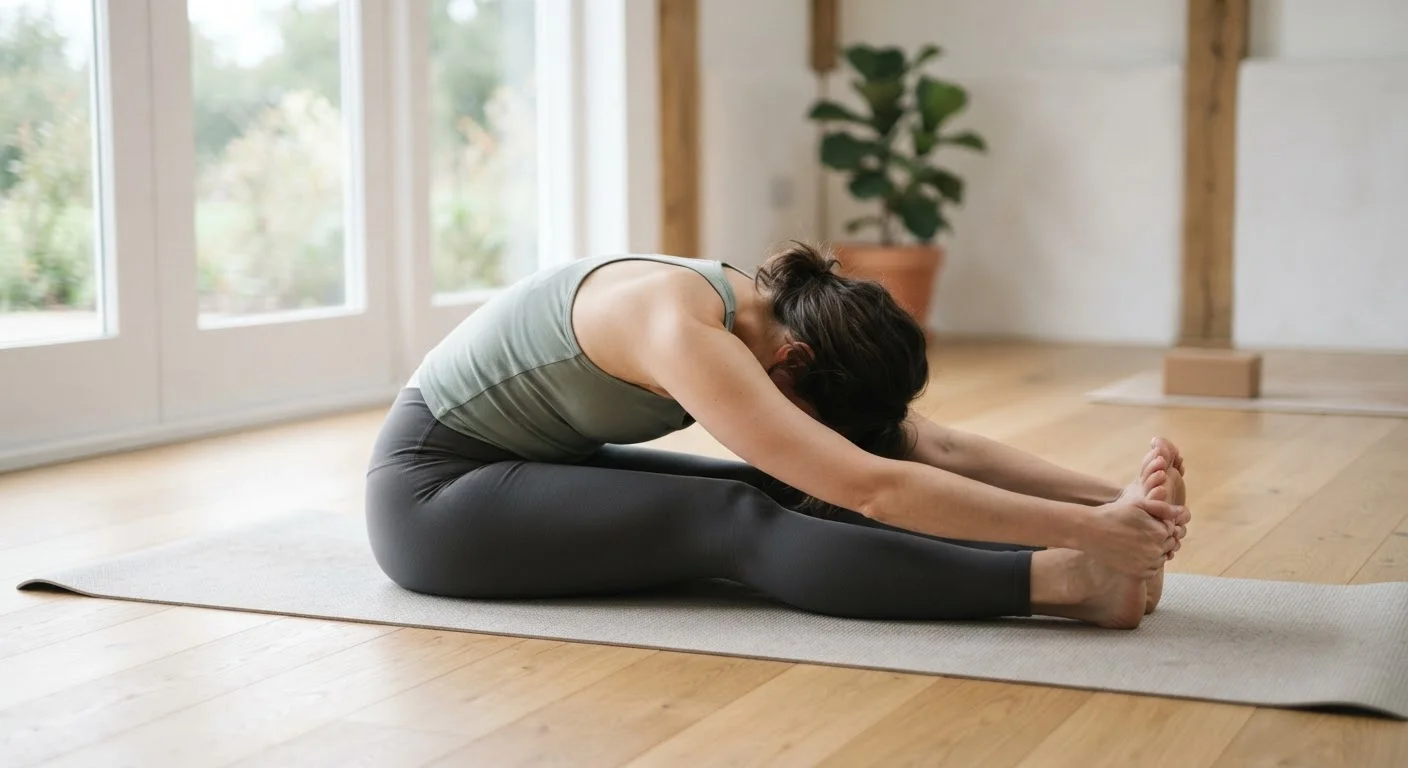
A stretching technique in which a position is held for a set duration — typically 20 to 60 seconds — to lengthen the target muscle. Best performed during cool-downs or dedicated flexibility work.
Dynamic Stretching
Movement-based stretching that takes joints through a controlled range of motion repeatedly without holding a fixed position. Commonly used during warm-ups to prepare tissues for activity.
Neuromuscular Control
The coordinated communication between the nervous system and muscles that allows smooth, controlled movement. Mobility training specifically develops this quality alongside raw range of motion.
Stretching is the practice that most people associate with both terms — but stretching primarily targets flexibility. Improving mobility typically requires active exercises that train the nervous system and muscles together, not passive holds alone.
Why the Difference Matters in Practice
If you've ever felt stiff getting up from a chair, struggled to reach overhead comfortably, or noticed your lower back aches after long sitting periods, both flexibility and mobility are likely involved. Understanding which is limiting you helps you choose more effective strategies.
| Primary focus of flexibility | Passive muscle lengthening |
| Primary focus of mobility | Active joint control through full range of motion |
| Best stretch type for warm-ups | Dynamic (movement-based) stretching (Exercise science consensus) |
| Best stretch type for cool-downs | Static stretching (held positions) |
| Equipment needed | None required for most stretching and mobility work |
| Who benefits | All fitness levels and ages |
Passive flexibility — the kind gained from long static stretches — improves the tissue's ability to lengthen, but doesn't automatically translate into usable movement. A dancer may have impressive passive flexibility but limited active mobility if they haven't trained the strength to control that range. Conversely, someone with moderate flexibility but good joint mobility often moves more fluidly and with less injury risk during everyday tasks.
This is why modern exercise guidance, including recommendations from physical therapy and sports medicine fields, tends to emphasize functional movement: building range of motion you can actually control and use. Low-impact exercise forms like yoga and swimming naturally blend both elements, making them valuable for a wide range of people.
Stretching: When and How It Helps
Stretching remains one of the most accessible movement practices — no equipment required, adaptable to almost any fitness level. But the type and timing of stretching matters more than many people realize.
- Static stretching (holding a position for 20–60 seconds) is best suited to cool-downs or dedicated flexibility sessions. Research suggests it may temporarily reduce power output if performed immediately before vigorous activity.
- Dynamic stretching (controlled, movement-based ranges) works well as a warm-up because it raises tissue temperature and activates neuromuscular coordination without the drawbacks of static holds. See common warm-up mistakes to avoid for more on sequencing your preparation effectively.
- Mobility drills — such as controlled leg swings, hip circles, or thoracic rotations — build active range and are valuable at any point in a session.
You don't need a lengthy dedicated session to benefit. Even brief, consistent movement throughout the day contributes meaningfully. Movement snacks — short bursts of activity scattered across your day — are a practical way to work in both stretching and mobility work without carving out extra gym time.
Mobility Work Isn't Just for Athletes
Many people assume joint mobility training is only relevant to athletes or those recovering from injury. In reality, it supports everyday tasks — getting up from the floor, lifting objects, turning to check a blind spot while driving. Incorporating simple mobility drills a few times a week can meaningfully reduce stiffness and improve the quality of routine movements at any age.
This article provides general health and fitness information only and is not a substitute for personalised advice from a qualified healthcare or exercise professional. If you have an injury, chronic condition, or specific movement concerns, consult a physiotherapist or your doctor before starting a new stretching or mobility routine.