

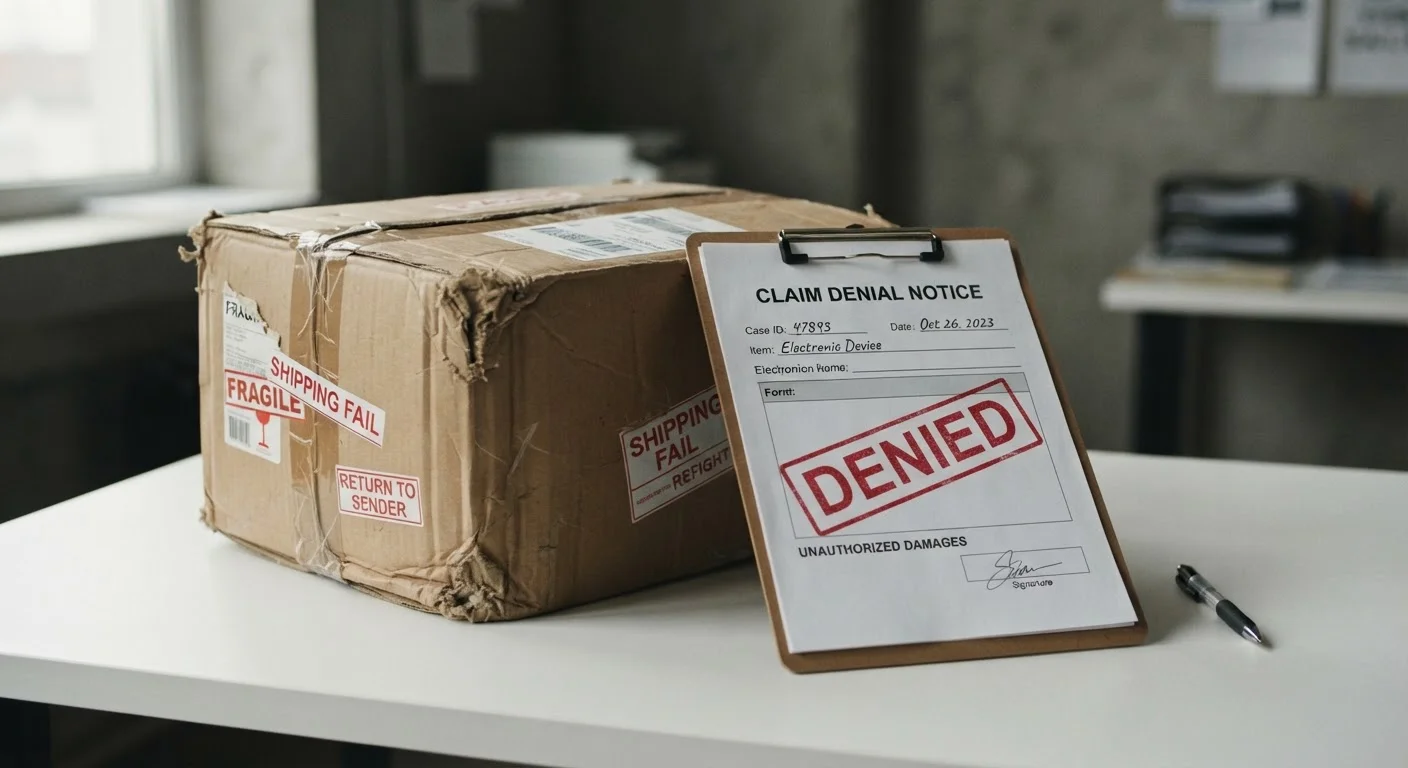
Key Takeaways
- Most damaged-goods claims fail due to missing documentation, not the damage itself.
- Reporting deadlines are strict — missing them is often grounds for automatic denial.
- Your coverage source matters: carrier, retailer, credit card, and insurer each have different rules.
- Photographing damage before discarding packaging is one of the most protective habits you can build.
- Policy exclusions for fragile or improperly packaged items catch many consumers off guard.
Why Damaged-Goods Claims Fail More Often Than They Should
A damaged delivery or purchase is frustrating enough. Receiving a claim denial on top of it is worse — especially when the damage is obvious and well-documented. The reality is that most rejections aren't about whether the damage happened. They're about procedural gaps: missing evidence, the wrong filing channel, or a deadline that passed unnoticed.
Understanding the mechanics of how these claims are evaluated — by carriers, retailers, card issuers, or insurers — gives consumers a significant advantage. The insurance explained hub covers how different coverage types operate; this article focuses on the specific mistakes that derail legitimate claims and the straightforward steps that prevent them.
~11%
Parcel damage rate in U.S. shipping
Industry logistics research has estimated that roughly 1 in 10 parcels experiences some form of damage or loss during transit in the U.S. supply chain.
48 hrs
Typical visible-damage reporting window
Many major carriers require visible damage to be reported within 24–48 hours of delivery; concealed damage windows are slightly longer but still limited.
The Six Mistakes That Get Claims Denied
Each of the following errors is avoidable with a small amount of preparation. They appear repeatedly across carrier disputes, retailer return escalations, and insurance adjuster reviews.
Failing to photograph damage before moving or unpacking the item further.
Why it happens: In the moment of discovering damage, the instinct is to assess the product — not document the scene. By the time a consumer thinks about a claim, the packaging has already been disturbed.
Reporting the damage too late, after the carrier's or retailer's claim window has closed.
Why it happens: Many consumers assume they have the standard return period to file a damage report, not realizing that damage claims have entirely separate — and much shorter — deadlines.
Discarding original packaging before the claim is investigated.
Why it happens: Consumers naturally want to dispose of damaged boxes and filler material. The assumption is that the product photo is sufficient evidence.
Assuming one coverage channel automatically applies without verifying which one is actually responsible.
Why it happens: When something arrives damaged, it's unclear whether to call the carrier, the retailer, the credit card issuer, or a separate insurer. Consumers often pursue the wrong channel first and lose time.
Overlooking policy exclusions for fragile items, improper packaging, or inherent vice.
Why it happens: Most consumers never read the full terms of a shipping policy or insurance certificate before a claim. Exclusions for glassware, electronics without proper packaging, or items with pre-existing flaws are common but buried.
Providing inconsistent or vague descriptions of the damage when filing.
Why it happens: Filing forms feel tedious, and consumers often use general language like "broken" or "damaged in shipping" without specifics — which gives adjusters grounds to request more information or deny outright.
Don't Discard Packaging Before Filing
Original packaging is frequently required as evidence by both carriers and insurers. Throwing away boxes, padding, or wrapping before a claim is reviewed is one of the most common — and irreversible — mistakes consumers make. Retain everything until your claim is fully resolved or officially closed.
Building Habits That Make Claims Easier to Win
The common thread across all these mistakes is preparation — specifically, the kind that happens before a problem arises. Consumers who document purchases consistently, understand their coverage sources, and know their reporting windows are rarely caught flat-footed when damage occurs.
Deadlines Are Non-Negotiable
Most carriers and retailers impose strict reporting windows — sometimes as short as 24 to 48 hours for visible damage, and 7 to 15 days for concealed damage discovered after delivery. These aren't soft guidelines. Missing the window typically results in automatic denial, regardless of how clear-cut the damage is. Check the specific policy or carrier terms immediately after a problem is discovered.
For purchases made on a credit card, it's worth checking whether your card includes purchase protection or extended warranty benefits — these can serve as a secondary coverage layer when a retailer or carrier claim falls short. Our chargeback guide explains how card-level disputes work and when they apply.
If you're working through a formal claim process for the first time, this step-by-step claim walkthrough explains what to expect from first notice through settlement. The more informed you are going in, the less likely a procedural misstep will cost you a valid claim.
This article provides general consumer information only and is not legal, financial, or insurance advice. Coverage terms, claim procedures, and deadlines vary by provider, policy, and jurisdiction. Consult the relevant policy documents or a licensed professional for guidance specific to your situation.