

Key Takeaways
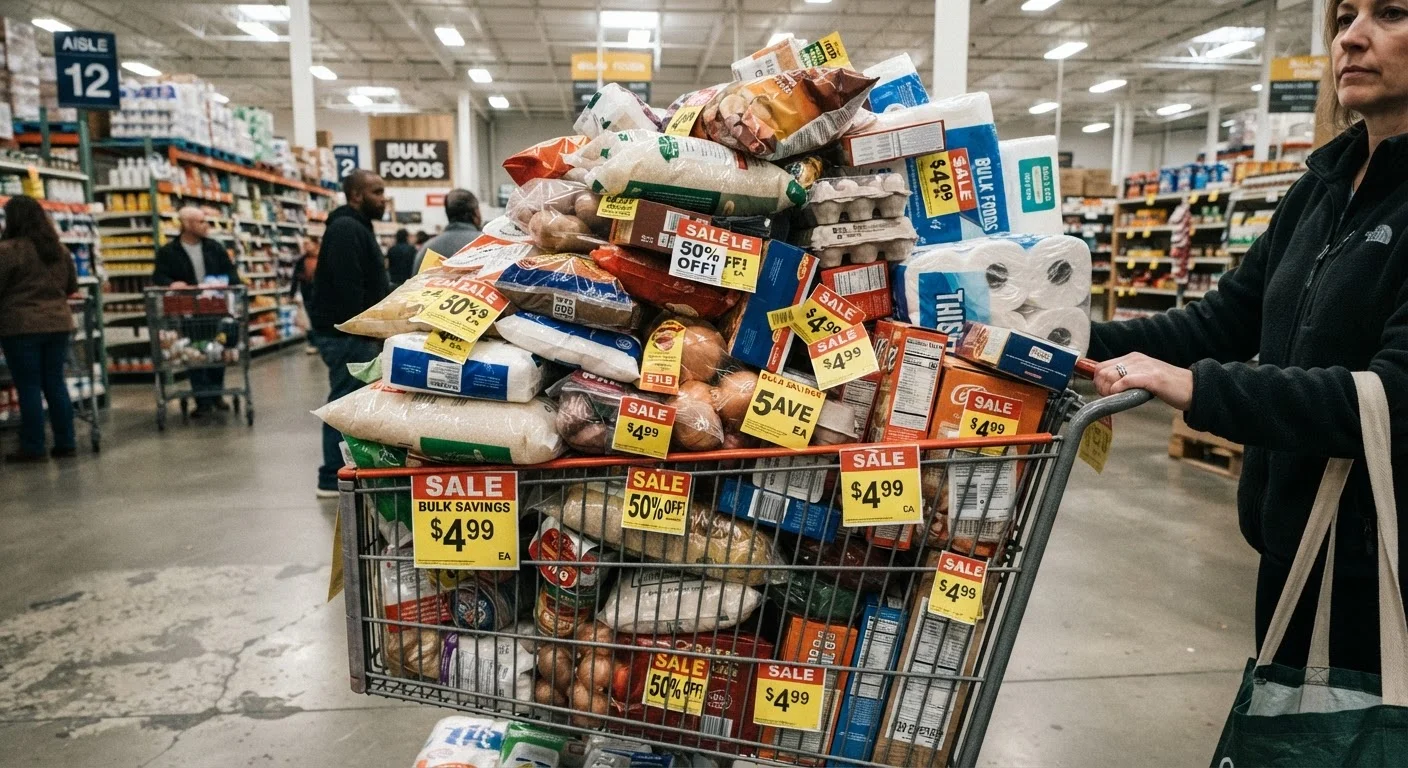
- Buying in bulk only saves money if you actually use everything before it expires or degrades.
- Free-shipping thresholds often prompt spending more than you would have on shipping alone.
- Countdown timers and low-stock alerts are frequently manufactured rather than genuine scarcity signals.
- A high original price shown next to a sale price doesn't guarantee the discount is real.
- Unit pricing — not package size — is the reliable metric for comparing value at the shelf.
Why Smart-Feeling Habits Can Cost You More
Some of the most consistent budget leaks don't come from reckless splurging — they come from habits that feel disciplined. Buying in bulk, chasing free shipping, and acting on urgency cues all carry the surface logic of savvy shopping. Underneath, each can quietly work against your actual spending goals.
The challenge is that retailers and platforms spend considerable resources designing these triggers. Understanding the mechanics behind them doesn't require cynicism — just a clearer framework for separating genuine value from manufactured incentive. The guidance here is general consumer education; for decisions tied to your personal financial situation, a qualified financial adviser can provide tailored perspective. See budgeting basics for foundational frameworks to track where your money actually goes.
~$1,500
Average annual household spending on impulse purchases
Estimates from consumer finance surveys suggest US households spend roughly this amount each year on unplanned items, often triggered by promotional framing.
40%+
Online shoppers who buy extra to hit free-shipping minimums
Multiple e-commerce industry reports indicate a substantial share of online shoppers add unneeded items specifically to qualify for free shipping thresholds.
The Mistakes — and How to Correct Them
Each of the patterns below feels reasonable in the moment. Recognizing why they feel reasonable is the first step toward making different choices.
Buying in bulk to save money, then discarding unused product.
Why it happens: Per-unit math looks favorable on the shelf label, and larger packages feel like responsible planning. The cost of spoilage, storage, or simply never finishing the product rarely enters the calculation at the moment of purchase.
Spending extra to qualify for free shipping, adding items you didn't need.
Why it happens: A "$10 away from free shipping" notice frames paying for shipping as waste, making an additional purchase feel logical — even when the shipping cost is lower than the extra item's price.
Treating a high reference price as proof that a sale price is a genuine deal.
Why it happens: Anchoring — a well-documented cognitive bias — causes people to judge value relative to the first number they see. Retailers know this and may set reference prices high specifically to make sale prices feel dramatic.
Assuming a higher price signals better quality.
Why it happens: Price-quality associations are deeply intuitive. Spending more can feel like due diligence — a way of avoiding a cheap, disappointing product. This instinct is frequently exploited in pricing strategy.
Signing up for a subscription to get a first-order discount, then forgetting to cancel.
Why it happens: Subscribe-and-save models are designed to make the initial savings salient while the ongoing charge becomes invisible background spending. Cancellation is sometimes deliberately complicated.
Urgency Is Often Engineered, Not Real
Phrases like "Only 2 left!" or countdown timers are standard conversion tools used by many online retailers. Consumer research has consistently shown these signals are frequently automated or reset, not tied to actual inventory. Treat any urgency cue as a prompt to pause, not to rush. Understanding when scarcity signals are manufactured can protect your spending decisions.
Bundle offers follow a similar pattern. Packaging multiple products together can represent real value — or it can move items a retailer couldn't otherwise sell individually. Understanding what distinguishes genuine bundle value from inventory clearance helps you evaluate the offer rather than the packaging.
Reference Prices Can Be Set Artificially High
The "was $80, now $40" framing only represents a genuine saving if the item was actually sold at the higher price for a meaningful period. Retailers in some cases set inflated reference prices specifically to make discounts look larger. Before assuming you're getting half off, check whether the current price matches what other sellers charge for the same item.
It's also worth noting that return policies don't always provide the safety net shoppers assume. Before buying something you're uncertain about, check the actual policy — common assumptions about returns frequently don't hold up in practice.
Building durable habits around these decisions — rather than reacting to individual deals — is the longer-term goal. A value-first shopping mindset focuses on cost-per-use and genuine utility, which hold across categories regardless of how promotions are framed.