

Key Takeaways
- Smart thermostats can reduce heating and cooling energy use, but savings vary widely by household.
- Learning schedules and remote control are genuine conveniences, not just marketing claims.
- Installation requires compatible wiring; older homes may need an electrician.
- Privacy and connectivity dependencies are real concerns worth evaluating before purchase.
- Integration with your existing smart home platform matters more than any single feature.
Reduces energy use through smarter scheduling
By learning occupancy patterns and adjusting automatically, smart thermostats avoid conditioning an empty home — one of the most common sources of wasted HVAC energy.
Remote control from anywhere with a phone
Adjusting temperature remotely is genuinely practical, not just a tech feature — it's useful when plans change or when you want the home comfortable before you arrive.
Usage reports provide actionable insight
Most smart thermostats generate monthly energy reports that help homeowners understand heating and cooling patterns, which can highlight inefficiencies that simple schedules miss.
Integrates with voice assistants and smart home platforms
Compatibility with platforms like Amazon Alexa, Google Home, or Apple HomeKit means the thermostat can participate in broader automations — such as adjusting when you set an alarm or lock the front door.
Geofencing reduces waste automatically
When configured, location-based triggers can switch the system to an energy-saving mode when all household members leave, without requiring manual action.
Requires compatible wiring not found in all homes
The C-wire requirement catches many buyers off guard; without it, some installations require an adapter or professional electrical work before setup can proceed.
Dependent on a reliable home Wi-Fi connection
Remote access, app features, and some automation functions stop working if your internet connection drops — meaning the device reverts to basic thermostat behavior at best.
Collects and stores behavioral data on manufacturer servers
Occupancy patterns and schedule data are transmitted to cloud servers, raising legitimate privacy questions for households that prefer to limit data sharing.
Savings estimates are averages, not guarantees
Actual energy savings depend heavily on prior habits, climate zone, home insulation, and how actively the household engages with the device's features.
Setup and ongoing configuration require time and engagement
Getting genuine value from a smart thermostat means reviewing schedules seasonally, checking that learning algorithms are working correctly, and updating app permissions as needed.
Not practical for renters or homes without central HVAC
Smart thermostats are designed for central forced-air or heat pump systems; they do not work with baseboard electric heating, window units, or radiator systems without additional hardware.
Our Verdict
Smart thermostats deliver meaningful convenience and measurable efficiency gains for many households, particularly those with irregular schedules or multi-zone systems. However, they require compatible infrastructure, a stable internet connection, and some willingness to configure and maintain an app-connected device. They are not a universal upgrade — the value depends heavily on how you live in your home.
Homeowners with central HVAC systems, variable daily schedules, and an interest in monitoring their energy use will get the most out of a smart thermostat.
What a Smart Thermostat Actually Does
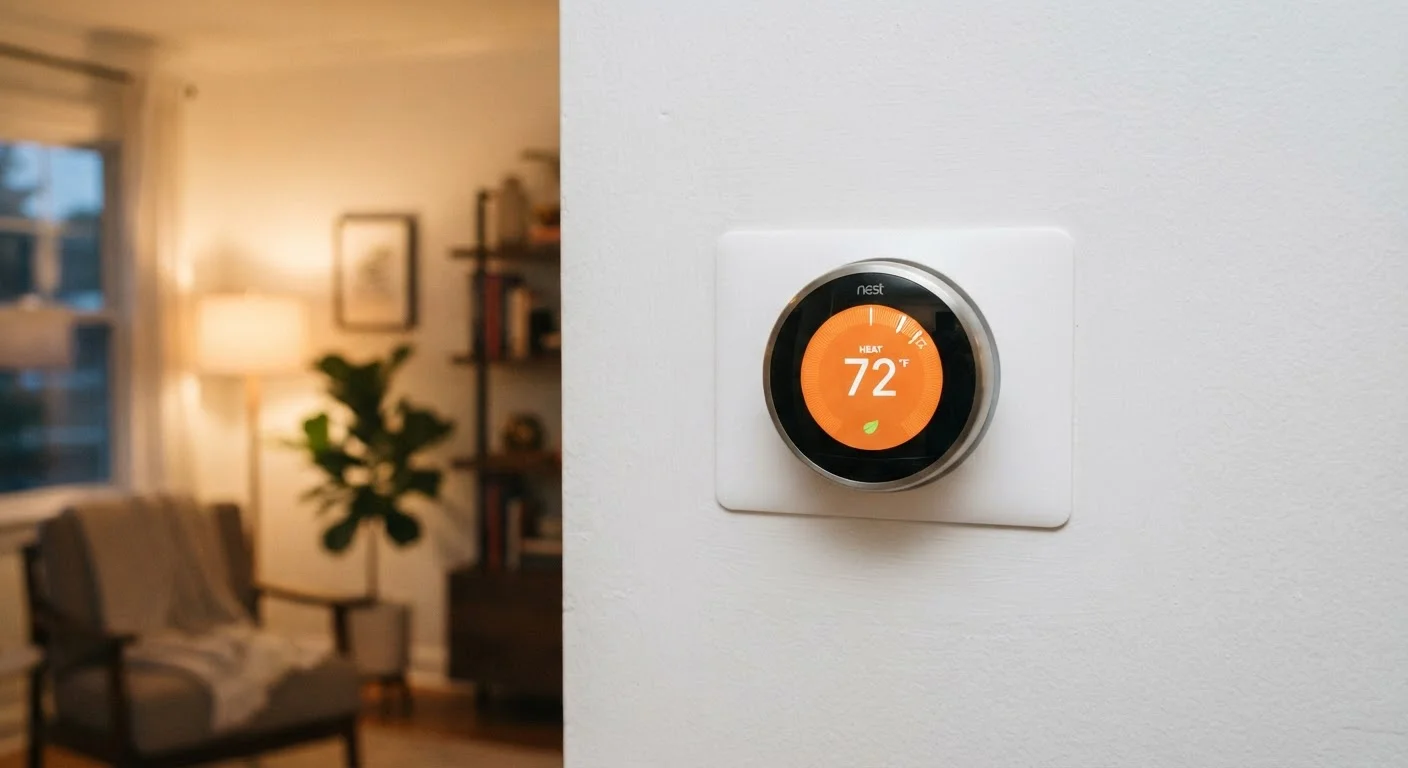
A smart thermostat replaces a conventional programmable thermostat and connects to your home's Wi-Fi network. This connection enables remote control via a smartphone app, integration with voice assistants, and — on many models — the ability to learn your routine and adjust heating or cooling automatically.
Unlike a basic programmable thermostat, which runs a fixed schedule you set manually, a smart thermostat collects data about your habits, occupancy patterns, and sometimes local weather forecasts to make real-time adjustments. Some models use motion sensors or geofencing (tracking your phone's location) to detect when the house is empty and scale back conditioning accordingly.
Understanding what these devices actually do — versus what marketing language implies — is a good starting point. For a broader look at how connected devices fit together at home, see how smart home ecosystems work.
The Genuine Advantages
The strongest case for a smart thermostat comes down to three practical benefits: energy savings, convenience, and visibility into your usage.
Reduces energy use through smarter scheduling
By learning occupancy patterns and adjusting automatically, smart thermostats avoid conditioning an empty home — one of the most common sources of wasted HVAC energy.
Remote control from anywhere with a phone
Adjusting temperature remotely is genuinely practical, not just a tech feature — it's useful when plans change or when you want the home comfortable before you arrive.
Usage reports provide actionable insight
Most smart thermostats generate monthly energy reports that help homeowners understand heating and cooling patterns, which can highlight inefficiencies that simple schedules miss.
Integrates with voice assistants and smart home platforms
Compatibility with platforms like Amazon Alexa, Google Home, or Apple HomeKit means the thermostat can participate in broader automations — such as adjusting when you set an alarm or lock the front door.
Geofencing reduces waste automatically
When configured, location-based triggers can switch the system to an energy-saving mode when all household members leave, without requiring manual action.
Energy reduction is the headline claim, and independent studies — including research published by organizations such as the American Council for an Energy-Efficient Economy — suggest that smart thermostats can reduce HVAC energy use by roughly 10–15% in typical homes, though results vary significantly based on prior habits, climate, and home insulation. Households that previously left heating or cooling running at full capacity while away tend to see the largest gains.
The remote access feature is genuinely useful in everyday scenarios: arriving home early on a cold day, or forgetting to adjust the thermostat before a long trip. Having that control from a phone is a practical convenience rather than a novelty.
10–15%
Estimated HVAC energy reduction
Research from the American Council for an Energy-Efficient Economy suggests this range for typical households, though individual results vary based on prior habits and home characteristics.
~45 million
Smart thermostats installed in US homes
According to the U.S. Energy Information Administration's Residential Energy Consumption Survey data, smart thermostat adoption has grown steadily, particularly in newer and larger homes.
The Real Limitations
Smart thermostats are not without meaningful drawbacks, and some of them are structural rather than fixable with a software update.
Requires compatible wiring not found in all homes
The C-wire requirement catches many buyers off guard; without it, some installations require an adapter or professional electrical work before setup can proceed.
Dependent on a reliable home Wi-Fi connection
Remote access, app features, and some automation functions stop working if your internet connection drops — meaning the device reverts to basic thermostat behavior at best.
Collects and stores behavioral data on manufacturer servers
Occupancy patterns and schedule data are transmitted to cloud servers, raising legitimate privacy questions for households that prefer to limit data sharing.
Savings estimates are averages, not guarantees
Actual energy savings depend heavily on prior habits, climate zone, home insulation, and how actively the household engages with the device's features.
Setup and ongoing configuration require time and engagement
Getting genuine value from a smart thermostat means reviewing schedules seasonally, checking that learning algorithms are working correctly, and updating app permissions as needed.
Not practical for renters or homes without central HVAC
Smart thermostats are designed for central forced-air or heat pump systems; they do not work with baseboard electric heating, window units, or radiator systems without additional hardware.
Compatibility is the first hurdle. Most smart thermostats require a common wire — often called a C-wire — to draw continuous power. Many older homes lack this wire, which can mean hiring an electrician before installation is even possible. Always verify your wiring before purchasing. Our checklist for adding a new smart device covers exactly this kind of pre-purchase verification.
Privacy is another legitimate concern. These devices collect data about when you're home, your temperature preferences, and behavioral patterns. That data is typically stored on manufacturer servers. Readers who want to understand the security implications of connected home devices will find useful framing in our article on keeping your smart home secure.
Cloud Dependency and What It Means
Most smart thermostat features — including remote access, usage reports, and some learning functions — rely on the manufacturer's cloud servers. If a company discontinues a product line or shuts down its service, device functionality can be significantly reduced. This is worth considering when evaluating the long-term value of any connected home device, not just thermostats.
Finally, the efficiency benefits assume consistent engagement. A smart thermostat that is set up once and never revisited will eventually drift from optimal settings as household routines change — it is not entirely set-and-forget.
Is a Smart Thermostat Right for Your Home?
The decision comes down to your home's infrastructure, your household's lifestyle, and your appetite for managing a connected device. Renters face additional constraints: installing a smart thermostat typically requires landlord permission, and you can't take central HVAC equipment with you when you move.
For homeowners building out a connected home, a smart thermostat is often one of the more straightforward starting points — provided compatibility checks out. If you're earlier in that process, what first-time smart home builders should know offers a grounded overview of the decisions involved.
The honest summary: smart thermostats work well within their constraints. They reward households that engage with them, and they underdeliver for households that expect automation to handle everything without any configuration or upkeep.