

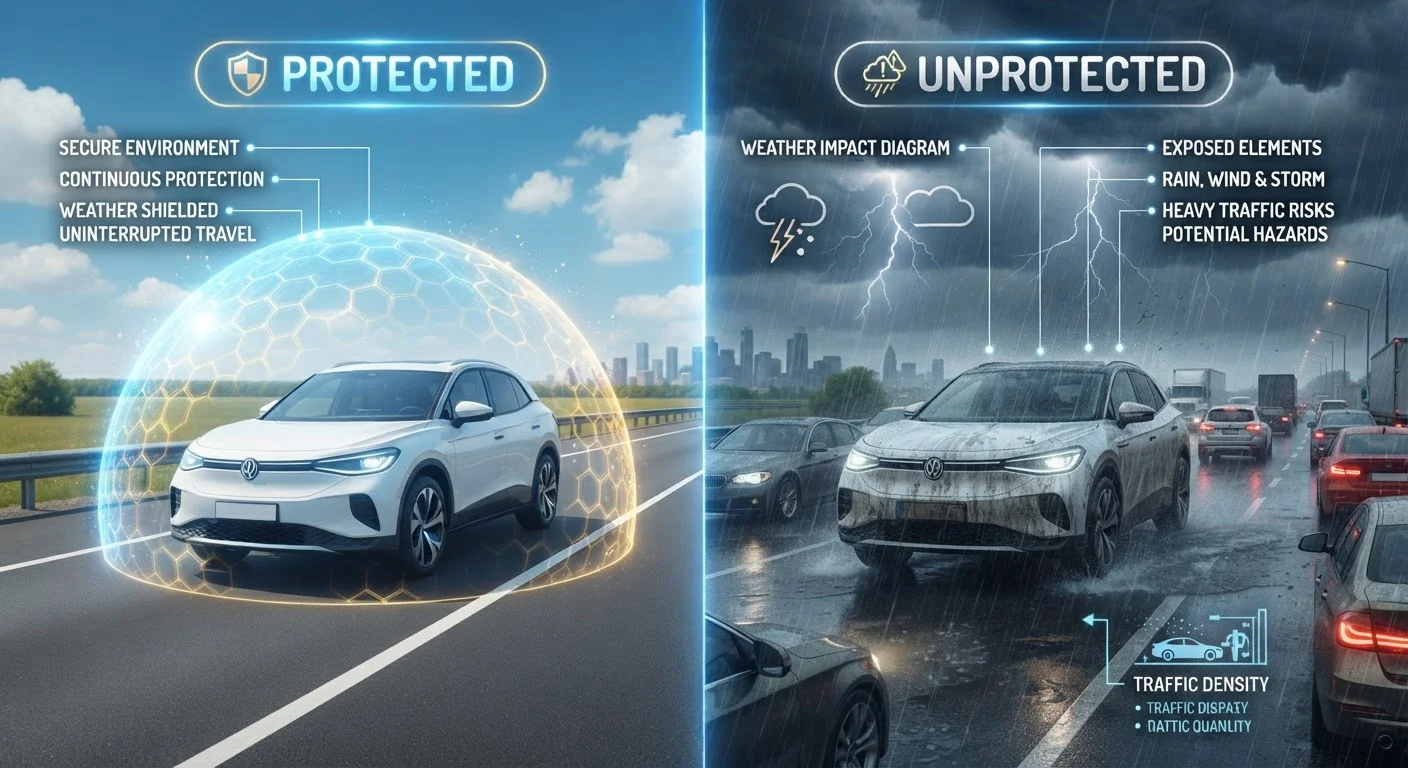
Key Takeaways
- Liability coverage pays for damage and injuries you cause to others — not your own vehicle.
- Full coverage combines liability with collision and comprehensive, protecting your car too.
- Most states require a minimum level of liability coverage; full coverage is rarely mandated by law.
- Lenders typically require full coverage on financed or leased vehicles.
- Choosing between them depends on your vehicle's value, your financial cushion, and your risk tolerance.
Option A
Liability Coverage
The legally required baseline that protects others from your mistakes.
Best for: Drivers of older or lower-value vehicles who can absorb out-of-pocket repair costs to their own car.
Option B
Full Coverage
A broader protection package that also covers damage to your own vehicle.
Best for: Drivers with newer, financed, or leased vehicles who need protection beyond third-party liability.
If you drive an older vehicle worth less than a few thousand dollars
Liability Coverage
When a car's market value is low, paying full coverage premiums may cost more over time than an out-of-pocket repair or replacement would.
If you're financing or leasing your vehicle
Full Coverage
Lenders and lessors typically require comprehensive and collision coverage to protect their financial interest in the vehicle.
If you want protection against theft, weather, and non-collision damage
Full Coverage
Comprehensive coverage — part of the full coverage bundle — addresses events like hail, flooding, and vehicle theft that liability never covers.
If budget is your primary concern and your car is paid off
Liability Coverage
Liability-only policies carry significantly lower premiums, and if your vehicle can be replaced without major financial hardship, the trade-off may be reasonable.
What Liability Coverage Actually Means
Liability coverage is the foundation of nearly every auto insurance policy — and in most U.S. states, it's legally required to drive. But its scope is narrower than many drivers assume.
There are two components to liability coverage:
- Bodily injury liability — pays for medical expenses, lost wages, and legal costs if you injure someone else in an at-fault accident.
- Property damage liability — covers the cost of repairing or replacing another person's vehicle or property that you damage.
The critical distinction: liability coverage pays for other people's losses, not your own. If you cause a collision, your liability policy may cover the other driver's repair bill and hospital visits — but your vehicle damage and your medical costs are yours to handle separately.
For a deeper look at how liability coverage works and where its gaps appear, see our liability coverage explainer.
State Minimums Vary Significantly
Each U.S. state sets its own minimum liability limits, typically expressed as three numbers (e.g., 25/50/25 — representing thousands of dollars in bodily injury per person, per accident, and property damage). These minimums are a legal floor, not a recommendation. In many real-world accidents, damages exceed state minimums, leaving an at-fault driver personally responsible for the gap. For a broader map of insurance categories, see our overview of insurance types.
What "Full Coverage" Actually Includes
Despite being widely used, "full coverage" is not a standardized insurance term — it's industry shorthand for a bundle of protections that typically includes:
- Liability coverage — the same third-party protection described above.
- Collision coverage — pays to repair or replace your vehicle after a crash, regardless of fault.
- Comprehensive coverage — covers non-collision losses such as theft, vandalism, flooding, fire, or hitting an animal.
Optional add-ons like uninsured motorist coverage, medical payments coverage, and roadside assistance are sometimes grouped in as well, though this varies by insurer and policy. The term "full" can be misleading — no policy covers every conceivable loss.
To understand the collision vs. comprehensive distinction more precisely, our comprehensive vs. collision breakdown goes into the specifics of when each type pays out.
| Criterion | Liability Coverage | Full Coverage |
|---|---|---|
| Covers injuries to others | Yes | Yes |
| Covers damage to others' property | Yes | Yes |
| Covers your own vehicle after a crash | No | Yes (collision) |
| Covers theft, weather, or animal strikes | No | Yes (comprehensive) |
| Required by law | Yes, in most states | No (except by lenders) |
| Typical premium cost | Lower | Higher |
| Deductible applies | No | Yes, for collision/comprehensive |
How to Decide Which Level of Coverage Makes Sense
The right choice isn't simply about price — it's about matching protection to your actual exposure. A few factors worth evaluating:
Your vehicle's current market value
If your car's market value is low, the payout from a comprehensive or collision claim — after your deductible — may be modest. In that case, the added premium cost may not justify the benefit. As a rough framework, if a vehicle's value is approaching the annual cost of full coverage, the math often tilts toward liability-only.
Whether you have a loan or lease
If a lender holds a financial interest in your vehicle, they almost always require full coverage. This is contractual, not optional.
Your financial resilience
Dropping to liability-only means accepting responsibility for your own repair costs after a crash. Drivers without a financial buffer to absorb a large unexpected expense may find the added premium for full coverage worthwhile.
Understanding how deductibles interact with your premiums can sharpen this decision — see our guide to deductibles and premiums for context. Also worth reviewing: what meeting only the state minimum actually means in practice.
~14%
Uninsured drivers on U.S. roads
The Insurance Research Council has estimated that roughly 1 in 7 U.S. drivers carries no insurance — a key reason uninsured motorist coverage is often recommended alongside any base policy.
~$800+
Average annual full coverage premium (U.S.)
The National Association of Insurance Commissioners reports that average full coverage costs vary considerably by state, vehicle type, and driver profile — emphasizing why no single rate applies universally.
This article provides general information about auto insurance coverage types and is not personalized insurance or financial advice. Coverage terms, costs, and availability vary by insurer, policy, and state. Consult a licensed insurance agent or adviser for guidance specific to your situation.