
Reading Your Owner's Manual: The Maintenance Answers Already in Your Glove Box

Key Takeaways
- Your owner's manual contains service intervals, fluid specifications, and tyre pressures specific to your exact vehicle.
- Generic maintenance advice found online may not match your manufacturer's actual requirements.
- The manual's index makes it fast to locate specific maintenance topics without reading cover to cover.
- Maintenance schedules often vary between normal and severe driving conditions — know which applies to you.
- Keeping a simple log of services performed helps you stay on schedule and supports resale value.
What you will need
Why the Manual Is Your Most Reliable Maintenance Source
Every vehicle on the road has unique engineering — different engine tolerances, fluid volumes, electrical architectures, and materials. Generic maintenance advice is built around averages; your owner's manual is built around your car. It reflects the decisions made during design and testing about exactly what the vehicle needs and when.
Despite being the most authoritative source available to any driver, owner's manuals are frequently ignored. A survey mindset toward routine maintenance — relying on mileage stickers from oil change shops or neighbour recommendations — can result in under-servicing some components and over-servicing others. Neither outcome is ideal.
Reading your manual doesn't require mechanical expertise. It requires only the ability to navigate a document and take notes — skills this guide walks you through directly. For drivers who've recently got their licence, building early maintenance habits makes this an especially valuable starting point.
Your Manual Outranks Generic Advice
Online forums, general maintenance articles, and even well-meaning mechanics sometimes apply rules of thumb that don't reflect your manufacturer's specific requirements. When a source contradicts your manual, default to the manual — it was written for your exact vehicle. That said, if a certified mechanic recommends something outside the manual's scope, ask them to explain the reasoning so you can make an informed decision.
What You'll Need Before You Start
Before working through the steps below, gather a few basics.
What you will need
Owner's Manual
The primary source of manufacturer-specific service intervals, fluid grades, and tyre specifications for your vehicle.
Notepad or Maintenance Log App
Records key service intervals, fluid specs, and dates of completed maintenance for easy future reference.
If your manual is in poor condition or missing sections, prioritise downloading the manufacturer's PDF version — it's typically free and fully searchable, which makes navigation faster than a printed copy.
Step-by-Step: Navigating Your Manual for Maintenance Answers
Locate and Verify Your Manual
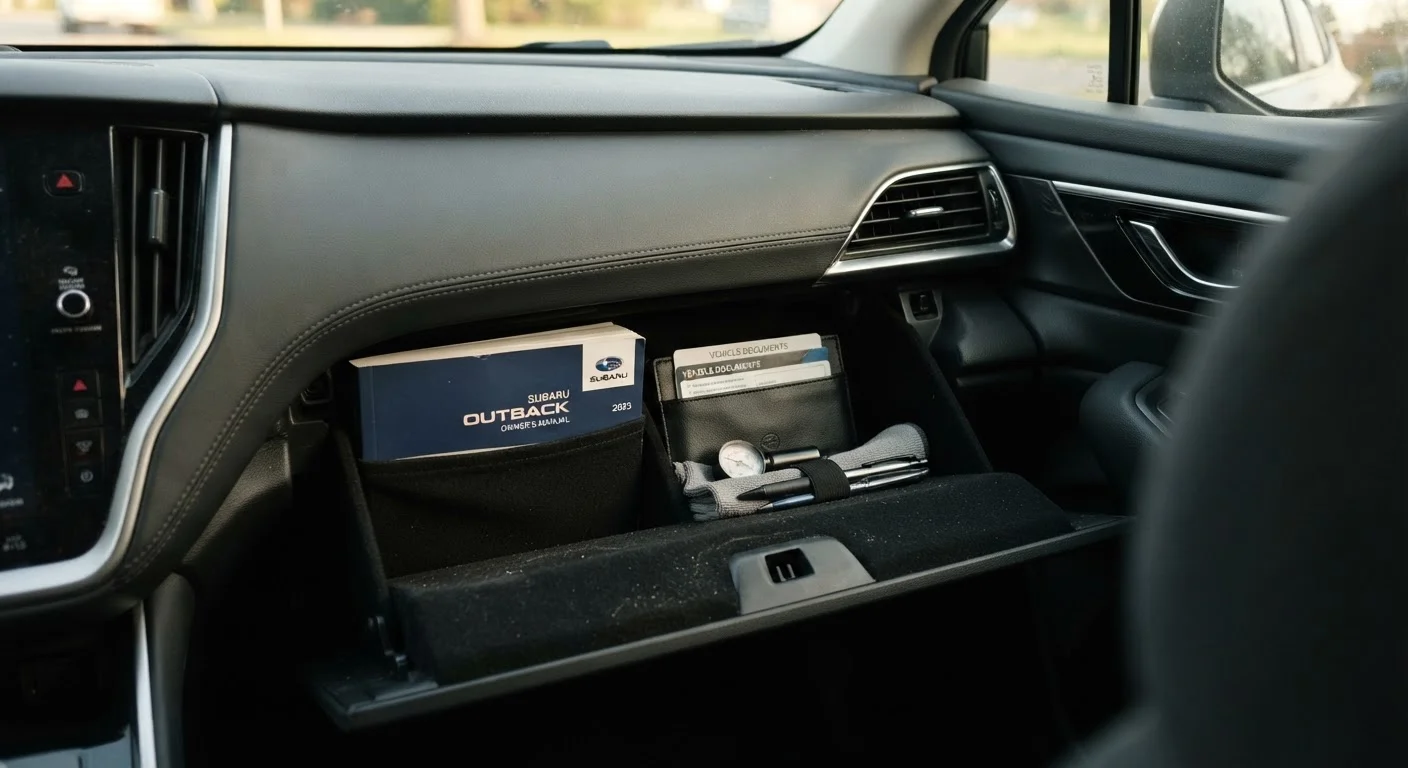
Check your glove box first. If the manual is missing, visit your vehicle manufacturer's website — most publish free downloadable PDFs searchable by year, make, model, and engine variant. Confirm the manual matches your exact vehicle configuration, since specifications can differ between trim levels and engine options within the same model year.
Use the Index to Navigate Directly
Owner's manuals can run several hundred pages, but you rarely need to read them sequentially. Turn to the index at the back and search for terms such as maintenance schedule, engine oil, tire inflation, coolant, or brake fluid. Note the page numbers for each section you plan to consult — this alone saves significant time.
Read the Maintenance Schedule Carefully
Most manuals present two schedules: one for normal driving conditions and one for severe conditions. Severe driving typically includes frequent short trips under 5 miles, extreme temperatures, heavy towing, or predominantly stop-and-go traffic. Many urban drivers actually fall into the severe category — check honestly against your own driving patterns, as this directly affects how frequently certain services are needed.
Record Your Fluid Specifications
The fluids section specifies exactly which grades your vehicle requires — engine oil viscosity (such as 5W-30 or 0W-20), transmission fluid type, brake fluid specification (DOT 3, DOT 4, etc.), and coolant type. Write these down or photograph the relevant pages. Using an incorrect fluid grade — even a seemingly close substitute — can void manufacturer warranties or cause component damage over time. For a deeper look at oil grades specifically, see our guide to engine oil grades and change intervals.
Find Your Tyre Pressure and Load Ratings
Tyre pressure specifications for your vehicle appear in the manual and on a placard inside the driver's door jamb. The manual will also specify load index and speed rating requirements for replacement tyres. Note that the pressure figure on the tyre sidewall is the tyre's maximum rating — not your vehicle's recommended operating pressure. Always use the figure from your manual or door placard. For a full explanation of pressure readings and tread depth, our tyre pressure and tread depth guide covers both in practical detail.
Cross-Reference Warning Light Descriptions
Your manual includes a dedicated section illustrating every dashboard warning symbol and its meaning. When a light appears, consult this section before drawing conclusions — symbols vary between manufacturers, and some indicate routine reminders while others signal conditions requiring prompt attention. Our warning lights guide provides additional context on urgency levels.
Start a Simple Maintenance Log
Create a basic record — a notebook, spreadsheet, or dedicated app — listing each service item from your maintenance schedule, the interval at which it's due, and the date and mileage each time it's completed. This keeps you proactive rather than reactive, and provides documented history that can support vehicle resale. Understanding the long-term value of consistent servicing explains why this record matters beyond just avoiding breakdowns.
Severe vs. Normal Driving: Know the Difference
Manufacturers define 'severe' driving conditions broadly — and more drivers qualify than realise. Frequent cold starts, short urban trips, extreme heat or cold, and regular towing or hauling all count. Operating under severe conditions while following a normal-duty maintenance schedule can accelerate wear on critical components including the engine, transmission, and brakes. Check your manual's definitions honestly against your daily driving.
Putting It All Together
Once you've located your service intervals, fluid grades, tyre specifications, and warning light descriptions, you have the foundation for managing routine maintenance with confidence. This doesn't mean performing every task yourself — some jobs genuinely require a qualified mechanic, and knowing where that line sits is part of being an informed owner. Our guide to DIY vs. professional maintenance helps you assess which tasks are appropriate for home completion.
Seasonal changes also introduce additional considerations beyond standard intervals — battery performance in cold weather, cooling system demands in summer, and tyre behaviour across temperature extremes. Our seasonal car maintenance checklist pairs well with the schedule you've just extracted from your manual.
The manual in your glove box isn't a last resort — it's the first place to look. Treat it as a working document, not an archive, and your vehicle's maintenance becomes considerably less uncertain.
This article provides general informational guidance only and does not constitute professional mechanical advice. Always consult a qualified mechanic for diagnosis, repair decisions, or situations involving vehicle safety.