

Key Takeaways
- Routine tasks like air filter swaps, wiper replacements, and fluid top-ups are manageable for most careful home mechanics.
- Brake system work, suspension repairs, and anything touching the airbag or electrical system warrant a qualified mechanic.
- Attempting complex repairs without proper tools or knowledge can create safety risks and higher repair bills.
- Your owner's manual is the most reliable guide to service intervals and fluid specifications for your specific vehicle.
- DIY maintenance can reduce costs, but only when the task is genuinely within your skill level and tool set.
Our Verdict
DIY maintenance makes sense for straightforward, low-risk tasks where the consequences of a mistake are minimal and the skills required are accessible. For anything involving safety-critical systems — brakes, steering, airbags, or complex diagnostics — a qualified mechanic is the right call. The wisest approach for most drivers is a hybrid: handle routine upkeep yourself and build a relationship with a trusted shop for everything beyond that threshold.
| Best for | Recommended |
|---|---|
| Drivers comfortable with basic tools and routine checks | DIY Maintenance |
| Safety-critical repairs or complex diagnostics | Professional Mechanic |
| New drivers building foundational habits | DIY Maintenance (for basics) + Professional for the rest |
| High-mileage or aging vehicles with unknown history | Professional Mechanic |
The Real Question: Risk, Skill, and the Right Tool
The decision between doing it yourself and hiring a mechanic isn't simply about saving money — it's about accurately assessing the task, your capability, and what happens if something goes wrong. Some maintenance jobs are genuinely straightforward and well-documented; others require specialized equipment, years of hands-on experience, or both.
Before reaching for a wrench, two questions are worth asking honestly: Do I understand what this job involves, step by step? And do I have the tools and workspace to do it safely? A task performed incorrectly on a safety-critical component can create a much larger problem than the original maintenance issue. See our guide to reading your owner's manual — it contains the specifications your vehicle actually needs, not generic advice.
Start With Your Owner's Manual
Before attempting any maintenance task, consult your vehicle's owner's manual for the manufacturer's specifications. It details the correct fluid grades, filter part numbers, and service intervals specific to your car — generic online advice may not match your vehicle. If you don't have a physical copy, most manufacturers make digital versions available on their websites.
Tasks That Are Reasonable to DIY
Several routine maintenance items are well within reach for a careful, prepared home mechanic. These tend to share common traits: they don't touch safety-critical systems, they require only basic tools, and the correct procedure is well-documented.
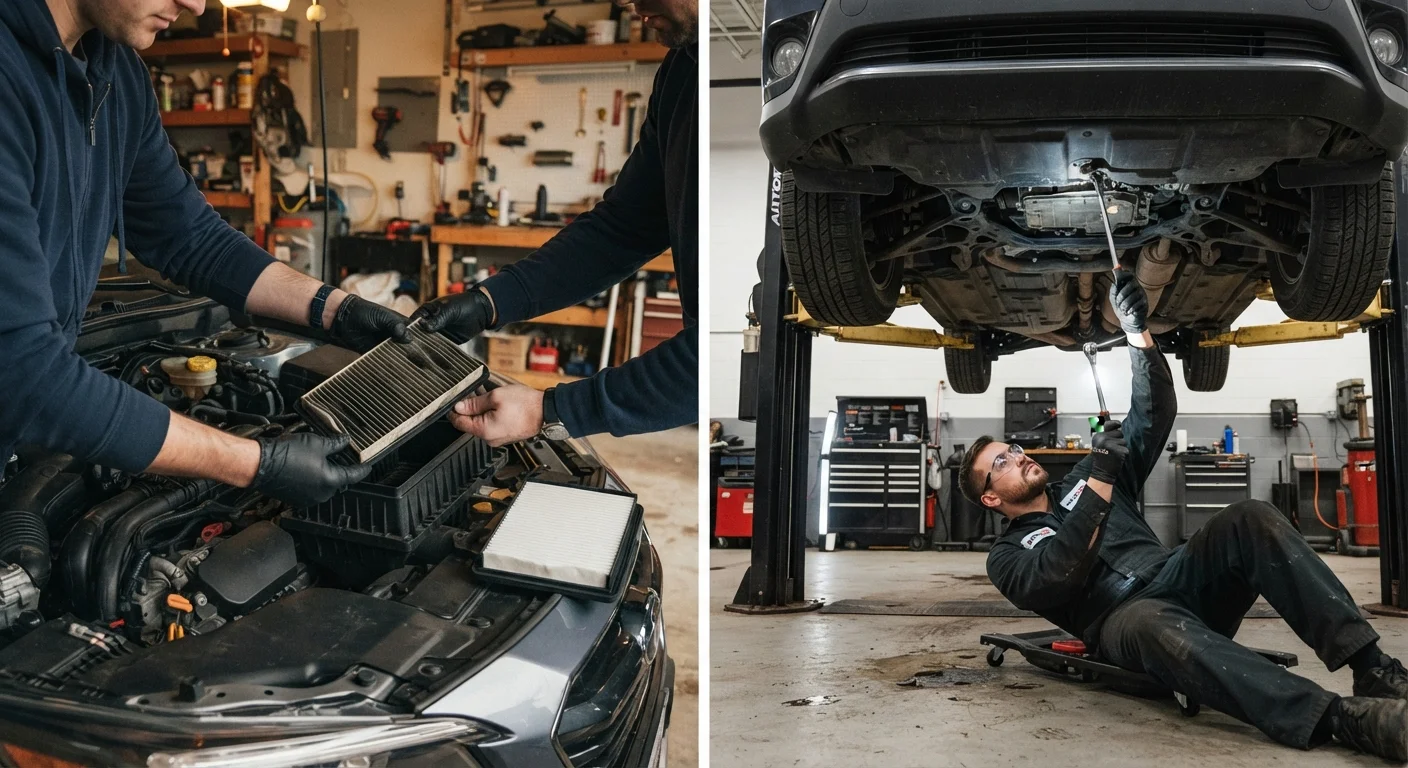
- Engine air filter replacement: Typically involves unclipping a housing and swapping the filter. Most vehicles make this accessible without any tools.
- Wiper blade replacement: Straightforward and clearly instructed on most blade packaging.
- Fluid top-ups: Checking and topping up windshield washer fluid, engine coolant, and power steering fluid is manageable at home. Our fluid check guide walks through each one safely.
- Cabin air filter replacement: Usually located behind the glove box; accessible in most vehicles with minimal effort.
- Battery terminal cleaning: Removing corrosion from terminals with a wire brush and baking soda solution is low-risk with basic precautions.
For new drivers especially, building these habits early pays dividends. Car maintenance habits for new drivers covers the foundational checks every driver should feel confident performing.
| Task | DIY Feasibility | Risk if Done Incorrectly | Tools Required | |
|---|---|---|---|---|
| Engine air filter | High | Low | None typically | |
| Wiper blades | High | Very low | None typically | |
| Fluid top-ups | High | Low (if correct fluid used) | None typically | |
| Brake pad replacement | Moderate (experienced only) | High | Jack, stands, torque wrench | |
| Brake lines / ABS sensors | Not recommended | Very high | Professional equipment | |
| Suspension components | Low | Very high | Professional equipment + alignment | |
| Airbag / SRS system | Never | Extreme | Professional only | |
| Electrical fault diagnosis | Low | High | Pro-grade scan tools |
When the Mechanic Should Take Over
Certain repairs and diagnostics should not be attempted at home regardless of enthusiasm or access to YouTube tutorials. The stakes are simply too high.
- Brake system repairs: Replacing brake pads is a task some experienced DIYers handle, but anything involving brake lines, calipers, or ABS (anti-lock braking system) sensors requires proper equipment and expertise. A brake failure at speed is catastrophic.
- Suspension and steering components: Worn ball joints, control arms, or tie rods affect handling in ways that are not immediately obvious — until they fail. Alignment after any suspension work also requires shop equipment.
- Airbag and SRS system work: The supplemental restraint system can deploy unexpectedly during service. This is a professional-only area, full stop.
- Transmission service: Fluid changes on some transmissions are DIY-accessible, but internal transmission repairs require specialized tools and diagnostic knowledge.
- Electrical fault diagnosis: Modern vehicles rely on complex CAN bus networks. Tracing an intermittent fault typically requires a professional scan tool and trained interpretation.
Don't Let Cost Savings Override Safety
Attempting a brake, steering, or airbag repair without the correct training and tools puts you, your passengers, and other road users at risk. The short-term saving is rarely worth the potential consequence. If you're uncertain whether a task is within your capability, err on the side of professional help — a qualified mechanic can also advise on what you could realistically tackle yourself in future.
Understanding the long-term case for routine servicing also helps frame why skipping or delaying professional service — even to save short-term costs — often leads to larger expenses down the road.
Making the Hybrid Approach Work
Most drivers benefit from what could be called a hybrid strategy: handle routine, low-risk upkeep at home and rely on a trusted shop for anything more involved. This approach keeps running costs manageable without compromising safety.
A few practical principles make this work effectively:
- Know your vehicle's service schedule. The manufacturer's recommended intervals — not the oil change shop's sticker — are your baseline. Seasonal maintenance checks layer on top of these intervals and are often easy to perform at home.
- Build a realistic tool inventory gradually. A basic socket set, torque wrench, jack stands, and a quality OBD-II scanner (on-board diagnostics reader) cover a substantial range of DIY tasks.
- Document everything you do yourself. When you do visit a mechanic, a clear record of what's been done — and when — helps them assess what's actually needed. It also supports resale value.
- Don't conflate frugality with safety. The budgeting basics for car ownership should account for professional servicing as a fixed line item, not an optional expense.
For a broader view of what a vehicle needs across its entire life, car maintenance across the full vehicle lifespan provides a structured roadmap from first service to high-mileage ownership.
This article is for general informational purposes only. Vehicle maintenance tasks vary significantly by make, model, and condition. Always consult a qualified mechanic before undertaking any repair that could affect vehicle safety or systems you are not confident working with.