
Situational Awareness at the Wheel: How Experienced Drivers Read the Road Ahead

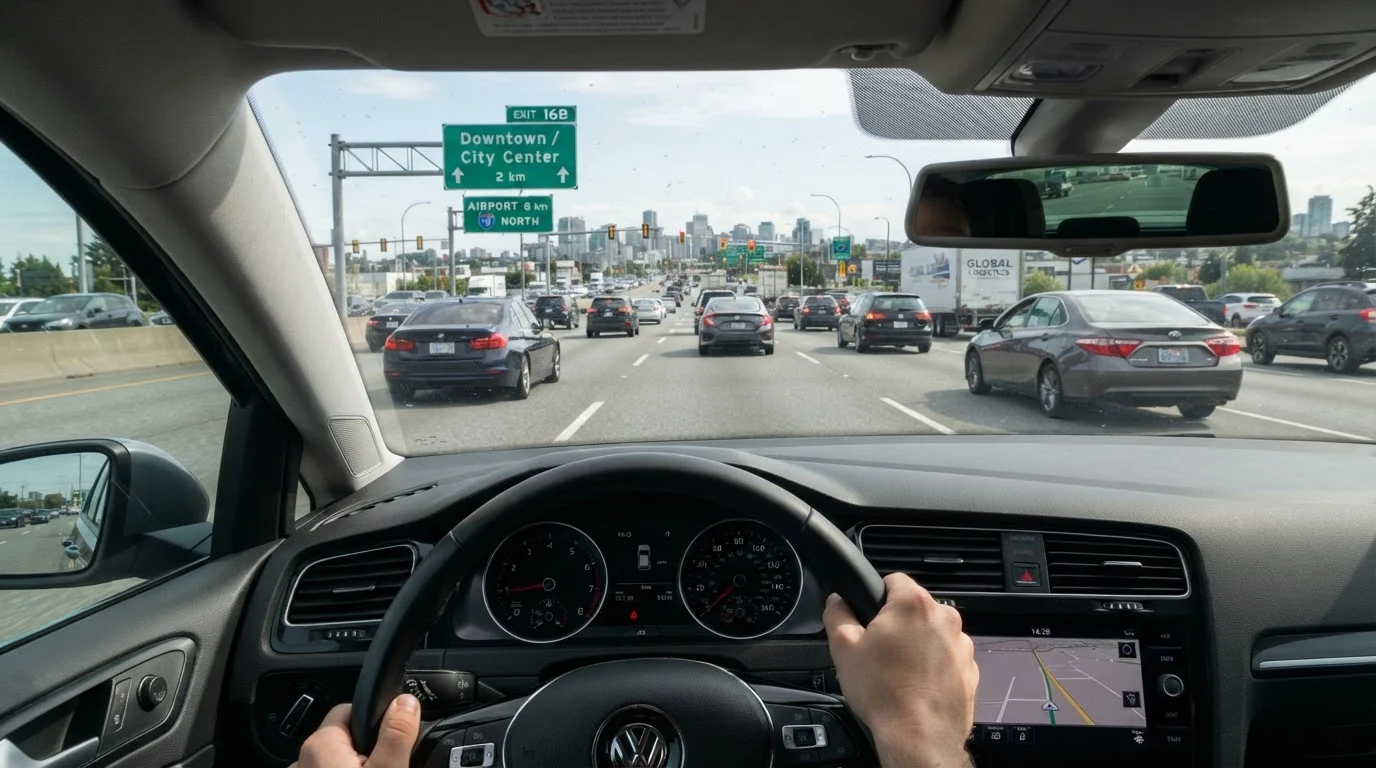
Key Takeaways
- Experienced drivers scan 12–15 seconds ahead rather than fixating on the vehicle directly in front.
- Constantly checking mirrors every 5–8 seconds builds a full mental picture of surrounding traffic.
- Anticipating hazards — not just reacting to them — is the defining habit of skilled, safe drivers.
- Speed selection, following distance, and lane positioning all work together to create response time.
- Environmental cues like brake lights several cars ahead, road curvature, and pedestrian behavior telegraph danger early.
Why Situational Awareness Separates Good Drivers from Great Ones
Most drivers consider themselves attentive — they watch the car ahead, stop at red lights, and stay in their lane. But genuine situational awareness goes far deeper. It means maintaining a continuously updated mental model of everything happening around your vehicle: traffic flow, road conditions, driver behavior, and potential hazards that haven't materialized yet.
Research in driving psychology consistently shows that crashes are most often preceded by a failure to perceive — not a failure to react. In other words, the danger was there to be seen; the driver simply wasn't looking in the right place at the right time. This is the gap that deliberate awareness training closes.
For a broader foundation on proactive driving habits, see our guide to defensive driving on modern roads — it pairs directly with the scanning techniques covered here.
The Core Scanning Techniques Skilled Drivers Use
Professional and advanced drivers share a set of structured visual habits that ordinary drivers either never learned or gradually abandoned. These aren't instincts — they're trained behaviors.
Scan 12–15 seconds ahead, not just the vehicle directly in front of you.
Fixating on the car immediately ahead gives you only a fraction of a second to respond to sudden changes. Looking further down the road — to the point your vehicle will reach in roughly 12–15 seconds — gives you time to adjust speed, change lanes, or brake gradually rather than abruptly.
Check your mirrors every 5–8 seconds to maintain a complete picture of surrounding traffic.
Traffic conditions behind and beside you change constantly. Infrequent mirror checks mean you're operating with outdated information about vehicles in adjacent lanes, tailgaters closing in, or emergency vehicles approaching. Regular checks keep your mental map current.
Maintain following distance that gives you at least 3–4 seconds of reaction time.
The two-second rule is a minimum; three to four seconds is more appropriate at highway speeds or in adverse conditions. Adequate following distance converts the time you need to react into actual physical space to stop or maneuver.
Identify an escape route before you need one.
When a hazard materializes, the driver who has already noted available space — a shoulder, a gap in adjacent traffic, a clear lane — can respond faster and more calmly. Pre-planning reduces panic decision-making under pressure.
Use lane positioning deliberately to maximize visibility and sight lines.
Where you sit within your lane changes what you can see around you. Positioning slightly to the left within your lane when following a large vehicle, for instance, opens up a view of the road ahead that would otherwise be completely blocked.
Anticipate the behavior of vulnerable road users — pedestrians, cyclists, and motorcyclists.
These users are less predictable, less visible, and far more vulnerable to injury in a collision. Mentally flagging their presence and giving them extra anticipatory attention reduces the chance of a dangerous surprise at speed.
Practicing these techniques consistently transforms scanning from a conscious effort into an automatic habit, freeing cognitive bandwidth for higher-level decisions.
Reading Environmental and Behavioral Cues
The road communicates constantly. Brake lights flickering four cars ahead, a ball rolling into the street, a truck drifting slightly in its lane, a pedestrian stepping off a curb while looking at a phone — each of these is a data point. Experienced drivers have learned to read these signals and interpret what they're likely to mean a few seconds from now.
“The expert driver is not reacting to hazards — they're managing a situation they saw developing three or four steps ago. That gap, between perceiving early and reacting late, is where most crashes live.”
— John Versace, Driver training researcher and author on advanced hazard perception
Certain road layouts amplify this challenge significantly. Roundabouts, merge zones, and blind-spot-heavy intersections demand a sharper version of these same skills. Our article on navigating roundabouts, merges, and blind spots explains how to adapt your awareness at the junctions that catch drivers out most often.
Situational Awareness Degrades with Fatigue
Even well-trained scanning habits deteriorate significantly when a driver is tired. Studies on drowsy driving show that fatigue impairs the ability to track peripheral cues and sustain far-ahead gaze — two of the most critical awareness skills. If you find your eyes naturally dropping to the car directly in front, that narrowing of focus can be an early signal of fatigue. When that happens, the safest response is to pull over safely and rest rather than push through.
Quick Wins: Building Awareness Habits Starting Today
You don't need a formal course to start improving your road awareness right now. The habits below are practical, immediate, and make a measurable difference — whether you're a new driver or someone who has been on the road for decades.
New drivers especially benefit from building these habits early, before less attentive patterns have time to solidify. Our guide for new licence holders covers the confidence-building mindset that makes these techniques stick.
For a comprehensive reference on core road safety principles — from stopping distances to right-of-way — visit our road safety fundamentals overview. And if you want the full picture of what makes a driver genuinely safer in every situation, our complete safe driving guide is the place to start.