

Key Takeaways
- A pantry stocked with whole grains, legumes, and healthy fats makes balanced meals easier to assemble daily.
- Shelf-stable staples reduce reliance on convenience foods and support a more consistent eating pattern.
- Variety within each food category ensures a broader range of nutrients over time.
- A pantry audit — like a wardrobe audit — helps you identify gaps before shopping, reducing waste.
- These are general guidelines; a registered dietitian can tailor recommendations to your individual needs.
Summary
28 items · 30–60 minutes to audit and restock
Why Your Pantry Is a Nutrition Tool
What you keep in your pantry shapes what you eat far more than willpower or meal-planning apps ever could. When the building blocks of a balanced meal are already on the shelf, cooking nutritiously becomes a matter of assembly rather than effort. When they're not, convenience foods fill the gap.
Think of this checklist the way you might think of a wardrobe audit: before restocking, take stock of what's already there. Identify what's expired, what's missing, and what you actually use. That honest inventory prevents over-buying and helps you build a pantry that genuinely reflects how you cook and eat.
The categories below cover the staple food groups that nutrition research consistently links to varied, nutrient-dense eating patterns. Use this list to audit your current shelves and fill genuine gaps — not to overhaul everything at once.
Pantry inventory list or app
Track what you currently have so you can identify genuine gaps before shopping, reducing food waste.
Airtight glass or BPA-free containers
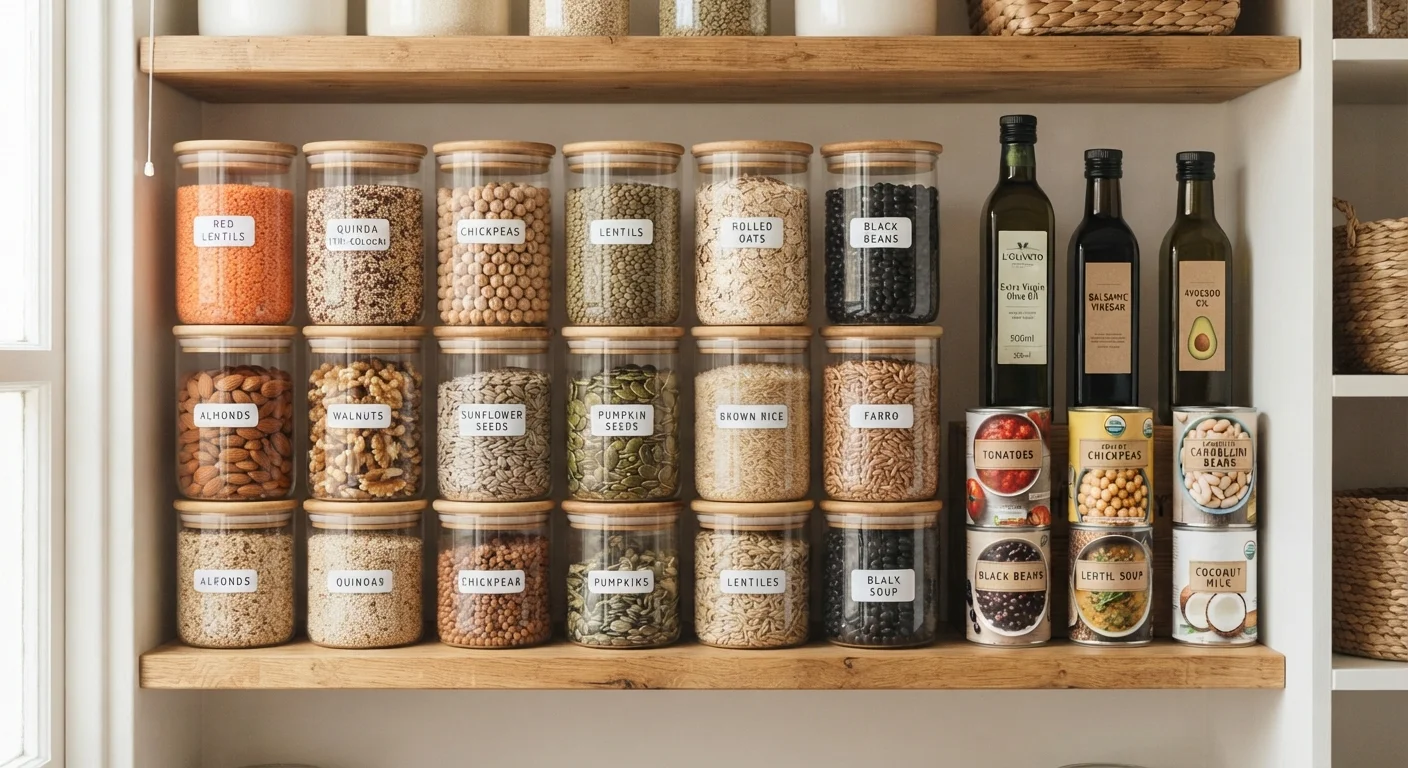
Store bulk grains, legumes, and nuts to extend shelf life and keep the pantry organised.
Permanent marker and labels
Date-mark opened packages so you use items in order and can spot anything past its prime.
Kitchen scale
Useful for portioning bulk items accurately when following recipes or managing serving sizes.
The Pantry Staples Checklist
Work through each category methodically. Check what you have, note what's running low or missing, and use the priority labels to guide your next shopping trip. If you're transitioning toward more plant-forward eating, our introduction to plant-based eating offers helpful context for why legumes and whole grains anchor so many balanced diets.
Whole Grains
Legumes
Healthy Fats
Canned and Preserved Vegetables & Fruits
Aromatics, Condiments & Flavour Bases
Baking and Thickening Essentials
Once your pantry is stocked, the next step is learning how to combine these ingredients into complete meals. Our guide on building a nutritionally complete meal walks through plate-model frameworks using exactly these kinds of staples.
Sodium in Canned Goods Adds Up Quickly
Many canned beans, tomatoes, and vegetables contain significant added sodium. When possible, choose low-sodium or no-salt-added versions and rinse canned legumes under cold water before using — this can reduce sodium content noticeably. Reading the nutrition label on every canned item is a simple habit worth building.
Shelf Life Varies More Than You May Expect
Whole grains and flours containing natural oils — like whole-wheat flour or ground flaxseed — can turn rancid faster than refined counterparts. Store them in airtight containers in a cool, dark spot, and consider refrigerating or freezing if you use them infrequently. Nuts and seeds are similarly susceptible to oxidation once opened.
Making the Most of Your Stocked Pantry
Stocking up strategically also has a financial dimension. Buying staples in bulk when your budget allows — and rotating stock so nothing goes to waste — is a practical form of household financial planning. If cost is a constraint, prioritising the must items first and adding nice-to-have items over time is a sensible approach. Our resource on building and sticking to a personal budget can help you work pantry staples into your overall household spending plan.
These Are General Guidelines, Not Personal Prescriptions
The staples listed here reflect broadly established nutrition principles appropriate for general adult eating patterns. Individual needs vary considerably based on health conditions, allergies, intolerances, medications, and life stage. If you have a specific health condition or dietary requirement, work with a registered dietitian to determine which staples are appropriate for you.
Revisit this checklist every four to six weeks — not because every item will need replacing, but because a quick review keeps your pantry functional rather than cluttered. Rotate newer purchases behind older ones, check expiration dates, and replace anything that has lost colour, aroma, or texture, as these are signs that nutritional quality may have declined.
This article is for general informational and educational purposes only and is not a substitute for personalised nutrition advice. Consult a registered dietitian or qualified healthcare professional for guidance tailored to your individual health needs and circumstances.