

Key Takeaways
- Plant-based eating is a spectrum, not a single rigid diet — flexitarian counts.
- Vitamin B12, iron, calcium, omega-3s, and vitamin D need deliberate attention on plant-heavy diets.
- Gradual, incremental changes are more sustainable than overnight overhauls.
- Whole, minimally processed plant foods form the most nutritionally sound foundation.
- Some groups — including pregnant people and older adults — should consult a healthcare professional before making significant dietary shifts.
Start here
What "Plant-Based" Actually Means
Next
Nutrients That Deserve Extra Attention
Then
How to Shift Without Overhauling Everything
Apply it
Building Meals That Actually Work
When you're ready
Special Considerations Worth Knowing
What "Plant-Based" Actually Means
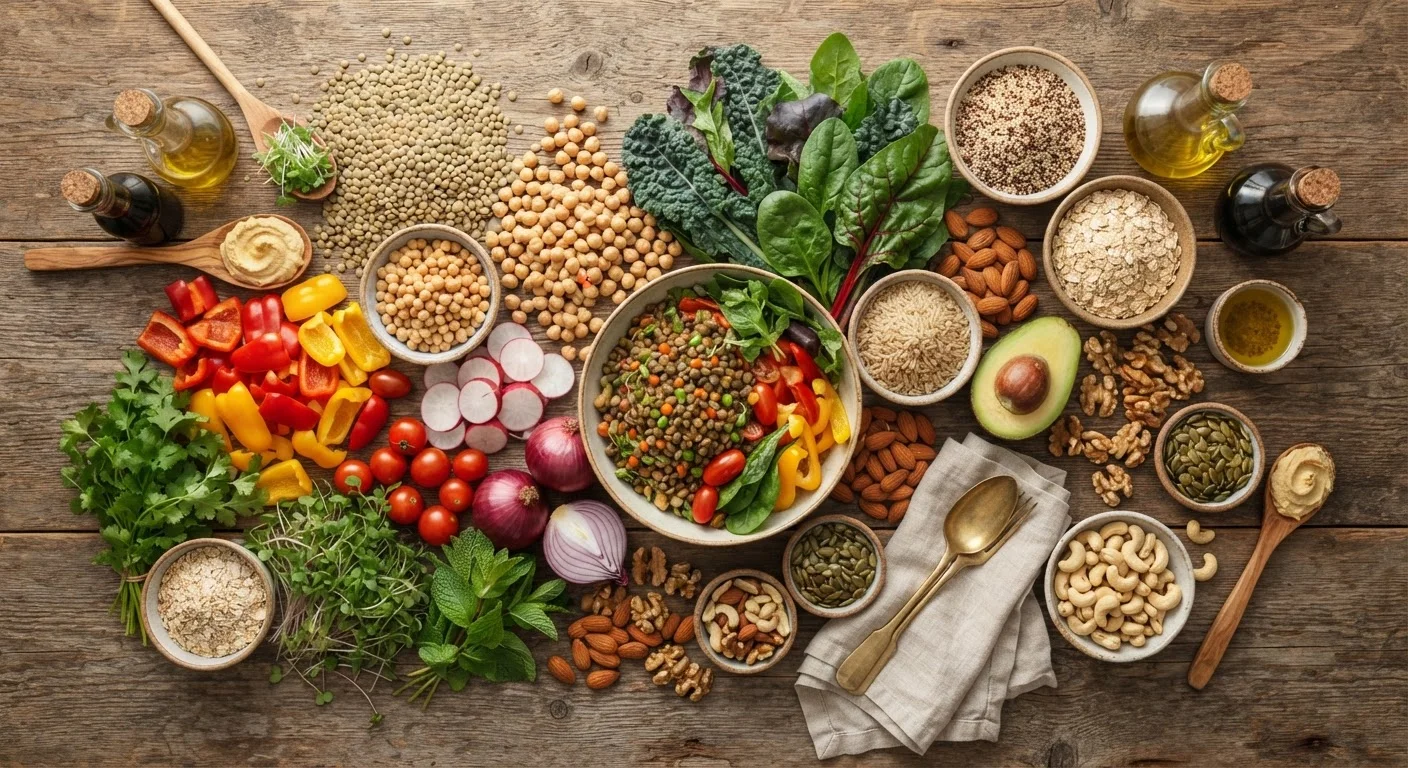
The phrase "plant-based" gets used so broadly that it has lost some precision. In practice, it describes a wide spectrum of eating patterns that center whole plant foods — vegetables, fruits, legumes, whole grains, nuts, and seeds — rather than a single fixed rulebook.
Flexitarian
A flexible eating style that is primarily plant-based but occasionally includes meat, poultry, or fish — with no strict rules about frequency.
Phytonutrients
Natural compounds found in plants — such as flavonoids and carotenoids — that contribute to the health properties associated with diets rich in fruits and vegetables.
Non-heme iron
The form of iron found in plant foods and eggs. It is absorbed less efficiently than heme iron (from meat), but absorption improves when eaten alongside vitamin C.
Vitamin B12
An essential vitamin for nerve function and red blood cell production that occurs naturally only in animal-derived foods, making supplementation important for fully plant-based eaters.
Essential amino acids
The nine amino acids your body cannot produce on its own and must obtain from food. A varied diet including different plant proteins provides all nine.
Omega-3 fatty acids
A category of healthy fats important for heart and brain health. EPA and DHA are the most active forms and are primarily found in fatty fish or algae-based supplements.
At one end sits the flexitarian: someone who eats predominantly plants but includes meat or fish occasionally. Moving along the spectrum are pescatarians (plants plus seafood), lacto-ovo vegetarians (plants plus dairy and eggs), and at the far end, vegans, who exclude all animal-derived products. None of these positions is inherently superior — the right fit depends on individual health needs, preferences, and context.
What unifies these patterns is an emphasis on whole, minimally processed plant foods. A diet built on vegetables, legumes, and grains looks very different — nutritionally — from one built on packaged plant-based convenience products, even if both technically qualify as "plant-based."
Nutrients That Deserve Extra Attention
Shifting toward plants brings genuine nutritional strengths — higher fiber intake, greater micronutrient variety, and more phytonutrients (natural plant compounds linked to health in the research literature). But certain nutrients become harder to obtain in adequate amounts as animal products are reduced, and awareness of these gaps is the foundation of doing it well.
- Vitamin B12: Found reliably only in animal products. Fully plant-based eaters need a supplement or consistent intake of B12-fortified foods. This is the most non-negotiable gap to address.
- Iron: Plant foods provide non-heme iron, which is absorbed less efficiently than the heme iron in meat. Pairing iron-rich plants (lentils, beans, tofu) with vitamin C-rich foods meaningfully improves absorption.
- Calcium: Dairy reduction requires deliberate replacement via fortified plant milks, tofu made with calcium sulfate, leafy greens like kale, and fortified foods.
- Omega-3 fatty acids: Fatty fish are a concentrated source of EPA and DHA. Plant sources such as flaxseed and walnuts provide ALA, which the body converts at low efficiency. Algae-based omega-3 supplements offer a direct plant-derived source of EPA and DHA.
- Vitamin D: Largely a concern across all dietary patterns in the US, but worth monitoring through a healthcare provider, particularly if sun exposure is limited.
- Zinc and iodine: Both warrant attention, especially on vegan diets. Seaweed and iodized salt are practical iodine sources; zinc is found in legumes, seeds, and whole grains.
For a practical framework on structuring nutritionally complete meals, see Building a Nutritionally Complete Meal Without a Dietitian on Speed Dial.
Make Absorption Work For You
Eating iron-rich plant foods alongside a vitamin C source — like squeezing lemon over lentils or pairing beans with tomatoes — meaningfully improves how much non-heme iron your body absorbs. Similarly, consuming calcium-rich foods separately from high-oxalate foods like spinach can optimize calcium uptake. Small pairing choices like these can close nutritional gaps without adding supplements.
How to Shift Without Overhauling Everything
One of the most consistent findings in behavioral nutrition research is that gradual change sticks better than radical reinvention. Rather than eliminating entire food categories overnight, most people find it more sustainable to add plant foods incrementally.
A few practical starting points:
- One meal at a time: Making one meal per day plant-focused — breakfast or lunch — builds familiarity without disruption.
- Swap by ingredient, not by meal: Replace ground beef in a familiar dish with lentils or black beans. Keep the dish; change the protein.
- Explore your pantry: Stocking legumes, whole grains, and nuts makes plant-based cooking accessible on a weeknight. Stocking a Pantry That Makes Balanced Eating Easier walks through the staple categories worth keeping on hand.
- Don't fixate on perfection: A flexitarian approach that increases plant foods meaningfully — without demanding complete elimination — carries real nutritional value and is far more sustainable for most people.
Plant-Based Doesn't Mean Automatically Healthy
Many packaged plant-based foods — including meat alternatives and dairy-free products — can be high in sodium, saturated fat, or added sugar. The evidence base for plant-based diets is largely built on whole and minimally processed foods. Reading ingredient labels and prioritizing whole foods over convenience products gives you the most nutritional value from this eating style.
Building Meals That Actually Work
A useful mental model for structuring plant-based meals is the plate framework: roughly half the plate filled with vegetables and fruit, one quarter with a whole grain or starchy vegetable, and one quarter with a plant protein source like beans, lentils, tofu, or tempeh. A small addition of healthy fat — olive oil, avocado, or a handful of nuts — rounds out satiety and fat-soluble vitamin absorption.
Variety is the mechanism through which plant-based diets cover the broadest nutritional range. Rotating between different legumes, grains, and vegetables across the week is more nutritionally valuable than eating the same "healthy" foods daily. This approach also naturally expands the range of phytonutrients and fiber types you consume.
For those moving through different life stages, nutritional needs shift in meaningful ways. Nutrition Through Every Life Stage provides useful context on how requirements evolve, which is particularly relevant for plant-based eaters adapting across life phases.
Special Considerations Worth Knowing
Plant-based eating is appropriate for many people across different life stages, but some groups face heightened nutritional stakes and should engage a healthcare professional before making significant changes.
Certain Groups Need Professional Guidance
Pregnant people, breastfeeding parents, young children, older adults, and anyone managing a chronic health condition face elevated nutritional stakes when changing their diet significantly. General plant-based guidance does not account for individual medical needs. Always consult a qualified healthcare professional or registered dietitian before making major dietary changes if you belong to any of these groups.
Pregnancy and breastfeeding: Nutritional demands increase, and deficiencies in B12, iron, folate, iodine, omega-3 DHA, and calcium carry real developmental consequences. Consult an obstetrician and registered dietitian before changing your diet during pregnancy.
Children and adolescents: Adequate protein, calcium, iron, zinc, and B12 are especially critical during growth. A pediatrician or pediatric dietitian should guide plant-based eating for children.
Older adults: Protein needs may increase with age, and absorption of B12 and calcium can decline. A healthcare provider can assess whether supplementation is appropriate.
People with existing health conditions: Conditions affecting the kidneys, gut, or requiring specific medication interactions (such as with high-potassium foods) may mean that standard plant-based guidance doesn't apply. Personal medical guidance is essential here — this article is general health information, not a substitute for professional advice.
If you're also working on the financial side of a lifestyle change — meal planning can be a significant budget variable — Personal Budgeting From the Ground Up offers a grounded starting point. Pairing nutritional changes with active movement is another common complement: Fitness from Scratch provides a similarly approachable foundation.
This article is for general informational purposes only and does not constitute medical or nutritional advice. Consult a qualified healthcare professional or registered dietitian before making significant changes to your diet, especially if you have an existing health condition or are pregnant, breastfeeding, or caring for a child.