

Key Takeaways
- Confirm vaccination and health requirements with your trainer before the first class.
- Practice basic leash manners at home so your dog isn't overwhelmed on day one.
- Bring high-value, small treats your dog already loves and responds to reliably.
- Arrive a few minutes early to let your dog settle before the session begins.
- A tired, calm dog learns better — a short walk beforehand can make a real difference.
Summary
18 items · 20–40 minutes
Why Preparation Makes All the Difference
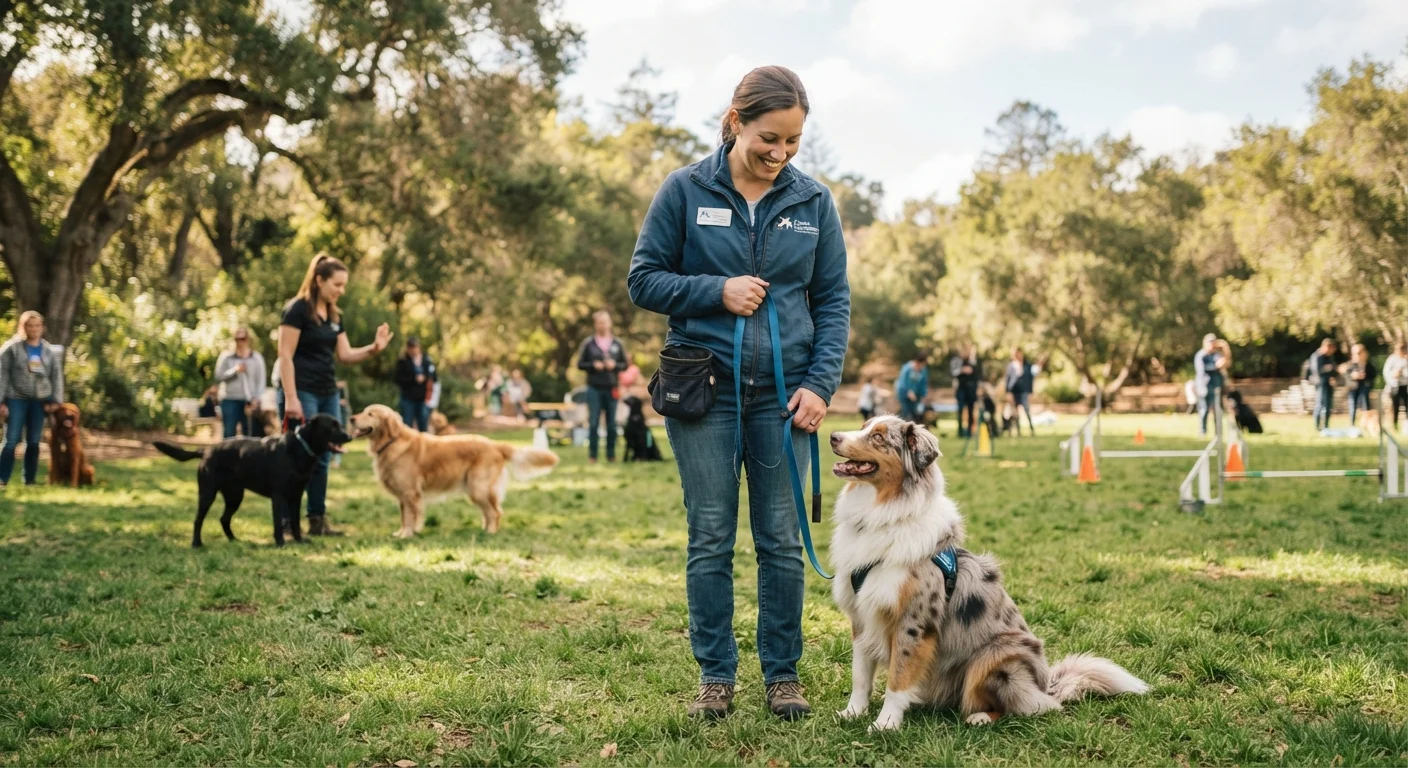
Group training classes offer something that solo practice simply can't replicate: real-world distraction. Your dog learns to focus on you while other dogs, people, and smells compete for their attention. That's genuinely valuable — but it also means that walking in underprepared can turn an exciting milestone into a stressful one for both of you.
Whether you've just welcomed a new puppy or you're working with a dog who needs a refresher, a little planning transforms your first class from chaotic to constructive. If you're still in the early settling-in phase, our guide on introducing a new pet to your home covers the foundational health and environment steps that should come first.
Use the checklist below to audit your readiness — gear, mindset, and your dog's baseline skills — before you walk through that classroom door.
Non-retractable leash (4–6 ft)
Provides safe, consistent control in close group settings without the unpredictability of a retractable line.
Treat pouch
Keeps high-value rewards accessible and easy to dispense quickly during fast-paced training moments.
Soft, small training treats
Small-sized, soft treats allow for rapid reinforcement without slowing the session or filling up your dog too quickly.
Front-clip harness or flat collar
Provides comfortable, humane control — confirm the appropriate equipment choice with your trainer before class.
Collapsible water bowl
Keeps your dog hydrated during classes held in warm or outdoor environments.
Vaccination and health records
Most training facilities require proof of current vaccinations before a dog can participate in group classes.
Before the Day of Class
Most of the work happens in the days leading up to your first session, not in the parking lot five minutes before it starts. Contacting your trainer early, handling paperwork, and doing a bit of light practice at home will put you well ahead of the curve.
Admin & Health Requirements
Gear to Pack
At-Home Practice Before Class
On the Day of Class
Don't Skip the Pre-Class Paperwork
Many facilities will turn dogs away if vaccination records are incomplete or missing. Contact your vet clinic at least a week in advance to request copies of your dog's records. Some clinics take several business days to process these requests, so don't leave it until the morning of class.
If your dog has a history of reactivity toward other dogs or strangers, let your trainer know before the first class — not during it. Many trainers can suggest modified placement, entry strategies, or even a one-on-one orientation session to set reactive dogs up for success.
Once your first class is behind you, the real work begins at home. Our article on building a training routine that sticks explains how to structure short, consistent sessions that reinforce what you've learned in class.
What to Expect — and How to Stay Patient
Your dog will probably be distracted, overstimulated, and maybe even a little wild during that first class. That's completely normal. Think of session one less as a performance and more as an orientation — for both of you. Trainers expect this, and a good class is designed with early chaos in mind.
Positive Reinforcement Is the Standard
Reputable group training classes today are built on positive reinforcement — rewarding behaviors you want to see more of, rather than punishing ones you don't. If a trainer ever instructs you to use physical corrections, choke chains, or punishment-based techniques, it's reasonable to ask questions or seek a different class. The American Veterinary Society of Animal Behavior and other professional bodies have raised concerns about aversive methods and their potential to increase fear and anxiety in dogs.
Training needs also shift depending on your dog's age. The strategies that work brilliantly for a four-month-old puppy look quite different for a three-year-old adult or a senior dog. Our guide on training dogs across the lifespan breaks down those differences in a clear, approachable way.
Above all, go in with realistic expectations and a spirit of curiosity. The relationship you're building with your dog through training is the real reward — the sit-stay and loose-leash walking are just the beginning.