

Key Takeaways
- Puppies benefit most from short, frequent sessions that focus on socialization and basic cues.
- Adult dogs can learn new behaviors — prior habits just require more patient, consistent effort.
- Senior dogs may need adjusted session lengths and gentler methods due to physical or cognitive changes.
- Positive reinforcement is effective and appropriate across all life stages.
- A dog's training needs are closely linked to their overall health at each life stage.
Why Life Stage Matters in Dog Training
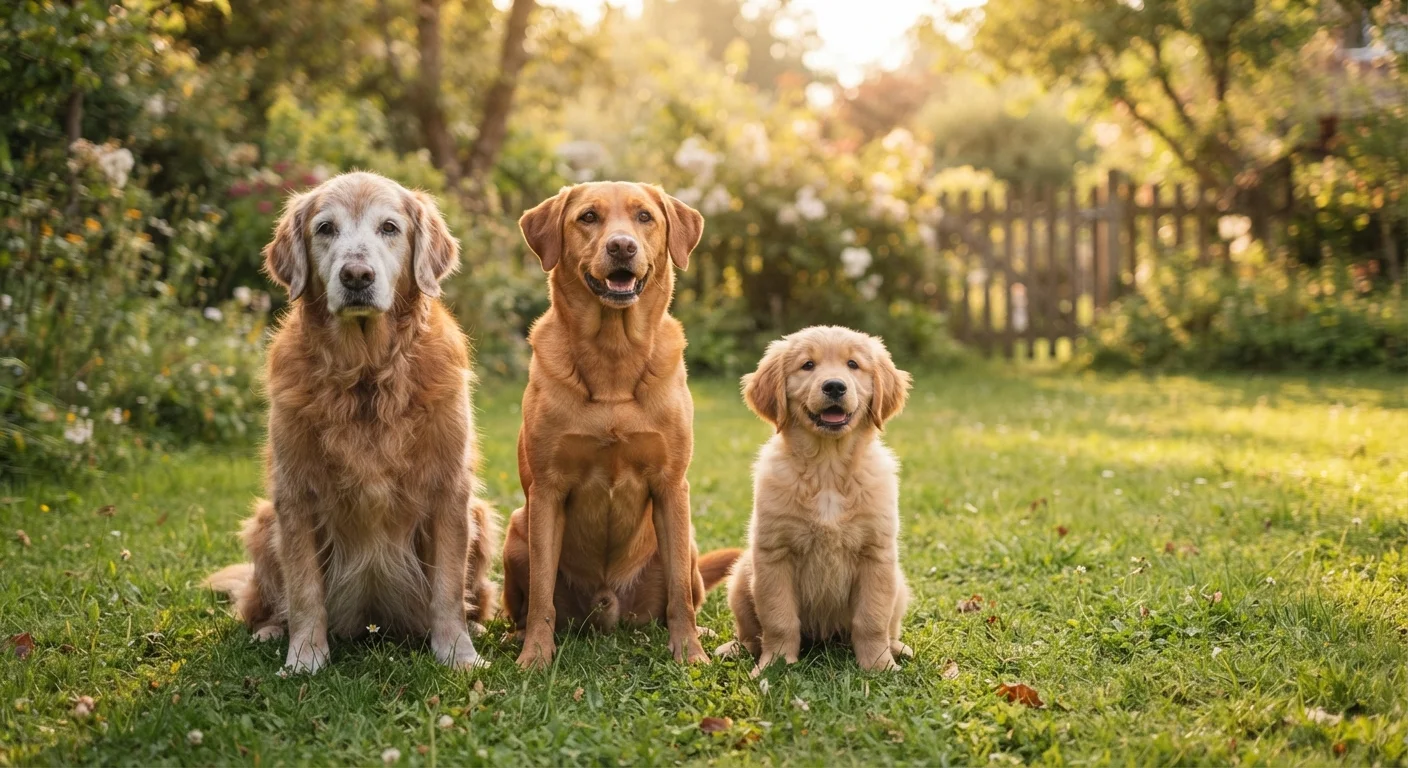
A dog is never the same learner at eight weeks as they are at eight years. Brain development, physical stamina, prior experience, and even sensory acuity all shift as dogs age — and training approaches that work brilliantly for a puppy may frustrate an older dog, or simply fall flat.
Understanding these differences isn't about lowering expectations. It's about meeting your dog where they genuinely are, which tends to produce faster, more lasting results. The evidence on positive reinforcement shows it works across species and ages — but how you apply it needs to adapt.
3–12 weeks
Primary socialization window in puppies
Behavioral researchers generally identify this as the period when positive exposure has the most lasting developmental impact.
~40%
Dogs in shelters are adults or seniors
Data from various U.S. animal welfare organizations suggests the majority of dogs awaiting adoption are past the puppy stage.
Training Puppies: Building the Foundation
The puppy period — roughly 8 to 16 weeks — is sometimes called the socialization window for good reason. During this time, young dogs are especially receptive to new experiences, sounds, people, and animals. What they learn now tends to stick.
Keep sessions short and positive: two to five minutes is often enough for a puppy under 12 weeks. Their attention spans are brief, and fatigue sets in quickly. Prioritize a few high-value skills: responding to their name, sit, come, and loose-leash walking. Layering too many cues at once creates confusion rather than competence.
Socialization is as important as obedience at this stage. Gentle, controlled exposure to different environments, handling, and people builds the emotional resilience that makes future training easier. If you're deciding on your marker method, our comparison of clicker training vs. verbal markers can help you choose what fits your household.
Start Socialization Early and Broadly
Introduce puppies to a wide range of gentle experiences — different surfaces, sounds, people of varying appearances, and other vaccinated dogs — during the socialization window. Always keep these exposures positive and low-pressure. A single scary experience during this period can have an outsized effect compared to the same experience later in life.
Training Adult Dogs: Refining and Redirecting
One of the most common misconceptions in dog ownership is that adult dogs — especially those adopted from shelters — can't be trained or retrained. The reality is that adult dogs are often excellent learners: they have longer attention spans than puppies, greater impulse control, and more physical stamina for sustained sessions.
The key challenge with adult dogs is existing habits. A behavior that's been reinforced for years (even unintentionally — like jumping up for greetings) has a strong history behind it. Changing it takes consistency, clear communication, and patience rather than punishment. For a structured approach to a specific skill, see our step-by-step guide to teaching stay.
Adult dogs also benefit from mental enrichment alongside obedience work — puzzle feeders, nose work, and trick training all build engagement and strengthen the human-animal bond.
When retraining an established adult dog habit, focus on teaching an incompatible replacement behavior rather than trying to suppress the unwanted one directly. A dog can't jump and sit at the same time.
Replacement behavior strategies tend to be faster and more durable than suppression alone, because they give the dog a clear, rewarded alternative to perform.
For senior dogs, switch to high-value, easy-to-chew treats and consider hand-targeting exercises — these are low-impact, cognitively stimulating, and easy on aging joints.
Cognitive engagement supports brain health in older dogs, and adjusting treat texture ensures the reward remains motivating even if dental sensitivity increases with age.
Training Senior Dogs: Adapting With Compassion
Senior dogs — generally considered 7 years and older, though this varies by breed size — deserve just as much engagement and mental stimulation as younger dogs. The idea that they're "too old" to train is a myth, but the approach does require thoughtful adjustment.
Physical comfort matters more at this stage. Arthritis, reduced hearing, and declining vision are common in older dogs and can all affect how they receive and respond to cues. A dog who no longer responds to their name may be experiencing hearing loss, not stubbornness. Check in with your veterinarian if you notice sudden changes in responsiveness or behavior — our resource on how health needs shift in ageing pets covers what to watch for.
Shorter sessions — five to ten minutes — and low-impact activities like scent games or gentle mat work are often ideal. Reinforce existing cues to keep them sharp, introduce new low-stress challenges, and always prioritize enjoyment over precision.
Don't Mistake Health Changes for Stubbornness
In senior dogs, sudden changes in behavior, responsiveness, or training performance often signal an underlying health issue rather than willfulness. Cognitive dysfunction, pain, vision loss, or hearing decline can all look like "bad behavior" on the surface. Always rule out a medical cause with your veterinarian before adjusting your training approach.
Consistency Across Every Stage
Whatever your dog's age, a few principles remain constant. Clear, consistent communication — the same cues, the same rewards, the same boundaries — gives dogs the predictability they need to feel secure and learn effectively. Training isn't a phase you complete; it's an ongoing conversation.
It's also worth remembering that training intersects with the whole of a dog's wellbeing. Nutrition, exercise, sleep, and social connection all influence how readily a dog can learn and regulate their behavior. Just as nutritional needs shift across life stages, so does the energy and attention a dog can bring to learning. And when major life changes arrive — a new home, a baby, another pet — preparing your dog thoughtfully can prevent stress-related setbacks in training.
Training across the lifespan isn't about perfection — it's about staying curious, staying kind, and staying connected to the dog in front of you.
This article is for general informational purposes only and is not a substitute for professional veterinary or certified trainer advice. If your dog is experiencing significant behavioral challenges or health-related changes, consult a qualified professional.