

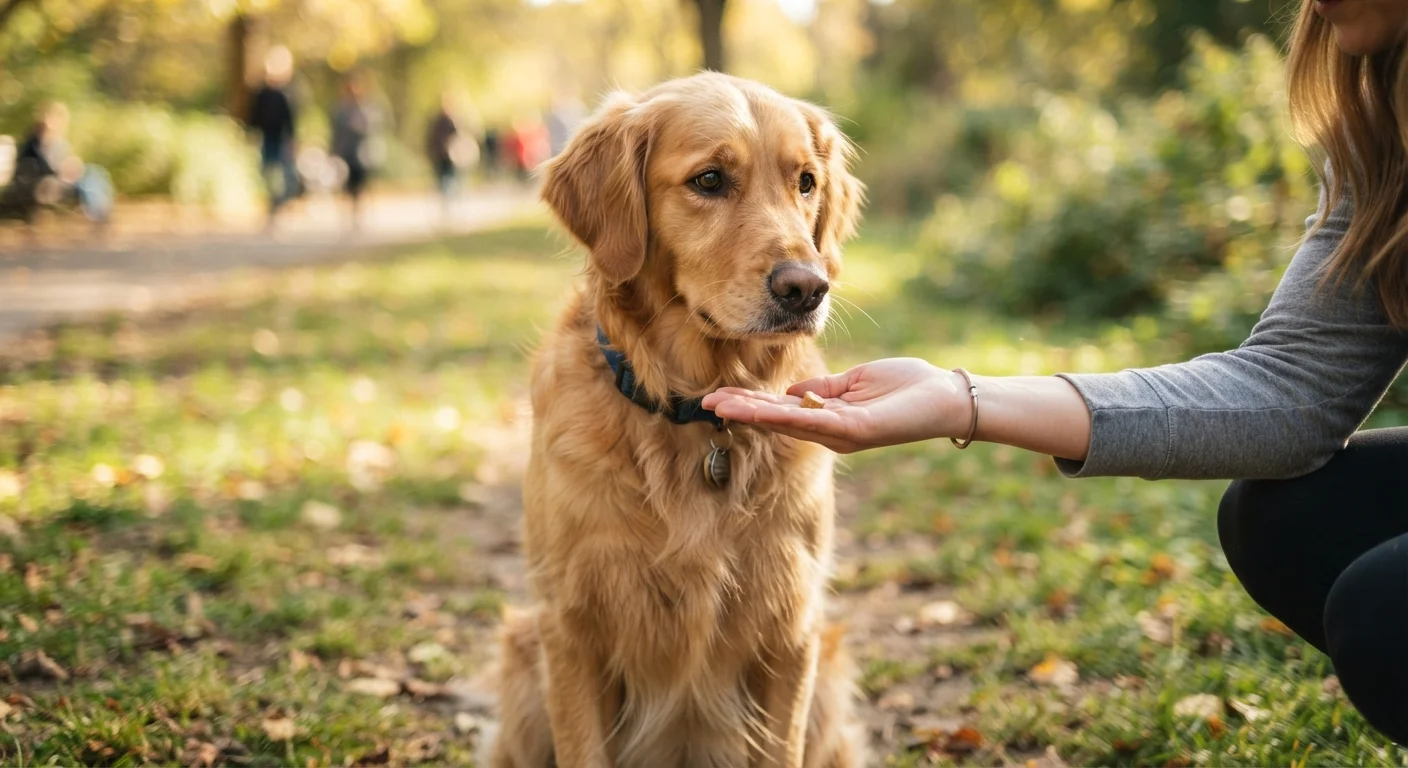
Key Takeaways
- Food rewards are one of the most effective tools for reinforcing new behaviors in pets.
- Over-reliance on treats can sometimes reduce a pet's motivation to respond without them.
- Treat quality, timing, and quantity all influence how well food rewards work.
- Most trainers recommend gradually fading treats as behaviors become reliable.
- Food rewards work best when paired with a clear marker signal like a clicker or verbal cue.
Highly motivating for most pets
Food taps into a basic biological drive, making it one of the fastest ways to get and hold a pet's attention during training. Even distracted or anxious animals often respond to a well-timed, high-value treat.
Speeds up the learning process
Positive reinforcement with food has strong support in behavioral science. When a reward closely follows a desired behavior, the association forms quickly and tends to be durable.
Low-stress for both pet and owner
Unlike correction-based methods, treat training rarely creates fear or anxiety. Sessions feel more like a game to the animal, which encourages engagement and builds trust.
Flexible and easy to customize
Treat value can be adjusted to match the difficulty of a task or the level of distraction in the environment — small kibble for easy skills, higher-value rewards for challenging new behaviors.
Strengthens the human-animal bond
Sharing positive experiences around food creates an emotional association between the owner and good things, gradually building a relationship of mutual trust and cooperation.
Risk of treat dependency
Some pets learn to respond only when a treat is visible or expected. If rewards aren't faded gradually, the behavior may weaken or disappear when food isn't present.
Can contribute to weight gain
Treats add calories. Without adjusting meal portions to account for training rewards, even small daily additions can lead to gradual weight gain — particularly in smaller breeds or less active pets.
Less effective for some animals or situations
Highly stressed, sick, or food-indifferent animals may not respond to treats at all. In high-distraction environments, even a motivated pet may struggle to focus on food as a reinforcer.
Timing errors can backfire
A treat delivered even a second or two late can reinforce the wrong behavior. This requires owners to develop coordination and awareness, which takes practice.
Our Verdict
Food rewards are genuinely effective and backed by behavioral science — they speed up learning, strengthen the human-animal bond, and make training sessions enjoyable for most pets. The key is using them strategically: starting with frequent rewards, then gradually shifting to intermittent reinforcement and other forms of praise as behaviors solidify. Misused, treats can create dependency or contribute to weight gain; used thoughtfully, they're hard to beat.
Food reward training is ideal for owners who want a science-supported, low-stress approach to building new behaviors — especially with puppies, kittens, or pets new to formal training.
Why Food Rewards Work So Well
At its core, food reward training is an application of operant conditioning — a well-established branch of behavioral science. When a desired behavior is followed quickly by something the animal values (like a tasty treat), the brain reinforces the connection. Over repetitions, the behavior becomes more frequent and more reliable.
For most dogs, cats, and many other pets, food is a primary motivator. It's consistent, portable, and doesn't require the animal to already trust or be bonded to the trainer. That makes it especially useful early in training, or when working with a new or rescue animal.
Food rewards also work naturally alongside marker training. If you're curious how signals like clickers or verbal cues fit into this picture, see our comparison of clicker training vs. verbal markers for a practical breakdown.
Highly motivating for most pets
Food taps into a basic biological drive, making it one of the fastest ways to get and hold a pet's attention during training. Even distracted or anxious animals often respond to a well-timed, high-value treat.
Speeds up the learning process
Positive reinforcement with food has strong support in behavioral science. When a reward closely follows a desired behavior, the association forms quickly and tends to be durable.
Low-stress for both pet and owner
Unlike correction-based methods, treat training rarely creates fear or anxiety. Sessions feel more like a game to the animal, which encourages engagement and builds trust.
Flexible and easy to customize
Treat value can be adjusted to match the difficulty of a task or the level of distraction in the environment — small kibble for easy skills, higher-value rewards for challenging new behaviors.
Strengthens the human-animal bond
Sharing positive experiences around food creates an emotional association between the owner and good things, gradually building a relationship of mutual trust and cooperation.
The Real Trade-Offs to Know About
Food rewards are effective, but they're not without complications. The most common concern trainers hear from owners is treat dependency — a pet who performs only when a snack is in view. This usually happens when treats are never faded after behaviors are learned. The fix is a gradual shift to intermittent reinforcement, where treats come unpredictably rather than every single time.
Calorie creep is a quieter concern. Small training treats add up across multiple daily sessions, and without adjusting meal portions, weight gain can follow. This is worth discussing with your veterinarian, particularly for pets who are already at the higher end of a healthy weight range.
Risk of treat dependency
Some pets learn to respond only when a treat is visible or expected. If rewards aren't faded gradually, the behavior may weaken or disappear when food isn't present.
Can contribute to weight gain
Treats add calories. Without adjusting meal portions to account for training rewards, even small daily additions can lead to gradual weight gain — particularly in smaller breeds or less active pets.
Less effective for some animals or situations
Highly stressed, sick, or food-indifferent animals may not respond to treats at all. In high-distraction environments, even a motivated pet may struggle to focus on food as a reinforcer.
Timing errors can backfire
A treat delivered even a second or two late can reinforce the wrong behavior. This requires owners to develop coordination and awareness, which takes practice.
Treat Size Matters More Than You Think
During training sessions, treats should be tiny — roughly pea-sized for dogs, even smaller for cats. This lets you reward frequently without overfeeding. Break larger treats into smaller pieces before sessions begin. If you're training multiple times a day, consider using a portion of your pet's regular meal as training rewards instead of adding extra food on top.
Making Food Rewards Work Long-Term
The most effective approach combines food rewards with a clear training structure. Start new behaviors with frequent, well-timed rewards. As the behavior becomes reliable, begin spacing treats out — first every other repetition, then randomly. Pair food with verbal praise so that praise itself starts to carry reinforcing value.
Treat quality is as important as frequency. A soft, smelly, high-value treat (think small pieces of cooked chicken or commercial soft training treats) will outperform dry kibble in challenging environments. Save your best rewards for the hardest tasks.
72%
Pet owners who use treats as a primary training tool
According to the American Pet Products Association's owner surveys, the majority of dog owners in the US report using food rewards regularly during training.
~10%
Recommended daily caloric limit from treats
Most veterinary nutritionists suggest treats should make up no more than 10% of a pet's total daily calorie intake to avoid nutritional imbalance.
Training cats follows similar principles, though their motivation profile can differ. Our article on training cats effectively covers what adjustments to make for feline learners. And if you're thinking more broadly about your approach to reinforcement, positive reinforcement vs. correction-based training offers a helpful comparison of the wider philosophies.
This article is for general informational and educational purposes only. For specific guidance on your pet's diet, health, or behavioral needs, consult a qualified veterinarian or certified animal trainer.