

Key Takeaways
- Dental disease is one of the most common health conditions diagnosed in adult dogs and cats.
- Bacteria from infected gums can travel through the bloodstream and affect the heart, kidneys, and liver.
- Most pets show few obvious signs of dental pain, making regular veterinary checks essential.
- Home care routines, including tooth brushing, meaningfully reduce plaque and tartar buildup.
- Dental health needs increase as pets age, requiring closer monitoring in senior animals.
Pet Dental Health
Pet dental health refers to the condition of your animal's teeth, gums, and surrounding oral tissues. It encompasses prevention and treatment of issues like plaque buildup, tartar, gum disease, and tooth decay. Because the mouth connects directly to the bloodstream, oral disease can affect organs well beyond the mouth itself.
Periodontal disease — inflammation and infection of the structures supporting the teeth — is among the most commonly diagnosed conditions in dogs and cats, often progressing silently before obvious symptoms appear.
Why the Mouth Is a Window to Your Pet's Body
It's easy to think of your pet's teeth as separate from their broader health — something to address only if there's obvious pain or a foul smell. But veterinary science tells a different story. The mouth is deeply connected to the rest of the body through the bloodstream, and what happens in the gums doesn't stay in the gums.
When bacteria accumulate along the gumline and trigger inflammation — a condition called periodontal disease — they can enter the bloodstream during everyday activities like chewing. Over time, this bacterial exposure has been linked to changes in the kidneys, liver, and heart. For pet owners who prioritize preventive care, understanding this connection is genuinely important, not just a dental sales pitch.
Dental disease is also far more prevalent than most owners realize. Studies consistently show that the majority of dogs and cats over age three have some form of periodontal disease, often without any outward signs of discomfort. See how dental health fits into broader welfare responsibilities for a fuller picture of the care dimensions many owners overlook.
Silent Suffering Is Common in Pets
Dogs and cats are instinctively inclined to hide pain, an evolutionary trait from their wild ancestors. This means a pet with significant dental disease may appear completely normal — eating, playing, and behaving as usual. Regular veterinary oral exams are the most reliable way to detect problems your pet won't show you.
The Systemic Risks of Untreated Oral Disease
Periodontal disease doesn't just cause local discomfort. Research in veterinary medicine has documented associations between chronic oral infections and damage to major organs. The kidneys and liver, which filter the blood, are particularly exposed to circulating bacteria. The heart — specifically its valves — can also be affected, with some studies suggesting dogs with severe dental disease are at higher risk for certain cardiac conditions.
This doesn't mean every pet with tartar will develop organ disease, and the nature and strength of these associations are still being studied. But the biological plausibility is sound: persistent infection creates an ongoing inflammatory burden that the body's vital systems must manage. Reducing that burden through good oral care is part of a responsible preventive approach.
80%
Dogs over age 3 with some periodontal disease
According to the American Veterinary Medical Association, an estimated 80% of dogs show signs of periodontal disease by age three.
70%
Cats over age 3 with oral disease
Veterinary dental specialists estimate that approximately 70% of cats over age three have some degree of dental disease, much of it undetected by owners.
This is especially worth keeping in mind for senior pets, whose immune systems may be less equipped to compensate. The health needs of ageing pets shift in ways that make dental vigilance increasingly important over time.
Building a Practical Home Dental Care Routine
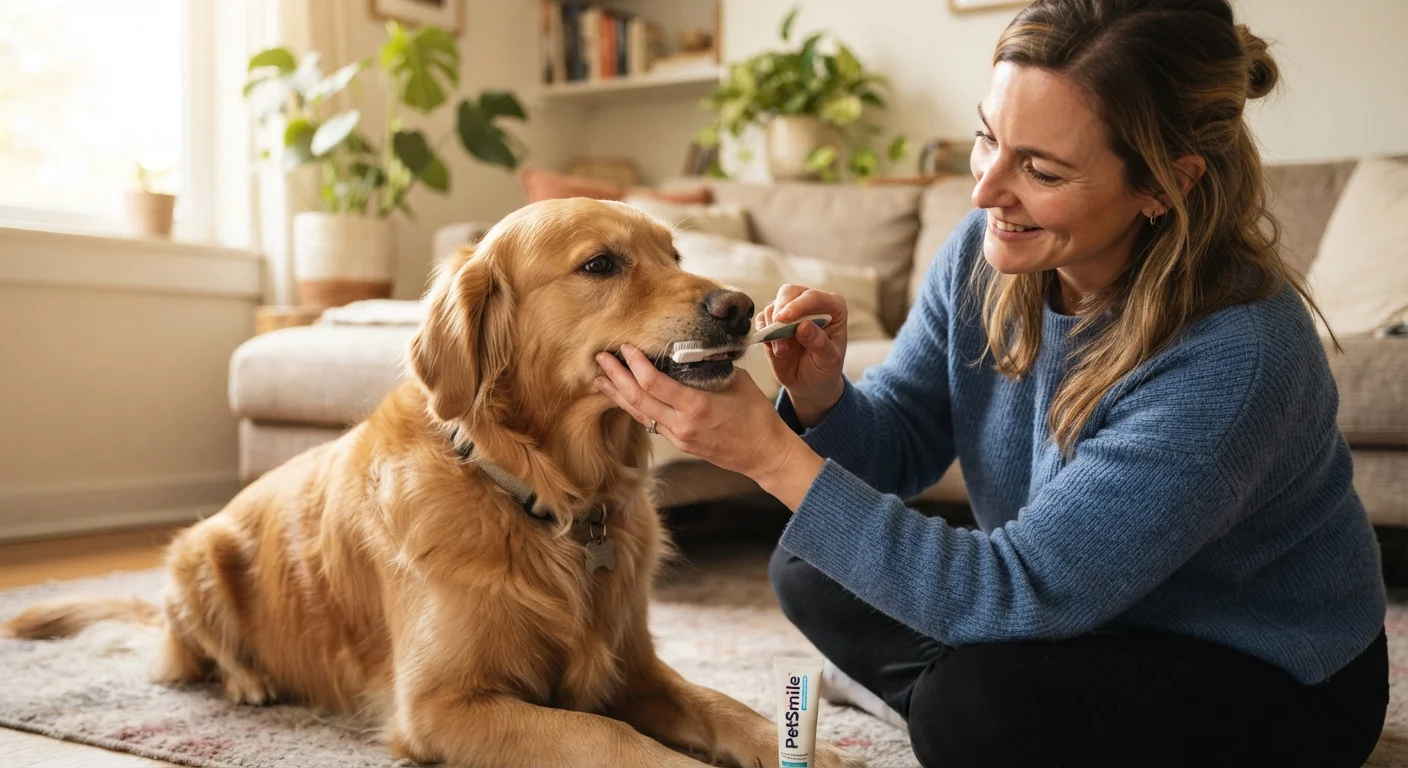
Veterinary dental cleanings — performed under anesthesia to allow thorough scaling and examination — are the foundation of professional oral care. But what happens between those appointments matters too. Daily tooth brushing using pet-safe toothpaste is the most effective home intervention supported by evidence. Human toothpaste is not appropriate for pets and should never be used.
If brushing isn't immediately feasible for your pet, a gradual introduction works best: start by letting your pet taste the toothpaste, progress to gently touching the teeth with a finger brush, then introduce a toothbrush over several weeks. Patience and positive association make a meaningful difference.
Start Slow, Stay Consistent
If your pet resists tooth brushing, don't force it — forced handling can create lasting aversion. Instead, build positive associations over days or weeks using small steps and rewards. Even brushing every two to three days provides meaningful benefit compared to no brushing at all.
Beyond brushing, veterinary-approved dental chews and oral rinses can help reduce plaque between cleanings. Your veterinarian is your best resource for matching products to your specific pet's needs. Dental health is also a natural part of the annual pet health checklist that every owner should work through each year.
Building a solid dental care routine also means building a strong relationship with your vet. Open, ongoing conversation about your pet's oral health — including concerns you notice at home — is exactly the kind of proactive partnership described in building a relationship with your veterinarian.
This article is for general informational purposes only and is not a substitute for professional veterinary advice. Always consult a licensed veterinarian for guidance specific to your pet's health needs.