

Key Takeaways
- Casual prioritizes comfort and personal ease; smart casual adds visible polish and intentionality.
- The distinction lies in fit, fabric choice, and how deliberately an outfit is assembled.
- Smart casual is not a step toward formal — it is its own defined register with its own rules.
- Footwear is often the fastest way to shift an outfit from casual to smart casual.
- Context matters: the same event may read as casual or smart casual depending on the setting and host.
Option A
Casual
The everyday, comfort-first default.
Best for: Relaxed social settings, errands, leisure time, and anywhere dress expectations are minimal or unstated.
Option B
Smart Casual
The polished middle ground between casual and formal.
Best for: Social dinners, low-key professional settings, creative workplaces, and events where you want to look considered without dressing up fully.
If you're dressing for a relaxed weekend with no particular destination in mind
Casual
Casual dressing is built for low-stakes comfort. There are no expectations to meet, so prioritize what feels right for your body and mood.
If you've been invited to a dinner party or casual drinks with colleagues
Smart Casual
These settings carry an unspoken expectation that you've made an effort. Smart casual lets you look thoughtful without overdressing.
If your workplace is relaxed but client-facing on some days
Smart Casual
Smart casual gives you the flexibility to look professional on demand without committing to full business attire daily.
If the invitation says 'come as you are' or 'no dress code'
Casual
Truly open dress codes are an invitation to be comfortable. Defaulting to smart casual here can feel unnecessarily stiff.
Why These Two Terms Get Confused
Both "casual" and "smart casual" appear constantly on invitations, workplace policies, and style guides — yet almost nobody defines them precisely. The confusion is understandable: neither term has a universally fixed meaning, and both shift depending on cultural context, region, and setting. What reads as smart casual at a Brooklyn rooftop bar may read as underdressed at a Chicago steakhouse.
Still, the two terms describe meaningfully different things, and understanding the distinction will make you more confident when interpreting dress codes. For a broader look at how dress codes function across the full spectrum, this dress code breakdown offers useful context.
The core difference is not about specific garments — it's about the level of intention behind an outfit.
What Casual Actually Means
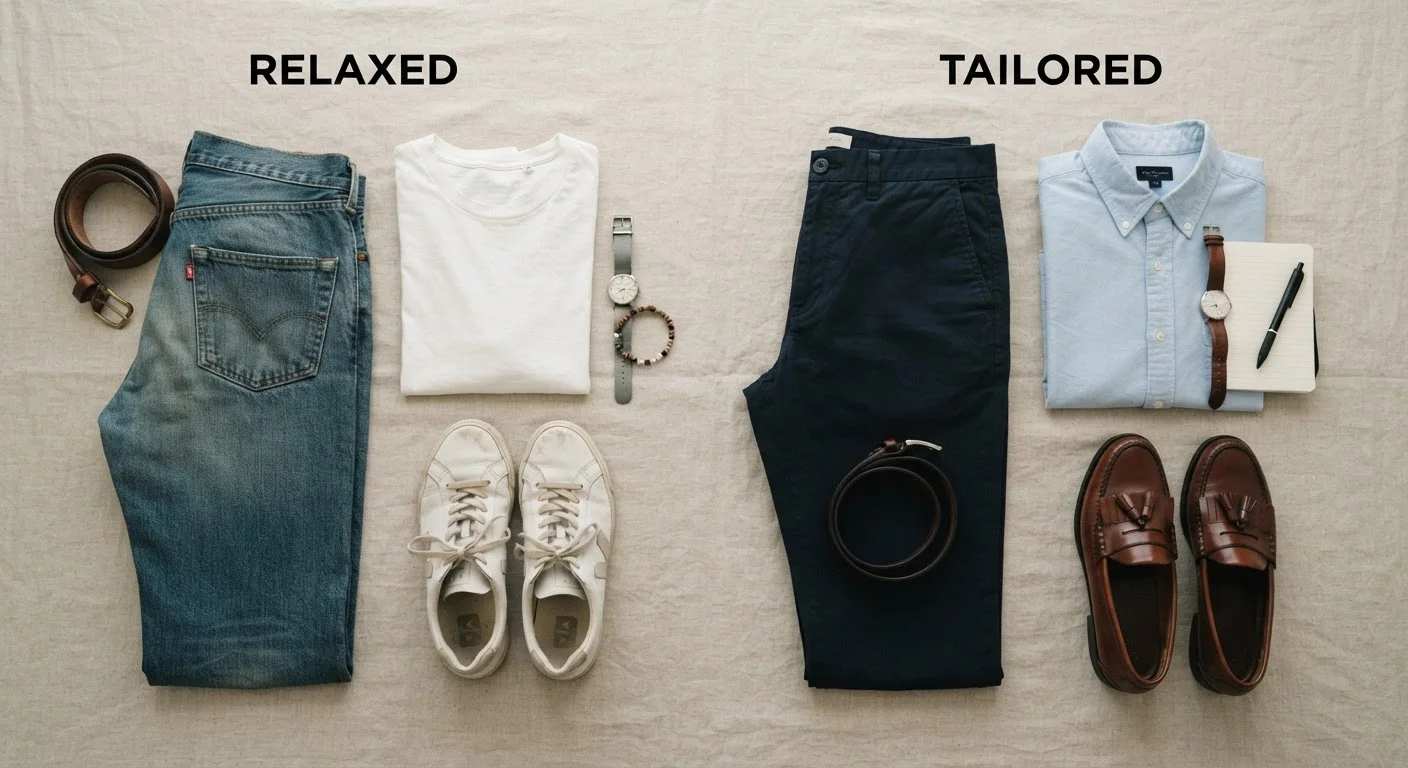
Casual dress is defined by comfort, ease, and low effort — in a positive sense. It reflects clothing chosen for personal preference rather than external expectations. Jeans, T-shirts, hoodies, sneakers, and similar everyday items all fall comfortably within casual territory.
Crucially, casual does not mean sloppy. A well-fitted pair of jeans and a clean crewneck sweater is casual. A wrinkled, ill-fitting outfit that looks pulled from the floor is just underdressed. The distinction matters because casual is a legitimate register with its own standards — it simply sets those standards around ease and personal comfort rather than formality.
Fabric and structure are generally relaxed in casual dressing: soft knits, denim, jersey, cotton basics. Silhouettes tend to be loose or relaxed. Footwear is functional rather than formal — sneakers, loafers worn without socks, casual leather shoes, or sandals in warmer months.
| Criterion | Casual | Smart Casual |
|---|---|---|
| Primary goal | Comfort and ease | Polished but relaxed appearance |
| Typical trousers | Jeans, joggers, chinos | Tailored chinos, dress trousers, dark clean denim |
| Tops | T-shirts, hoodies, casual knits | Button-down shirts, structured tops, blazer-friendly layers |
| Footwear | Sneakers, sandals, casual flats | Leather shoes, loafers, clean boots, dressy flats |
| Fit expectations | Relaxed; personal comfort first | Well-fitted; silhouette matters |
| Fabric quality | Jersey, denim, fleece, cotton basics | Linen, merino, structured cotton, quality blends |
| Accessories | Optional or minimal | Deliberately chosen to complete the look |
What Smart Casual Actually Means
Smart casual occupies a precise middle ground: more considered than everyday casual, but without the rigidity of business or formal attire. The word "smart" here is doing specific work — it signals that your choices look deliberate. The outfit should appear assembled, not just grabbed.
In practice, smart casual typically involves at least one elevated element. That might be tailored trousers instead of jeans, a structured blazer over a plain tee, or clean leather shoes where you'd normally wear sneakers. Fit becomes more important: garments should sit well on the body without excess fabric. Fabric quality tends to be more visible — linen, merino wool, structured cotton, and similar materials read as more intentional than jersey or fleece.
Accessories also play a role in crossing from casual to smart casual. Thoughtful accessory choices — a simple watch, a leather belt that matches your shoes, or minimal jewellery — signal the kind of attention to detail that defines smart casual without tipping into over-dressed territory.
41%
Workers in hybrid or flexible dress environments
A survey by the Society for Human Resource Management found that a significant share of US workplaces have moved toward flexible or casual-leaning dress policies, making smart casual a frequently needed default register.
1 item
Minimum elevated element to shift a look
Style educators broadly agree that replacing a single casual item — such as swapping sneakers for loafers — is often sufficient to move an outfit from casual to smart casual territory.
The Practical Test: How to Tell Which One to Wear
When you're uncertain which register is appropriate, consider three questions. First: is this a social event where the host or venue has a level of formality implied by its nature? A neighborhood cookout points to casual; a rooftop gathering at a cocktail bar points to smart casual. Second: will you likely meet people for the first time, or is this purely personal company? New impressions generally benefit from the extra effort of smart casual. Third: does the invitation say anything at all? Explicit terms like "relaxed" or "come as you are" give you permission to go fully casual.
When in doubt, smart casual is the safer default for ambiguous social situations. It is almost impossible to look out of place by appearing more put-together than necessary — the opposite error is far more visible.
Understanding when to adapt your style to context — and when your own preferences should take priority — is a broader skill. Balancing occasion dressing with personal style explores that tension in more depth. And for a wider view of which fashion principles genuinely hold up in practice, this guide to style rules worth keeping is worth reading alongside this one.
Fabric Choice Matters More Than You Think
One of the fastest ways to read whether an outfit is casual or smart casual is to look at the fabric. Structured materials like linen, merino, or tailored cotton read as more intentional regardless of the garment's silhouette. For a deeper understanding of how fabric choices affect the overall impression of an outfit, this comparison of natural and synthetic fabrics covers how different materials behave and present in everyday wear.