

| Most common workplace dress code | Business casual |
| Formality spectrum | Casual → Smart Casual → Business Casual → Business Formal → Cocktail → Black Tie |
| Key factor when in doubt | Err slightly more formal rather than less |
| Single biggest outfit upgrade | Proper fit — regardless of price point or dress code |
Why Dress Codes Still Matter
Dress codes exist to signal context — they communicate the tone of an event, the expectations of a workplace, or the culture of a social setting. But the language used to describe them has grown increasingly blurry. Terms like business casual and smart casual are often used interchangeably, yet they carry meaningfully different expectations.
Getting it right isn't about rigid rule-following. It's about reading a situation accurately so your clothing works for you rather than against you. This guide breaks down the most commonly encountered dress codes in plain terms, so you can interpret any invitation or office policy with confidence.
For a broader look at which fashion principles hold up and which don't, see our guide to style rules worth keeping.
| Most common workplace dress code | Business casual |
| Formality spectrum | Casual → Smart Casual → Business Casual → Business Formal → Cocktail → Black Tie |
| Key factor when in doubt | Err slightly more formal rather than less |
| Single biggest outfit upgrade | Proper fit — regardless of price point or dress code |
The Core Dress Codes, Defined
Most dress codes fall along a spectrum from highly formal to fully relaxed. Here's how to read each level:
Black Tie
The most formal standard for evening events. For men, this means a tuxedo with a bow tie. For women, floor-length gowns are traditional, though elegant cocktail-length dresses are increasingly accepted at less strict events. The key word here is evening — fabrics, colors, and silhouettes should reflect that.
Cocktail Attire
A step below black tie, cocktail attire calls for polished but not maximally formal dressing. Knee-to-midi length dresses or tailored separates work well for women; a dark suit is the standard for men. Avoid overly casual fabrics like denim or jersey.
Business Formal
The traditional professional standard. Think structured suits in neutral tones, collared dress shirts, and closed-toe dress shoes. This code applies in formal corporate environments, legal settings, or high-stakes professional meetings.
Business Casual
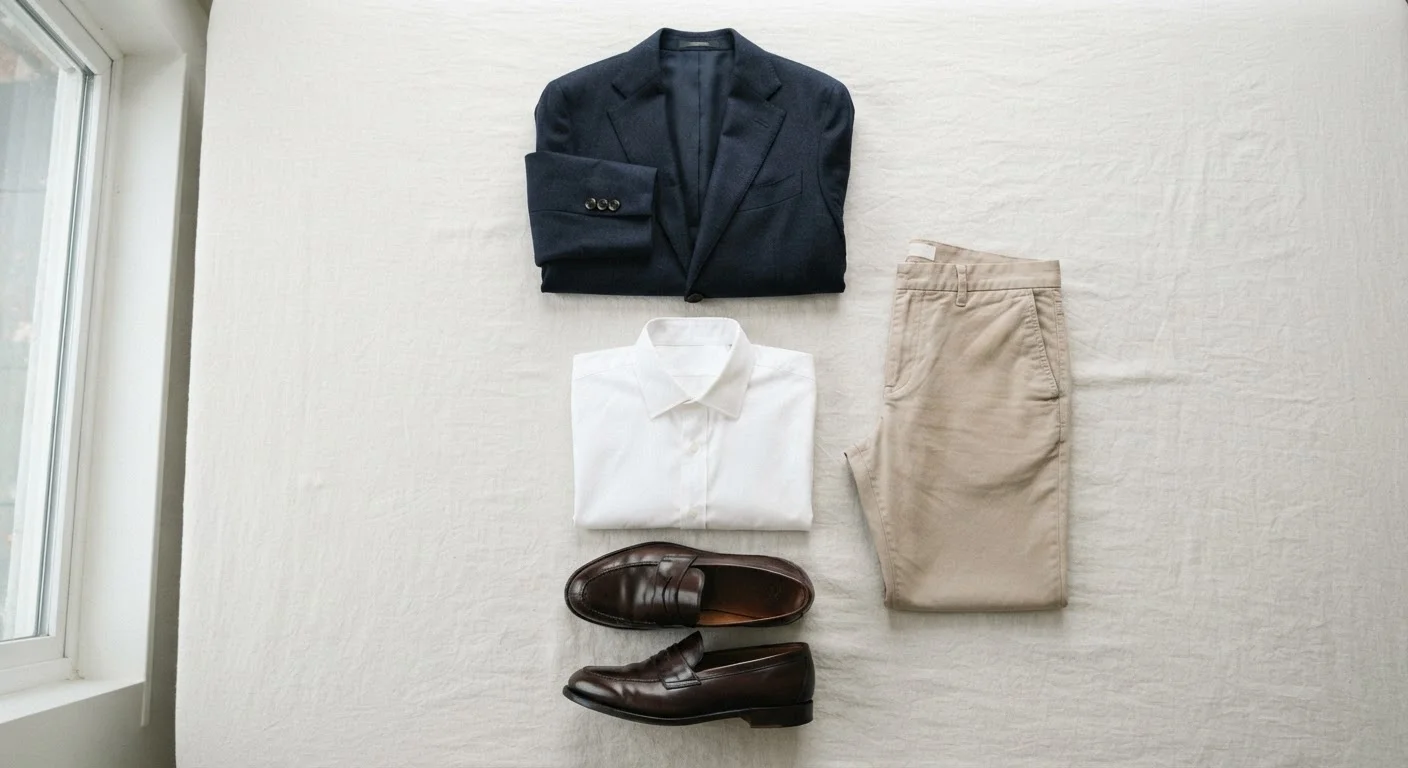
Perhaps the most misread code of all. Business casual retains a professional appearance while relaxing strict suiting requirements. Chinos, tailored trousers, collared shirts, blouses, and blazers all fit this register. Jeans, t-shirts, and athletic wear generally do not — though some workplaces have shifted these boundaries.
Black Tie
A formal evening dress code requiring a tuxedo for men and typically a floor-length gown or sophisticated formal attire for women. It signals the highest level of formality outside of white tie.
Business Casual
A professional dress standard that relaxes full suiting requirements while maintaining a polished, workplace-appropriate appearance. Collared shirts, blouses, chinos, and blazers are typical; denim and athletic wear are usually excluded.
Smart Casual
A style register that is more intentional and refined than everyday casual, but without the professional formality of business attire. Well-fitted, cohesive outfits in quality fabrics are the benchmark.
Cocktail Attire
A semi-formal dress code associated with evening social events. It calls for tailored, elegant clothing — typically knee-to-midi dresses or suits — without reaching the full formality of black tie.
Dress Code Register
The level of formality conveyed by a dress code category. Understanding the register helps you calibrate your outfit to match the social or professional context of an event.
Smart Casual
Smart casual sits between business casual and everyday casual. It implies a put-together look without a professional context. Well-fitted dark jeans can work here; so can clean sneakers, knit tops, and unstructured jackets. The goal is intentional dressing — nothing looks thrown together. For a deeper comparison, see where the line actually falls between casual and smart casual.
Casual
Casual means relaxed and comfortable, but it doesn't mean careless. Clean, well-fitting clothes in good condition still matter. Think everyday separates, relaxed jeans, and comfortable footwear — but not torn, stained, or overly distressed items unless the specific setting calls for it.
How to Apply This in Practice
When you receive an invitation or encounter a dress code policy, start by identifying the setting and time of day. Evening events almost always call for a more elevated standard than daytime ones. Corporate environments typically skew more formal than creative industries, even at the same dress code label.
When in doubt, it's generally safer to err slightly more formal — arriving overdressed rarely causes the same friction as appearing underdressed. That said, appropriateness matters more than formality. A sequined gown at a garden party casual lunch is as mismatched as jeans at a cocktail reception.
Accessories and fit also carry significant weight regardless of dress code. A well-fitting outfit in moderate-price fabrics reads more polished than an ill-fitting expensive one. For guidance on keeping accessories proportionate, see our guide to accessorising with restraint.
Dress codes also intersect with personal expression — and navigating that balance is its own skill. Our article on dressing for occasion versus dressing for yourself explores that tension in depth.