

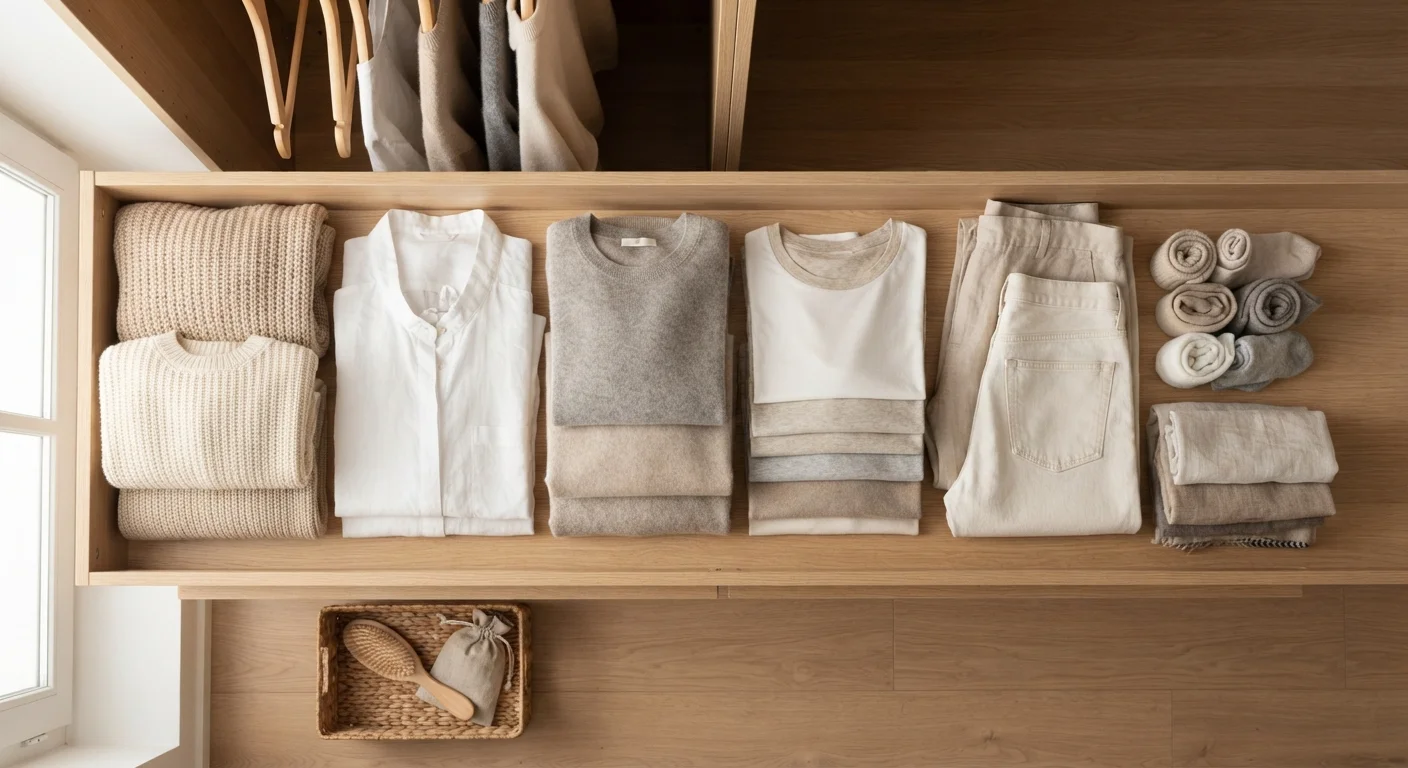
Key Takeaways
- Rotating your wardrobe seasonally reduces clutter and makes daily dressing faster and more intentional.
- Every transition is an opportunity to reassess what actually gets worn — not just what you own.
- Clean and repair clothes before storing them to prevent fabric damage over time.
- Transitional pieces that work across multiple seasons deserve a permanent spot in your accessible closet.
- A consistent rotation process compounds over years into a more functional, better-curated wardrobe.
Summary
22 items · 1–3 hours
Why Seasonal Rotation Is Worth the Effort
Rotating your wardrobe between seasons isn't about following a rigid rule — it's a practical habit that keeps your closet functional rather than overwhelming. When every item you own is visible and competing for your attention, choosing an outfit becomes harder, not easier. A thoughtfully rotated wardrobe surfaces only what's relevant, so your decision-making is simplified before the day even starts.
If you're building your closet from the ground up, see our practical starting point for any style before diving into rotation. And if you haven't recently taken stock of what you already own, our wardrobe audit guide is a natural companion to this checklist.
Below is a structured checklist to walk you through the full rotation process — from pulling things out to putting them away properly.
Breathable fabric storage bins or cotton garment bags
Store off-season clothing without trapping moisture, which can cause mildew and fabric damage.
Sturdy, uniform hangers
Maintain garment shape in your active closet and create a visually organized hanging section.
Cedar blocks or lavender sachets
Naturally deter moths and absorb odor in storage containers, particularly for natural-fiber pieces.
Labels or a label maker
Mark storage containers clearly so you can locate specific items without unpacking everything.
A full-length mirror
Evaluate how items actually fit and move when deciding whether they earn a spot in your active closet.
The Seasonal Rotation Checklist
Work through these groups in order. The process moves from assessment and sorting through cleaning, storing, and finally refreshing what stays in your active closet.
Assessment & Sorting
Cleaning Before Storage
Storage & Organisation
Refreshing Your Active Closet
Final Review
Don't Store Unwashed Clothes
Storing clothes that haven't been properly laundered is one of the most common and costly wardrobe mistakes. Oils, sweat, and even invisible food residue oxidize over months and can permanently stain fabric. Moths and insects are also attracted to soiled natural fibers. Always clean before you store — no exceptions for items that look visually clean.
Making the Most of What Stays
Once the off-season pieces are packed away, spend a few minutes looking at what remains with fresh eyes. This is often when you notice that certain items feel mismatched or uninspiring despite being perfectly wearable on their own. If that sounds familiar, the issue is usually about combination rather than quality — something our piece on why outfits feel off even when the clothes are nice addresses directly.
Transitional pieces — layering tops, lightweight knits, dark denim, neutral trousers — are the backbone of any rotation. These are the items worth investing care in, because they earn their closet space across multiple seasons. If you find your active closet still feeling overstuffed after rotation, it may be worth exploring how a capsule wardrobe approach can reduce that friction permanently.
Rotation Is a Reassessment, Not Just a Shuffle
Every seasonal transition is a natural checkpoint for your wardrobe as a whole. Avoid the habit of automatically repacking everything that came out last year — use this moment to ask whether each piece still fits your life, your body, and the outfits you actually want to put together. A wardrobe that gets critically reviewed twice a year gradually becomes more intentional and less cluttered over time.
This article provides general wardrobe organization guidance for informational purposes only. Individual storage conditions, fabric care requirements, and climate factors vary — always follow the care label instructions on your specific garments.