

Key Takeaways
- A capsule wardrobe works through intentional selection, not deprivation — quality and compatibility matter most.
- Fewer, well-chosen pieces typically generate more usable outfit combinations than a cluttered closet.
- A neutral color palette forms the foundation; accent pieces add personality without disrupting cohesion.
- A capsule wardrobe is personal — it should reflect your actual lifestyle, not an idealized one.
- Starting with a wardrobe audit is the most practical first step before adding or removing anything.
Capsule Wardrobe
A capsule wardrobe is a small, intentional collection of clothing pieces that work together to create a wide variety of outfits. The idea is to own fewer items — typically between 25 and 50 — chosen because they complement each other rather than compete. Every piece earns its place by being versatile, well-fitting, and aligned with your real daily life.
The term was popularized by London boutique owner Susie Faux in the 1970s and later brought to mainstream attention through Donna Karan's '7 Easy Pieces' collection in 1985.
Why a Packed Closet Can Feel Like Nothing to Wear
If you've ever stood in front of a full closet and felt completely stuck, you're not imagining things. Research in decision science consistently shows that too many options can lead to decision fatigue — a state where making even small choices becomes mentally exhausting. A wardrobe with 80 items that don't coordinate creates more friction than a wardrobe of 30 pieces that all work together.
This is the core logic behind the capsule wardrobe. It's not about owning less for the sake of minimalism. It's about owning the right things so that getting dressed takes less mental effort and produces better results. When every item in your closet plays well with the others, you naturally unlock more outfit options, not fewer.
If your outfits regularly feel uninspiring despite having plenty of clothes, the issue is usually compatibility, not quantity. Understanding why outfits feel off even when individual pieces are nice is a useful companion concept here.
~80%
Clothes worn only 20% of the time
The 80/20 rule is widely cited in wardrobe psychology: most people regularly wear only about 20% of what they own, suggesting significant room to curate more intentionally.
25–50
Typical capsule wardrobe item count
Most capsule wardrobe frameworks recommend a range of 25 to 50 total clothing items, tailored to individual lifestyle and seasonal needs.
100+
Outfit combinations from 30 core pieces
With strong interoperability across tops, bottoms, and layers, a 30-piece capsule can realistically generate well over 100 distinct outfit combinations.
How a Capsule Wardrobe Actually Works
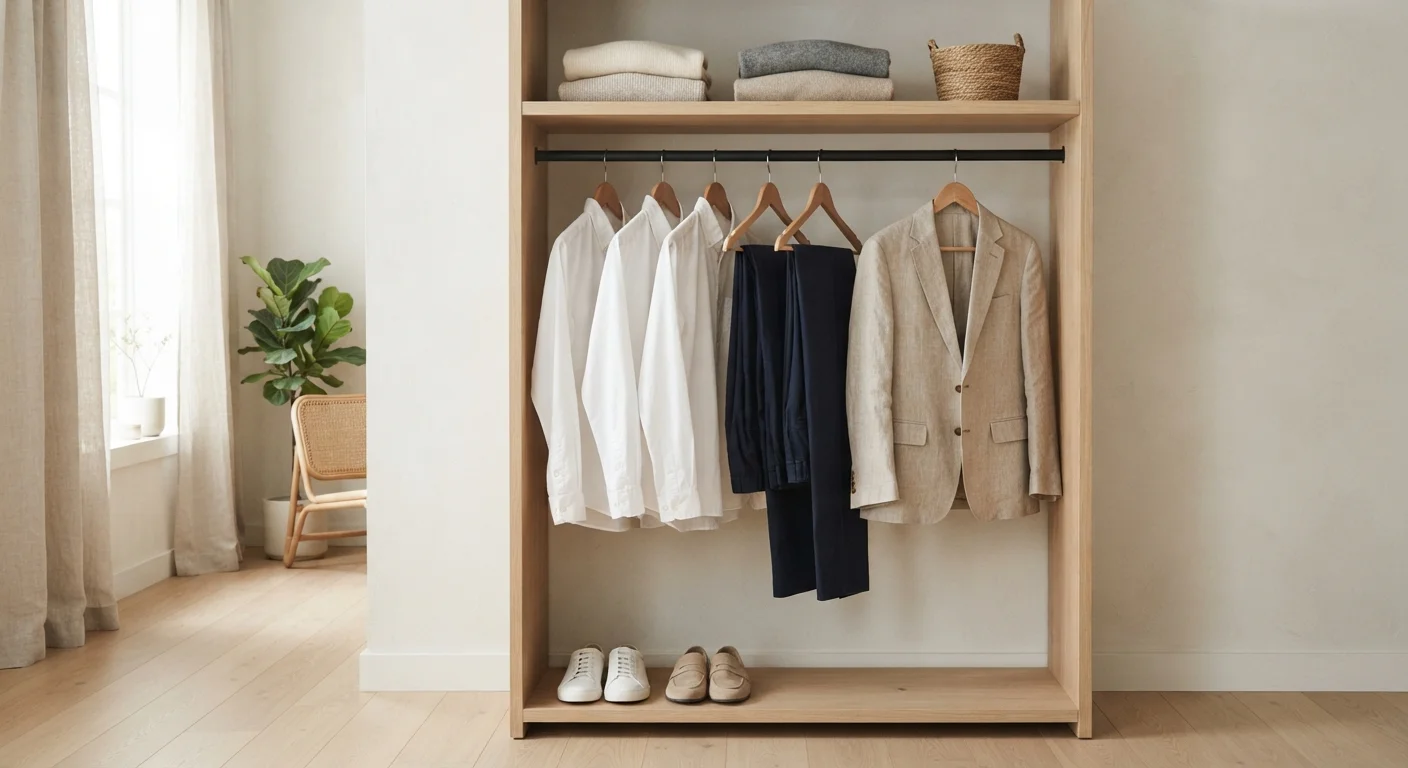
The mechanics are straightforward. A capsule wardrobe is built around a core of neutral, versatile pieces — think well-fitting trousers, a crisp white shirt, a structured blazer, a knit in a foundational color — that serve as the backbone of most outfits. These neutrals are then complemented by a smaller number of accent pieces that introduce personality: a patterned blouse, a colored shoe, a statement layer.
The key multiplier effect comes from interoperability. If you have five tops that all work with four bottoms, you already have twenty outfit combinations before adding layers or accessories. When you factor in footwear and outerwear, the combinations multiply further. Compare this to a closet full of items that only work as one specific outfit each — the math shifts dramatically.
Accessories play a meaningful role in this system. A single scarf, belt, or pair of earrings can shift the register of an outfit from casual to polished without adding bulk to your wardrobe. Restraint in accessorizing, applied thoughtfully, extends a capsule without inflating it.
Test Interoperability Before Committing
Before adding a new piece to your capsule, mentally pair it with at least three items you already own. If it works naturally with fewer than two, it risks becoming a 'single-outfit' item that reduces overall flexibility. The more an item can do, the more value it adds to the system.
Building Your Own: Practical Starting Points
A capsule wardrobe is most effective when it reflects your actual life — not a curated fantasy of who you'd like to be. If you work from home four days a week, a wardrobe heavy on formal office wear won't serve you. Start by honestly mapping how you spend your time, then identify the categories of clothing you actually need.
From there, a wardrobe audit is the most useful first move. Before buying anything new, take stock of what you already own, what fits well, and what you genuinely reach for. A structured wardrobe audit helps you identify gaps and duplicates so you're building on a clear foundation rather than guessing.
If you're starting with very little, or rebuilding after a major life change, building a wardrobe from scratch covers the foundational decisions in practical terms. And once you have a functioning capsule, managing seasonal transitions keeps it relevant year-round without starting over each time.