

Key Takeaways
- What you do at the accident scene directly shapes the strength of your insurance claim.
- Reporting promptly and accurately to your insurer is critical — delays and inconsistencies can hurt your case.
- Collecting thorough documentation — photos, police reports, and witness contacts — protects you if disputed.
- Avoid admitting fault or arranging repairs before your insurer has assessed the damage.
- Understanding your coverage terms before filing helps you set realistic expectations.
What you will need
Why Your Actions After an Accident Matter
Most drivers assume the insurance claim process begins when they call their insurer. In reality, it begins the moment an accident occurs. The decisions you make — or fail to make — in the minutes and hours that follow can materially affect whether your claim is approved, how quickly it resolves, and how much you ultimately recover.
Insurers investigate claims carefully. Adjusters look for consistent accounts, contemporaneous documentation, and timely reporting. Gaps in any of these areas can create doubt about the facts of the loss, even when the underlying claim is entirely legitimate. Before you file anything, it helps to know what your coverage terms actually mean, so you can frame your claim accurately from the start.
What you will need
Step-by-Step: Filing Your Claim the Right Way
Follow these steps in order. Skipping or reordering them is one of the most common ways drivers unintentionally weaken their own cases.
Ensure Safety and Call 911 If Needed
Before anything else, check for injuries. If anyone — including yourself — is hurt, call 911 immediately. Move vehicles out of active traffic lanes if it is safe to do so; otherwise, activate hazard lights and wait for emergency services. Do not leave the scene before police arrive if there are injuries or significant damage.
Exchange Information With Other Parties
Collect the following from every other driver involved:
- Full legal name and contact information
- Driver's license number and state
- Vehicle make, model, year, color, and license plate
- Insurance company name and policy number
Do not discuss fault, apologize, or speculate about what happened. Limit your conversation to factual information exchange.
Document the Scene Thoroughly
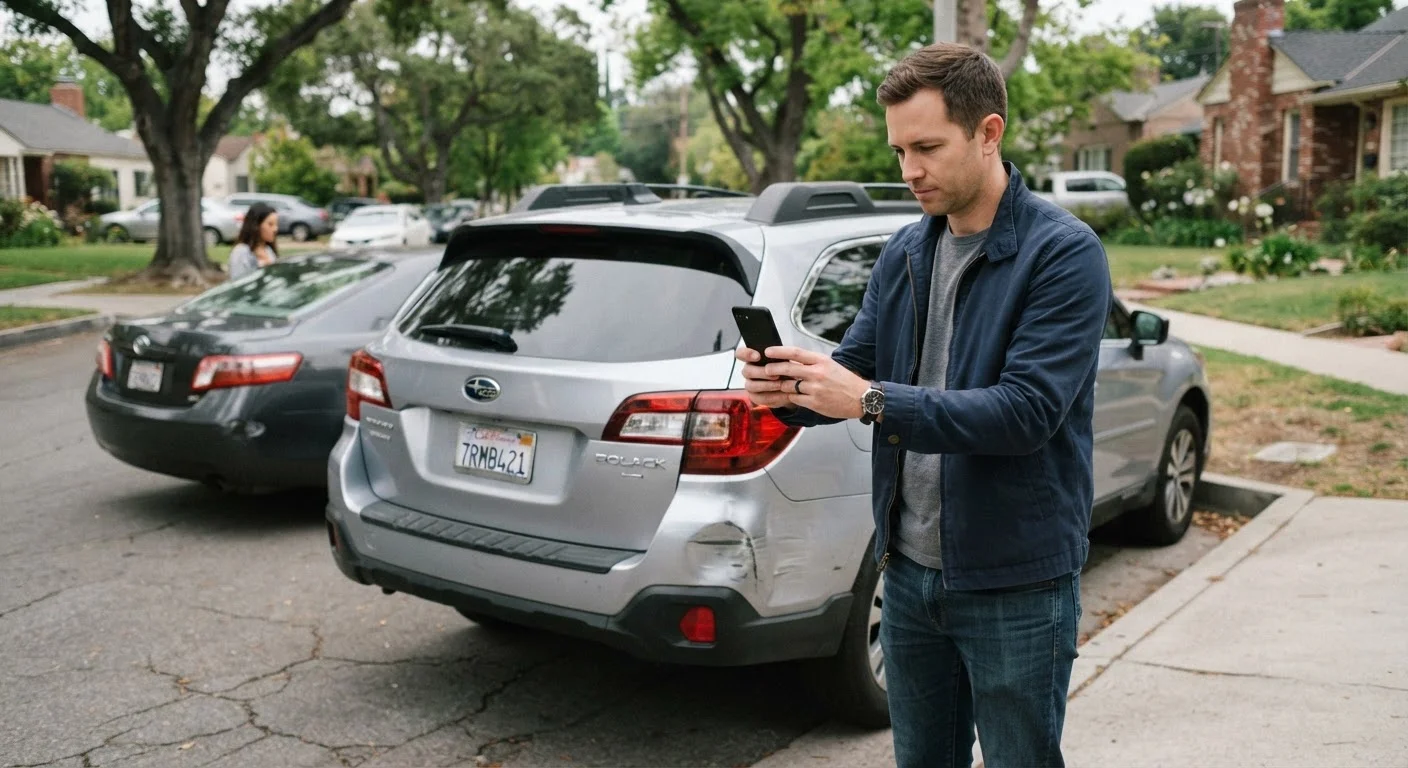
Use your phone to photograph and, if possible, video the following:
- All vehicles involved, from multiple angles, before they are moved
- Visible damage, close-up and wide-angle
- Road conditions, traffic signals, skid marks, and any environmental factors
- The overall scene, showing the positions of all vehicles
- Any visible injuries (with consent where applicable)
If witnesses are present, record their names and contact details. Witness accounts are independent corroboration that adjusters weight heavily.
Obtain the Police Report Number
If law enforcement responds to the scene, ask the responding officer for the incident report number. The full report is typically available within a few days from the relevant police department. Your insurer will likely request it; having it in hand speeds the process.
Notify Your Insurer Promptly
Contact your insurance company as soon as practicable — ideally the same day or the next day. Most insurers provide 24/7 claims reporting via phone or app. When you call, provide a factual, measured account of what happened. Stick to what you observed directly; do not speculate about cause or fault.
Have your policy number, the other party's information, and the police report number ready before you call.
Cooperate With the Adjuster — But Know Your Rights
Your insurer will assign a claims adjuster to evaluate the loss. Cooperate fully: provide the documentation you gathered, make your vehicle available for inspection, and respond to requests promptly. However, you are not required to accept a repair estimate or settlement offer you believe is inaccurate. If you disagree with the adjuster's assessment, you can request a re-inspection or consult an independent appraiser or a licensed public adjuster.
Never Admit Fault at the Scene
Fault in an auto accident is determined through investigation — by insurers, law enforcement, and sometimes courts. Statements you make at the scene, including casual apologies, can be treated as admissions and used to reduce or deny your claim. Stick to factual information exchange only, and let the investigation process determine liability.
Common Mistakes That Undermine Claims
Even careful drivers can inadvertently complicate their claims. The most frequent missteps include:
- Admitting fault at the scene — Fault is a legal and insurance determination, not a roadside conversation. Expressions of apology, even well-intentioned ones, can be used against you.
- Delaying the report — Most policies require "prompt" or "timely" notification. What that means varies by insurer, but waiting days or weeks is rarely defensible.
- Giving a recorded statement unprepared — You may be asked for one. You are generally entitled to have an attorney present if the situation is complex or involves injury.
- Authorizing repairs before the adjuster inspects — Once damage is repaired, it cannot be independently verified. Your insurer may contest the scope or cost.
For a broader look at why claims fail and what patterns to watch for, this breakdown of common claim rejections is worth reviewing before you file.
Review Your Coverage Before You Need It
The time to understand your deductibles, coverage limits, and exclusions is before an accident, not during one. A comprehensive reference on auto insurance coverage can help you build that foundation. Knowing what your policy covers — and what it does not — puts you in a much stronger position when it is time to file.
What Happens After You File
Once your claim is submitted, your insurer will assign an adjuster to investigate the loss. They will review your account, examine the damage, and may contact other parties or witnesses. The timeline varies: straightforward property-damage claims can settle in days, while claims involving injuries or liability disputes can take considerably longer.
If you want a detailed walkthrough of each stage from first notice to final settlement, see what happens when you file a claim. And if you are unsure whether your current policy actually covers the situation you are in, verify your coverage before assuming — discovering a gap after the fact is far more costly than confirming coverage beforehand.
This article provides general informational guidance on the auto insurance claims process and does not constitute legal, financial, or insurance advice. Coverage terms, claim procedures, and policyholder obligations vary by insurer and by state. Always consult your policy documents and, where appropriate, a licensed insurance professional for guidance specific to your situation.