

Key Takeaways
- Serving size is the foundation of every number on the label — always check it first.
- The % Daily Value column uses a 2,000-calorie reference diet that may not reflect your own needs.
- Added sugars and saturated fat are the two figures most linked to diet-quality concerns.
- Ingredient lists reveal what serving-size math can obscure — order reflects quantity by weight.
- Nutrition labels are required disclosures, not complete pictures of a food's overall health value.
What you will need
Why Nutrition Labels Are Designed the Way They Are
The US Nutrition Facts label is a regulatory document, not a marketing tool. It is governed by the Food and Drug Administration (FDA) and was substantially updated in 2020 to reflect current nutrition science — including the mandatory disclosure of added sugars and a revised serving size methodology. Manufacturers are required to display it on most packaged foods sold domestically.
That regulatory framing matters: the label tells you what it's legally required to tell you, no more. Front-of-package claims — 'low fat,' 'high protein,' 'a good source of fibre' — are governed by separate, sometimes less stringent rules. The Nutrition Facts panel is where verified, standardised data lives.
Labels Are Education, Not Medical Advice
The information on this page is general nutrition education only and is not a substitute for personalised dietary guidance. If you have a medical condition, food allergy, or specific health goal, consult a registered dietitian or qualified healthcare professional before making significant changes to your diet.
Reading a nutrition label shares something with reading any dense informational document: the structure rewards those who know where to look first. Just as understanding an insurance policy requires knowing which sections carry the most weight — a process our insurance policy walkthrough covers — a nutrition label has a deliberate hierarchy worth learning.
Front-of-Pack Claims Can Mislead
Terms like 'natural,' 'multigrain,' or 'light' on the front of packaging are marketing claims governed by different — and often looser — regulations than the Nutrition Facts panel. Always flip the package and read the actual label before drawing conclusions about a food's nutritional value.
Step-by-Step: Reading the Panel
Follow these steps in order — each builds on the previous. Having an actual package in hand will make the walkthrough more concrete.
What you will need
Food package with Nutrition Facts panel
The primary source you will read and interpret during this walkthrough.
Calculator or smartphone
Useful for scaling nutrient values when you eat more or less than the listed serving size.
Find the serving size and servings per container
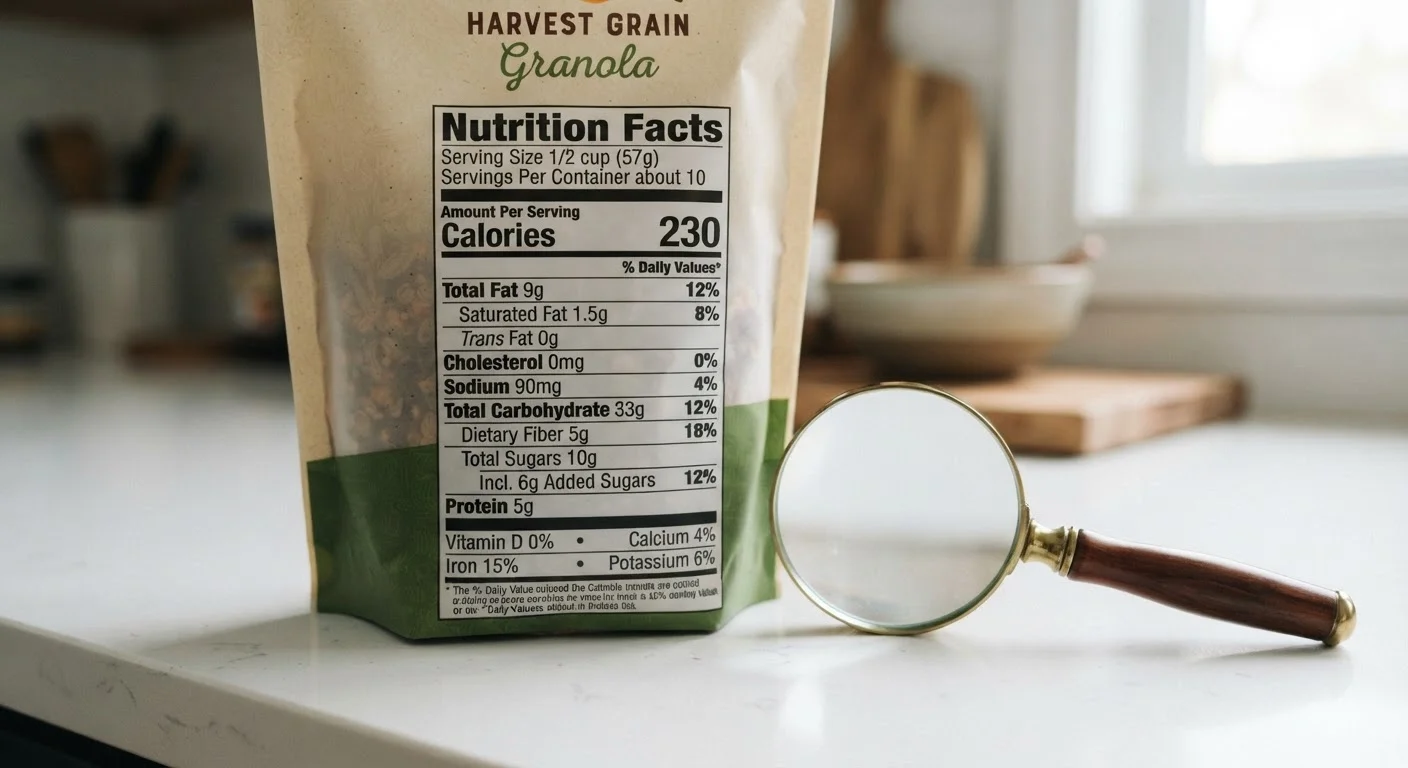
Every number on the label — calories, fat, sodium, everything — applies to one serving, not the whole package. Locate the serving size (printed in familiar units such as cups or pieces, followed by the gram weight) and the servings per container directly below the bold 'Nutrition Facts' header.
If a bag lists a serving size of 28 g and contains 3.5 servings, eating the whole bag means multiplying every figure by 3.5. This single check prevents the most common label-reading error. For more on why portion judgments go wrong, see why portion size estimates go wrong.
Read the calorie count in context
Calories are printed in large type immediately below the serving size. This figure represents total energy from fat, carbohydrates, and protein combined. A calorie count only becomes meaningful once you know the serving size and how the food fits into the rest of your day — a 200-calorie snack may be appropriate or excessive depending on your overall intake and activity level.
Scan the 'limit these' nutrients
The upper section of the nutrient list covers items public health guidelines generally advise limiting: saturated fat, trans fat, cholesterol, and sodium. The American Heart Association and major dietary guidelines identify saturated fat and sodium as nutrients most Americans consume in excess.
Added sugars — listed as a sub-item under Total Sugars since the 2020 label update — is particularly worth noting. Unlike naturally occurring sugars in fruit or dairy, added sugars contribute calories with little accompanying nutritional value.
Check the 'get enough of' nutrients
The lower section highlights nutrients many Americans under-consume: dietary fibre, vitamin D, calcium, iron, and potassium. These are listed because public health data suggest habitual shortfalls are common in the US population.
Dietary fibre is worth particular attention — it supports digestive health and satiety. Our article on dietary fibre explains what soluble and insoluble types do differently. For a broader nutrient reference, see the micronutrient reference guide.
Interpret the % Daily Value column
The % Daily Value (% DV) column translates each nutrient amount into a percentage of the daily target for a person eating 2,000 calories per day. This is a standardised reference, not a personalised recommendation. Your actual needs may be higher or lower based on age, sex, activity level, or health status.
Use % DV to compare similar products quickly and to gauge whether a food is a significant source — or a significant contributor of excess — for any given nutrient.
Read the ingredient list
Ingredients are listed in descending order by weight — the first ingredient is present in the greatest amount. This list reveals what serving-size arithmetic cannot: whether whole grains or refined flours dominate a bread, for example, or whether multiple forms of added sugar appear across the list under different names (cane syrup, dextrose, maltose, fruit juice concentrate).
Understanding grain processing and what it removes is explored in depth in our article on whole grains vs refined grains. If you want to understand broader product certifications and what label claims are independently verified, our certifications reference guide is a useful companion.
Once you can read a human food label fluently, you may find it useful to apply similar critical thinking to pet food. The structure differs, but the underlying questions — what am I actually feeding and in what quantity? — are the same. Our article on reading pet food labels covers the guaranteed analysis panel and ingredient list conventions specific to that category.
What the Label Doesn't Tell You
Nutrition labels are a starting point, not a verdict. Several things fall outside their scope:
- Glycaemic impact: Total carbohydrates and sugars appear, but the label does not indicate how quickly a food raises blood glucose. That depends on fibre content, food form, preparation, and what you eat alongside it. Our explainer on the glycaemic index unpacks this further.
- Nutrient interactions: Certain vitamins and minerals compete for absorption or enhance each other — the label cannot reflect that complexity.
- Whole-diet context: A single food is neither a 'superfood' nor a dietary disaster in isolation. What matters is the overall pattern. For practical guidance on building balanced meals, see building a nutritionally complete meal.
Use the 5% / 20% Rule of Thumb
The FDA offers a simple guide: 5% Daily Value or less per serving is considered low for any nutrient; 20% or more is considered high. Use this shortcut when scanning labels quickly to identify foods low in saturated fat or sodium, or high in fibre and key vitamins.
This article is for general informational and educational purposes only and does not constitute medical or dietary advice. Always consult a qualified healthcare professional or registered dietitian for guidance specific to your health needs.