
Wet Food vs. Dry Food: What the Difference Really Means for Your Pet's Health

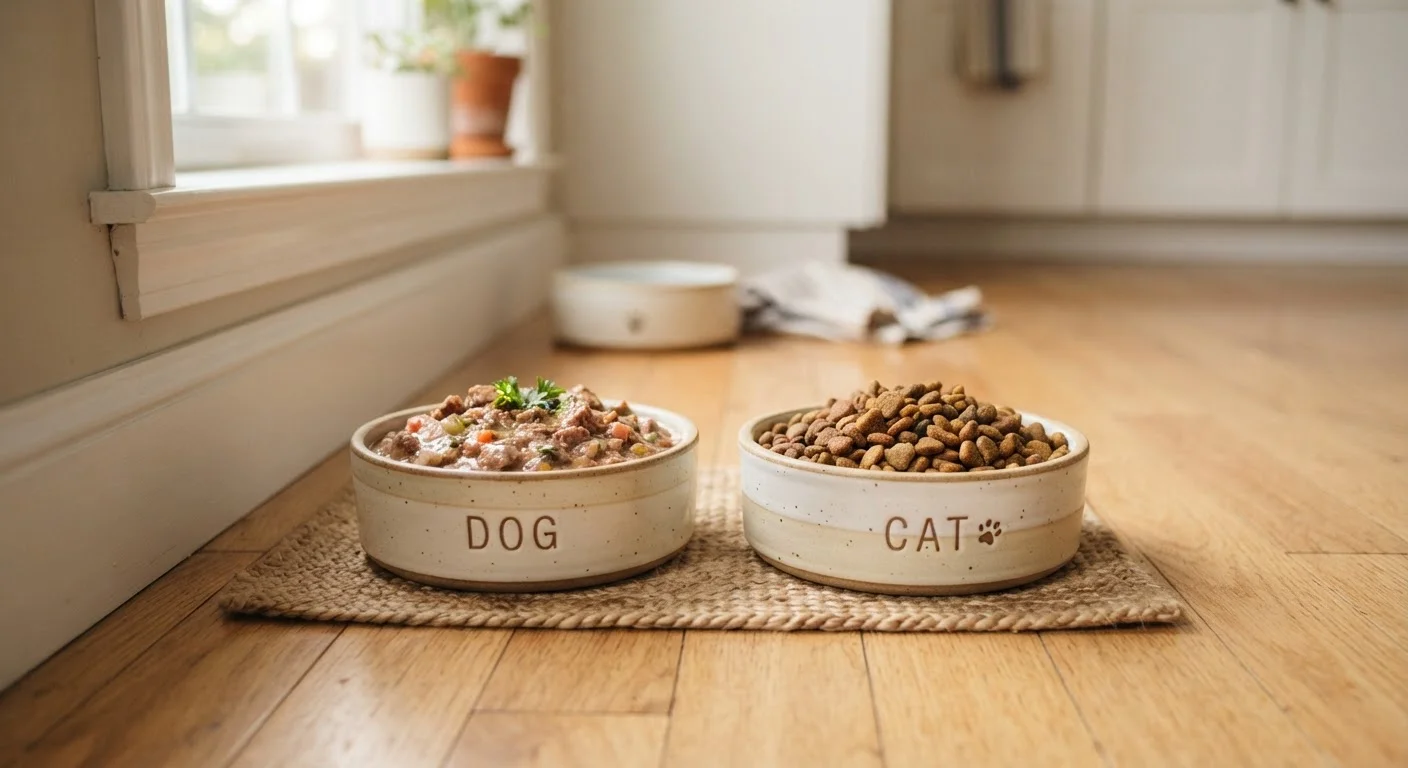
Key Takeaways
- Wet food contains 70–85% moisture, making it a meaningful source of daily hydration for cats and dogs.
- Dry kibble is generally more calorie-dense per ounce and easier to store, but offers minimal hydration.
- Neither format is universally superior — the right choice depends on your pet's health, age, and preferences.
- Dental health is more complex than food texture alone; regular brushing and vet checkups matter more.
- Always consult your veterinarian before making significant changes to your pet's diet.
Option A
Wet Pet Food
The moisture-rich, highly palatable option.
Best for: Pets needing extra hydration, picky eaters, seniors, or animals with urinary tract or kidney concerns.
Option B
Dry Pet Food (Kibble)
The convenient, shelf-stable everyday staple.
Best for: Pet owners seeking cost-effective, easy-to-store nutrition with potential dental texture benefits.
If your cat is reluctant to drink enough water
Wet Pet Food
Cats evolved with low thirst drives, so high-moisture wet food helps them meet daily fluid needs more naturally than relying on a water bowl alone.
If you need an affordable, easy-to-store daily option
Dry Pet Food (Kibble)
Kibble has a longer shelf life once opened, is simpler to measure for portion control, and tends to cost less per serving than wet food.
If your pet has kidney disease or urinary issues
Wet Pet Food
The higher moisture content in wet food can support kidney function and urinary tract health — though your vet should guide this decision specifically.
If your pet is a healthy adult with no known sensitivities
Dry Pet Food (Kibble)
A nutritionally complete dry food suits most healthy adult dogs and cats well, and a mixed feeding approach can add variety without extra complexity.
If your senior pet has dental pain or difficulty chewing
Wet Pet Food
Softer wet food is easier to eat for pets with tooth loss, dental disease, or jaw discomfort, improving their comfort and food intake.
What Actually Separates Wet and Dry Food
At the most basic level, wet and dry pet foods differ in one critical way: water content. Wet food — whether sold in cans, pouches, or trays — typically contains 70–85% moisture. Dry kibble, by contrast, usually sits at just 8–12% moisture. That gap shapes nearly everything else about how each food affects your pet's body.
Dry kibble is made by combining proteins, fats, starches, and micronutrients, then processing them under high heat and pressure — a method called extrusion — which creates the familiar hard pellet shape. Wet food is generally mixed and then sealed in its container before heat sterilization. Both processes can preserve nutritional content, but they produce very different textures, aromas, and caloric densities.
Because wet food contains so much water, it delivers fewer calories per ounce. That's not a flaw — it means pets can eat a satisfying volume of food while consuming fewer calories, which can be helpful for weight management. Kibble, being moisture-poor and energy-dense, requires careful portioning to avoid overfeeding. If you're navigating ingredient panels on either type, our guide to reading pet food labels can help you cut through the marketing language.
Hydration, Kidneys, and the Case for Moisture
One of the clearest health arguments for wet food — particularly for cats — is hydration. Cats are obligate carnivores that evolved in arid environments, which means their thirst drive is biologically low. They're naturally inclined to get most of their fluid intake from their food, not a water bowl. A cat eating only dry kibble may consistently drink too little water, potentially increasing the risk of urinary tract problems and kidney stress over time.
Dogs are more adaptable drinkers, but pets with diagnosed kidney disease, bladder stones, or chronic urinary issues are often guided toward higher-moisture diets by their veterinarians. Wet food can contribute meaningfully to daily fluid intake in these cases — though the right approach always depends on the individual animal and should be discussed with your vet.
70–85%
Moisture content in typical wet pet food
Compared to just 8–12% in dry kibble, this difference makes wet food a significant source of daily fluid intake, especially relevant for cats.
~60%
Of US cats affected by dental disease by age 3
According to general veterinary estimates, most cats show signs of dental disease early — reinforcing that food texture alone is not a dental care strategy.
3–5x
Typical cost difference per serving, wet vs. dry
Wet food often costs significantly more per meal than equivalent dry food, a practical factor for multi-pet households or long-term budget planning.
It's worth noting that raw diets are sometimes proposed as another route to higher moisture intake. If you're curious how that conversation compares, our piece on common misconceptions about raw diets separates the evidence from the claims.
The Dental Health Question: What the Evidence Actually Shows
A persistent belief among pet owners is that dry kibble helps clean a pet's teeth — the idea being that crunching hard pellets scrapes away tartar. The reality is more nuanced. While some large, textured kibble formulas have shown modest benefits in reducing plaque accumulation, most standard dry food provides little meaningful dental cleaning. Pets tend to crack kibble with side teeth and swallow quickly, not chew it in ways that would scrub tooth surfaces.
Wet food is sometimes criticized for contributing to dental buildup because it's soft and sticks more easily to tooth surfaces. There's some basis for this concern, but it doesn't mean wet food causes dental disease on its own. Genetics, genetics-driven tartar formation rates, saliva composition, and — most importantly — consistent dental hygiene all play bigger roles.
The most effective dental care for pets involves regular tooth brushing, veterinary dental cleanings, and products specifically evaluated for oral health (such as those reviewed by the Veterinary Oral Health Council). Food texture alone should not be relied upon as dental care. For a broader view of why this matters, see our article on the overlooked role of dental health in overall pet wellbeing.
Dental Products With Documented Evidence
The Veterinary Oral Health Council (VOHC) evaluates pet dental products — including some foods and treats — against defined standards for plaque and tartar reduction. Products that meet their criteria are awarded a VOHC Seal of Acceptance. If dental health is a priority, looking for this seal is more reliable than assuming food texture alone will make a difference. Your vet can also recommend a brushing routine suited to your pet's temperament.
Side-by-Side: How Wet and Dry Food Compare
The table below summarizes how these two food formats compare across the health and lifestyle factors that matter most to pet owners. Keep in mind that quality varies enormously within each category — a high-quality dry food may outperform a low-quality wet food on many dimensions, and vice versa.
| Criterion | Wet Food | Dry Food (Kibble) |
|---|---|---|
| Moisture content | 70–85% | 8–12% |
| Hydration support | High — contributes to daily fluid intake | Low — pet must drink water separately |
| Caloric density (per ounce) | Lower — larger volume per calorie | Higher — small portions pack more calories |
| Palatability | Generally higher aroma and appeal | Variable; some pets are indifferent |
| Dental texture benefit | Minimal to none | Modest for some textured formulas |
| Shelf life after opening | 1–3 days refrigerated | Weeks to months in sealed container |
| Typical cost per serving | Generally higher | Generally lower |
| Ease of portion control | Moderate — measured by can or pouch | Easy — measured by weight or cup |
Cost is another practical dimension many owners weigh. Wet food typically costs more per meal than dry kibble, and this difference can add up meaningfully over a pet's lifetime. Our overview of the real costs of pet ownership offers a realistic look at long-term financial planning for animal care.
Mixing Both: A Middle Path Worth Considering
Many veterinarians and nutritionists suggest that a mixed feeding approach — combining wet and dry food — can give pets the benefits of both formats. This might look like a wet food meal in the morning and a measured portion of dry food in the evening, or wet food used as a topper to make kibble more appealing to a reluctant eater.
Mixed feeding is particularly useful for picky eaters, pets transitioning between life stages (like puppies or kittens moving to adult food), and senior animals who may need softer food but whose owners appreciate the convenience of kibble. If you do mix foods, adjust total caloric intake carefully to avoid unintentional overfeeding — the caloric density difference between formats is real and easy to overlook.
Whatever feeding approach you choose, the most important foundation is a diet that meets AAFCO (Association of American Feed Control Officials) nutritional standards for your pet's species and life stage. Look for a nutritional adequacy statement on the label, and schedule regular wellness checkups where your vet can assess body weight and condition over time.
This article is for general informational purposes only and is not a substitute for veterinary advice. Always consult a licensed veterinarian before making significant changes to your pet's diet, particularly if your pet has a health condition.