

| Origin of 'MSRP' | Set by manufacturer, not enforceable at retail (Federal Trade Commission consumer guidance) |
| Flash Sale typical duration | 24–72 hours (Common industry practice) |
| 'Up to X% off' coverage | May apply to as few as one item in a category (FTC advertising guidelines) |
| Loss leader purpose | Drive store traffic, not to pass on savings broadly (Standard retail strategy) |
| Final sale risk | No returns or exchanges permitted (Standard retail policy term) |
| Raincheck availability | Varies by retailer and state law (State consumer protection statutes) |
Why Retail Language Deserves a Close Read
Sale terminology is not neutral. Each term carries implications about urgency, exclusivity, depth of discount, and return rights — and not all of those implications are accurate. Retailers operate within advertising guidelines, but those guidelines leave considerable room for framing that can mislead a shopper who takes the language at face value.
This reference guide defines the most common discount terms in plain language and explains what each one typically signals — and where skepticism is warranted. For a deeper look at how strikethrough prices and anchor pricing work at the shelf level, see how retail price tags are constructed.
Reading the Fine Print Behind Common Promotions
Several discount formats deserve particular scrutiny because their surface presentation routinely diverges from what they actually deliver.
| Origin of 'MSRP' | Set by manufacturer, not enforceable at retail (Federal Trade Commission consumer guidance) |
| Flash Sale typical duration | 24–72 hours (Common industry practice) |
| 'Up to X% off' coverage | May apply to as few as one item in a category (FTC advertising guidelines) |
| Loss leader purpose | Drive store traffic, not to pass on savings broadly (Standard retail strategy) |
| Final sale risk | No returns or exchanges permitted (Standard retail policy term) |
| Raincheck availability | Varies by retailer and state law (State consumer protection statutes) |
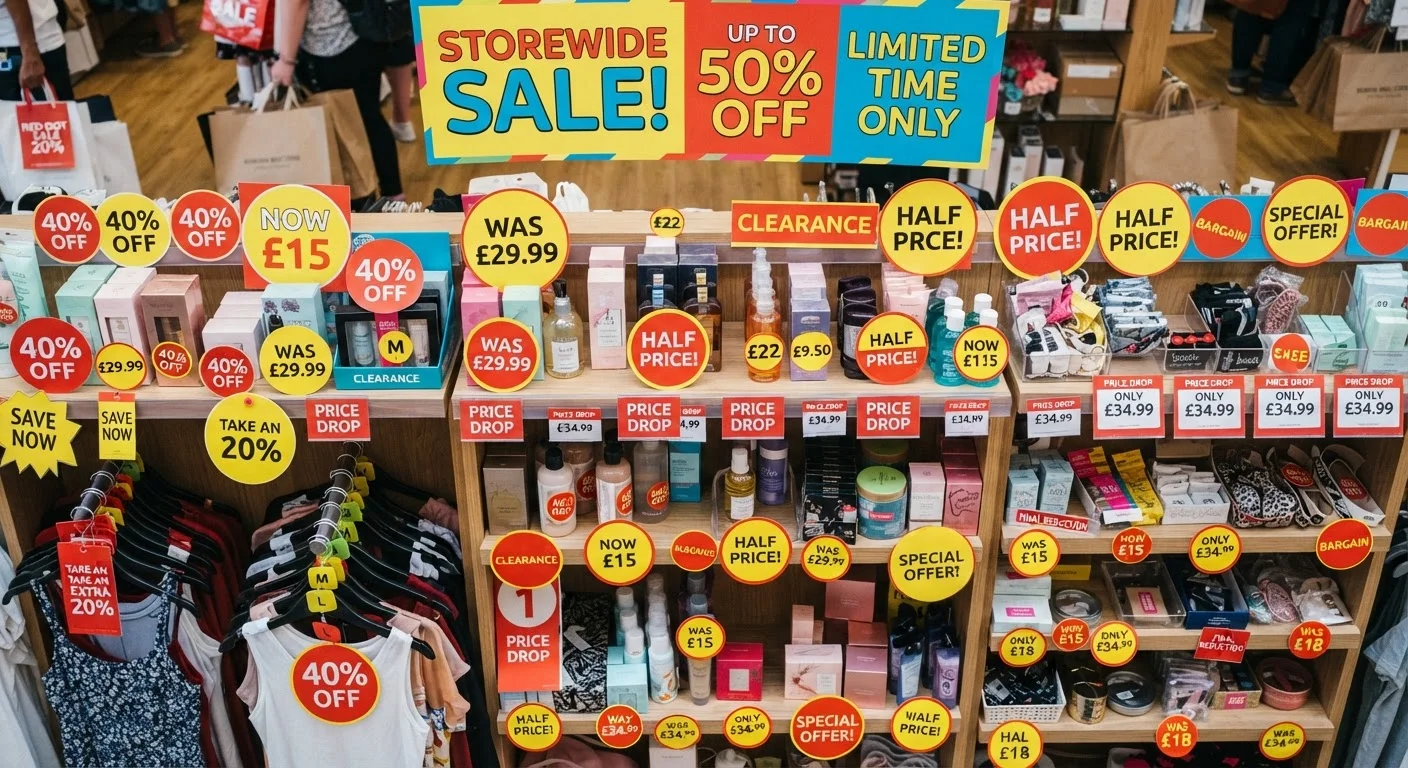
"Up to X% off" is one of retail's most elastic phrases. Legally, it requires only that at least one item in the promoted set reaches the stated discount. Everything else can be discounted less — or not at all. For more on how this language is used and what to look for, see why 'up to' discount claims can mislead.
Members-only pricing can represent genuine value — but only if the member price is being compared against a stable, real standard price. When the non-member price is routinely elevated to make the member price look favorable, the "discount" is structural rather than actual.
Bundle deals follow a similar logic. A bundle is only a saving if every included item is one you would have purchased at its individual price. When bundles work in your favor — and when they don't explores the structural signals to look for before committing.
Pricing Transparency Varies by State
The US does not have a single federal standard requiring retailers to substantiate reference prices used in discount advertising. Several states, including California and New York, have stricter rules about how long an item must have been sold at the 'original' price before a comparison can be made. If a discount claim seems implausible, your state attorney general's office is a starting point for understanding local consumer protection rules. See also: consumer protection terminology for relevant legal definitions.
Before acting on any promotion, a practical framework helps: use a structured approach to evaluate whether a discount is real before a purchase decision is made.