

Key Takeaways
- MSRP is a manufacturer's suggested price, not a guarantee of what was ever charged.
- Strikethrough prices are only meaningful if the item genuinely sold at that price recently.
- Anchor pricing is a psychological tactic that shapes perception of value independent of actual cost.
- A discount percentage means little without knowing the price history behind it.
- Price tracking tools can reveal whether a "sale" price is actually lower than recent norms.
- Retail regulations on reference pricing exist, but consumer vigilance remains your strongest tool.
Retail Price Tag Anatomy
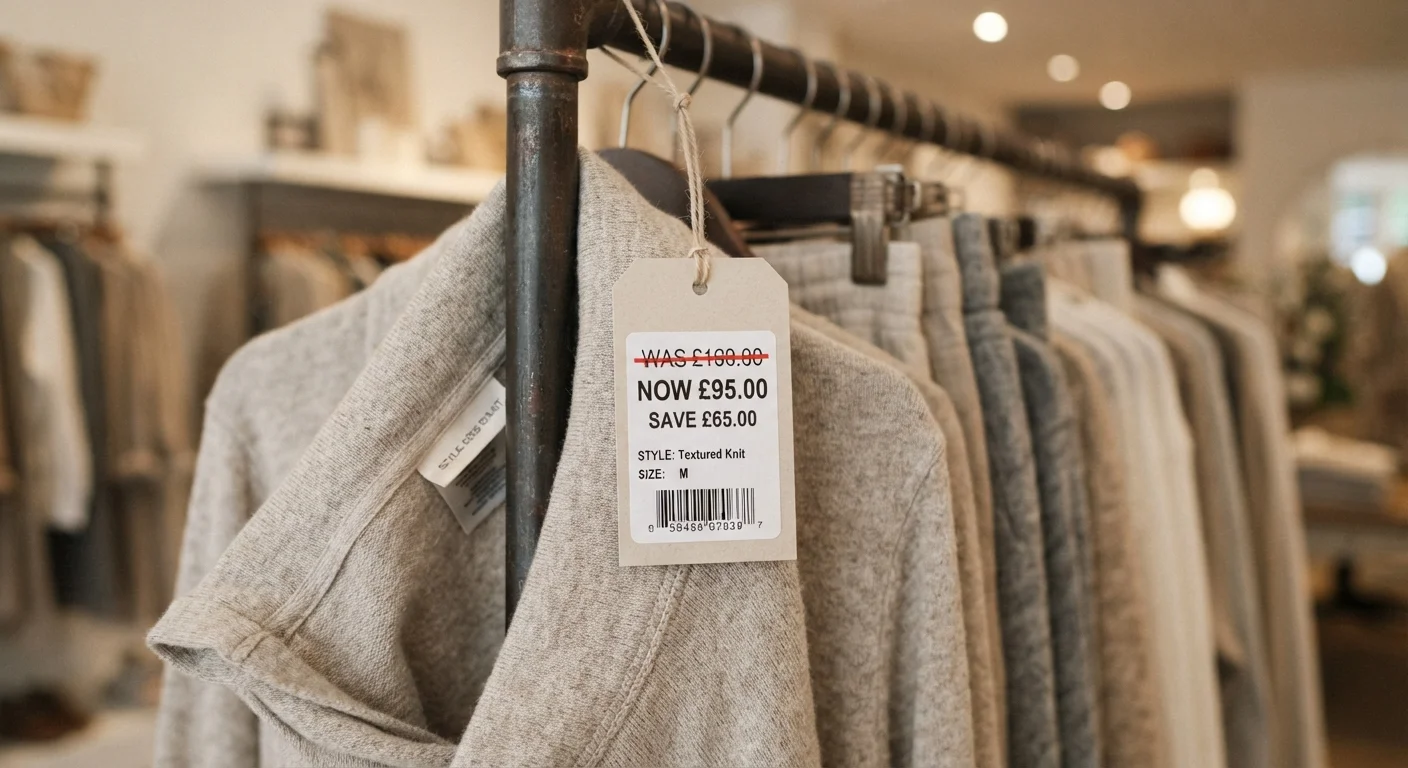
A retail price tag typically displays two numbers: a reference price (often labeled "was," "original," or "MSRP") and a current selling price. The gap between them is framed as your savings — but that framing depends entirely on whether the reference price reflects a price the item was genuinely sold at, or one set primarily to make the markdown look more dramatic.
The FTC's "Guides Against Deceptive Pricing" require that a former price used as a reference must have been offered in good faith for a reasonably substantial period of time. Compliance and enforcement vary, and complaints can be filed with the FTC or your state attorney general.
The Two Numbers That Drive Every Purchase Decision
Walk past almost any display rack or product listing and you'll see a familiar format: one number in large print, another crossed out above it. The visual math is instant — the difference looks like money back in your pocket. But those two numbers are doing very different jobs, and understanding which is which changes how you read every price tag you'll ever see.
The current selling price is what the retailer actually charges at the register today. The reference price — labeled "was," "compare at," "original," "MSRP," or just struck through — is a claim about value. It says: this product is worth more than you're paying. The credibility of that claim is the entire story.
~60%
Shoppers who report feeling urgency from a strikethrough price
Consumer psychology research consistently finds that reference prices create perceived savings pressure even when shoppers cannot verify the original price's accuracy.
37 states
US states with some form of deceptive pricing statute
According to retail law surveys, most states have consumer protection laws that can address fictitious reference pricing, though enforcement mechanisms and thresholds vary significantly.
"Was" prices
Most common reference price label in retail
Retail audits find "was/now" formatting is the dominant price comparison display format across both physical and online retail environments.
What MSRP Actually Represents
MSRP — Manufacturer's Suggested Retail Price — is a price recommended by the product's manufacturer, not a price set by any regulatory body or market mechanism. Retailers can price above it, below it, or ignore it entirely. In many product categories, particularly consumer electronics and auto accessories, products routinely sell below MSRP as a standard practice rather than as a genuine discount.
When a tag reads "MSRP: $120 | Our Price: $89," you're not necessarily seeing a $31 savings — you may be seeing the ordinary market price framed as a deal. Research what comparable retailers charge and what the item has historically sold for before treating an MSRP gap as meaningful. This framing is closely related to anchor pricing tactics, where a high reference number shapes how attractive any lower number feels.
Strikethrough Prices and What They're Required to Mean
A strikethrough price carries an implicit promise: the item used to cost that much. The FTC's Guides Against Deceptive Pricing hold that a "former price" should reflect a price at which the product was actually offered in good faith for a reasonably substantial period — not a price inflated specifically to manufacture a bigger-looking markdown.
In practice, this standard is unevenly applied. Some retailers set artificially elevated "original" prices that items never sold at in significant volume. Others rotate items in and out of sale status so frequently that the "regular" price is effectively never the real price. Seasonal sales cycles reveal how certain categories treat sale pricing as a permanent marketing fixture rather than a genuine periodic reduction.
Use a Price Tracker Before You Buy
Free browser extensions can display a product's price history directly on retailer pages. Before accepting any reference price as meaningful, check whether the item has ever consistently sold at that figure. A few seconds of research can reveal whether a markdown is genuine or manufactured.
Your strongest defense is a price history. Tools that track pricing across time expose whether a strikethrough figure ever represented a real transaction price — or was set high to make the markdown look impressive.
Reading the Tag Like a Consumer Advocate
A few practical habits help cut through manufactured savings:
- Ignore the percentage off headline. "40% off" is only useful if the original price was legitimate. A 40% discount from an inflated anchor is not 40% savings.
- Check the price history. Browser extensions and dedicated price-tracking tools show you what a product has actually sold for over the past weeks or months. Price tracking over time is one of the most practical skills a modern shopper can develop.
- Compare across retailers. If the "was" price is what every other retailer charges today as their regular price, the discount is illusory.
- Understand the terminology. Tags use words like "compare at," "value," and "originally" with varying degrees of precision. A glossary of discount terms clarifies what each phrase usually signals.
Price tags communicate in the language of value — but only you can verify whether that language is accurate. The same critical lens that helps decode product claim language applies equally to the numbers on the tag itself.