

Key Takeaways
- "Up to X% off" only requires one item to hit the maximum discount — most items may be discounted far less.
- Retailers are not required to disclose what percentage of inventory qualifies for the advertised top figure.
- The FTC has guidelines on deceptive pricing, but enforcement depends heavily on the complaint and context.
- Checking a product's price history is more reliable than trusting the discount percentage shown at checkout.
- Comparing the actual price to verified market prices beats relying on any crossed-out reference figure.
What "Up to X% Off" Actually Promises
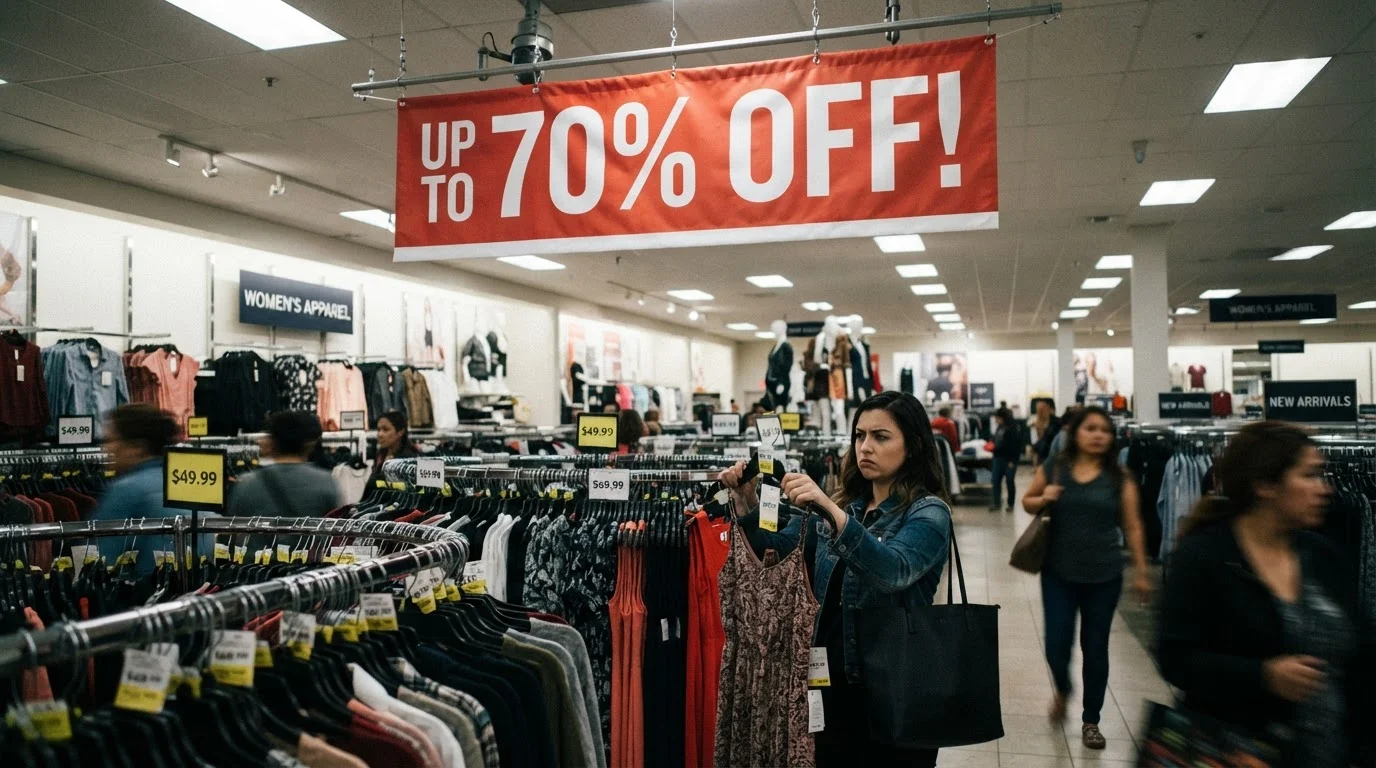
Walk into almost any sale event — online or in a physical store — and you'll encounter banners, pop-ups, or email subject lines promising savings of "up to 40%," "up to 70%," or some equally impressive ceiling. The phrase is ubiquitous for a straightforward reason: it is extraordinarily flexible.
Legally, "up to X% off" obligates the retailer to ensure that at least one item in the promotional scope is discounted by the advertised maximum. Everything else in the sale can carry a fraction of that figure. A retailer advertising "up to 60% off" may have one clearance item marked down 60% while the bulk of the sale inventory sits at 10–15% off — and that framing is generally permissible under U.S. advertising standards.
The Federal Trade Commission's guidelines on deceptive pricing address strikethrough prices and reference prices, but the "up to" qualifier itself gives retailers considerable room. The phrase is, in practice, a ceiling disclosure, not an average or a typical-saving promise. Understanding this distinction is the first step in reading any sale event clearly. For a broader look at how marketing language is structured to stay technically truthful while creating misleading impressions, see how product claims are constructed.
Common Myths Shoppers Believe About Discount Ads
Several persistent misconceptions make "up to" language more effective than it deserves to be. The myth-and-fact breakdowns below address the most common ones directly.
Myth
If a store advertises "up to 50% off," most items in the sale are discounted close to 50%.
Fact
The advertised maximum only needs to apply to at least one item. The typical discount across a sale event is often far lower.
Shoppers frequently interpret the ceiling figure as a rough average or a common savings amount. That interpretation is understandable — it's likely the intended one — but it's not what the phrase guarantees. A retailer can legally display "up to 50% off" across an entire store while the overwhelming majority of sale items are marked down 5–15%. The maximum discount may apply to a single end-of-season clearance item buried in the back. Always look at the actual marked price of the specific item you're considering, not the banner figure.
Myth
A crossed-out "original" price next to the sale price is always what the item previously cost.
Fact
Reference prices may reflect a manufacturer's suggested retail price, a briefly held price, or a figure that was rarely if ever charged in practice.
U.S. advertising guidelines require that a former price used for comparison be one at which the product was actually offered to the public for a reasonably substantial period. In practice, some retailers set artificially high reference prices or use a price that existed for only a day or two before a prolonged "sale." This tactic — sometimes called fictitious pricing — inflates the perceived discount. The anatomy of a retail price tag breaks down MSRPs and strikethrough figures in more depth.
Myth
Retailers must disclose how many items actually qualify for the maximum discount.
Fact
There is no general federal requirement to disclose what portion of inventory qualifies for the maximum advertised discount.
This is one of the most significant information gaps in retail advertising. When a banner reads "up to 70% off," the retailer is under no general obligation to tell you that only three out of two thousand SKUs hit that number. Some state-level consumer protection statutes impose additional requirements, but national advertising standards do not mandate disclosure of the qualifying percentage. Shoppers must do their own item-level research rather than relying on the implied scope of the headline figure.
Myth
If a deal looks too good, the advertising must be illegal — someone would have stopped it.
Fact
Deceptive pricing enforcement in the U.S. is largely complaint-driven, and many questionable practices continue unaddressed for extended periods.
The FTC and state attorneys general do pursue deceptive pricing cases, and some retailers have faced settlements over fictitious reference prices. However, enforcement is not automatic or comprehensive. Many misleading-but-technically-legal practices persist because the "up to" qualifier and high reference prices occupy gray areas rather than clear violations. Comparison shopping and price-history checking are more reliable protections than assuming regulation will catch every inflated claim. Loss leader pricing is another legal tactic that distorts shoppers' sense of a store's overall value.
The Reference Price Problem
Much of the persuasive power behind any percentage-off claim comes from the reference price — the number shown crossed out beside the "sale" price. That figure anchors your perception of value before you have a chance to question it. Retailers may set reference prices based on a suggested retail price that few or no customers ever actually paid, or based on a briefly offered price that existed for only a matter of days.
Briefly Offered Prices Can Legally Anchor a 'Discount'
Some retailers raise an item's listed price for a short window before a sale, then reinstate a lower price and call it a markdown. While FTC guidelines require that a reference price reflect a genuinely offered price for a substantial recent period, the definition of "substantial" is not precisely codified and is rarely policed proactively. If a price tracker shows a sudden spike immediately before a sale start date, treat that reference price skeptically.
The FTC's "Guides Against Deceptive Pricing" state that a former price should have been offered for a reasonably substantial period of time in the recent past to be used as a legitimate comparison. However, enforcement is complaint-driven and inconsistent, and many shoppers never realize the reference price they're trusting was never a realistic market price. How retailers exploit anchor pricing psychology is a deeper exploration of why these inflated reference figures are so effective at changing spending decisions.
A practical counter is to check price-tracking tools before purchasing — several browser extensions record historical prices on major e-commerce platforms and show the real price trajectory. If the "original" price appears only briefly before a sale, that's a signal worth noting.
Protecting Yourself at the Point of Decision
Recognizing these tactics doesn't mean every advertised sale is deceptive. Genuine markdowns exist. The goal is to verify rather than trust.
1 item
Minimum qualifying for advertised maximum discount
Under typical U.S. advertising standards, a single item at the ceiling discount is sufficient to support an "up to X% off" claim for an entire sale.
~15%
Typical average discount during major retail sale events
Consumer research and price-tracking analyses have generally found that average actual discounts during widely advertised sales are considerably below the promoted ceiling figures.
Before assuming a percentage discount reflects real savings, consider these checks: compare the current price against the item's 90-day price history, look up the item on multiple retail platforms, and ask whether you would purchase the item at this price if no "original" price were displayed. That last question is particularly clarifying — it separates value from the illusion of a deal.
For a structured method to apply this kind of critical thinking at the point of purchase, a practical deal-evaluation framework walks through the steps in detail. And if you want to understand how urgency cues like countdown timers compound the effect of discount claims, scarcity and urgency signals in online retail covers exactly that. More broadly, your rights as a shopper — including complaint mechanisms when advertising is genuinely deceptive — are outlined in the Consumer Rights hub.
This article is for general informational purposes only and does not constitute legal or financial advice. Advertising regulations vary by state and retailer. Consult a qualified consumer protection resource or attorney for guidance specific to your situation.