
Dewy Finish vs. Matte Finish: Understanding the Difference in Skin Prep and Makeup

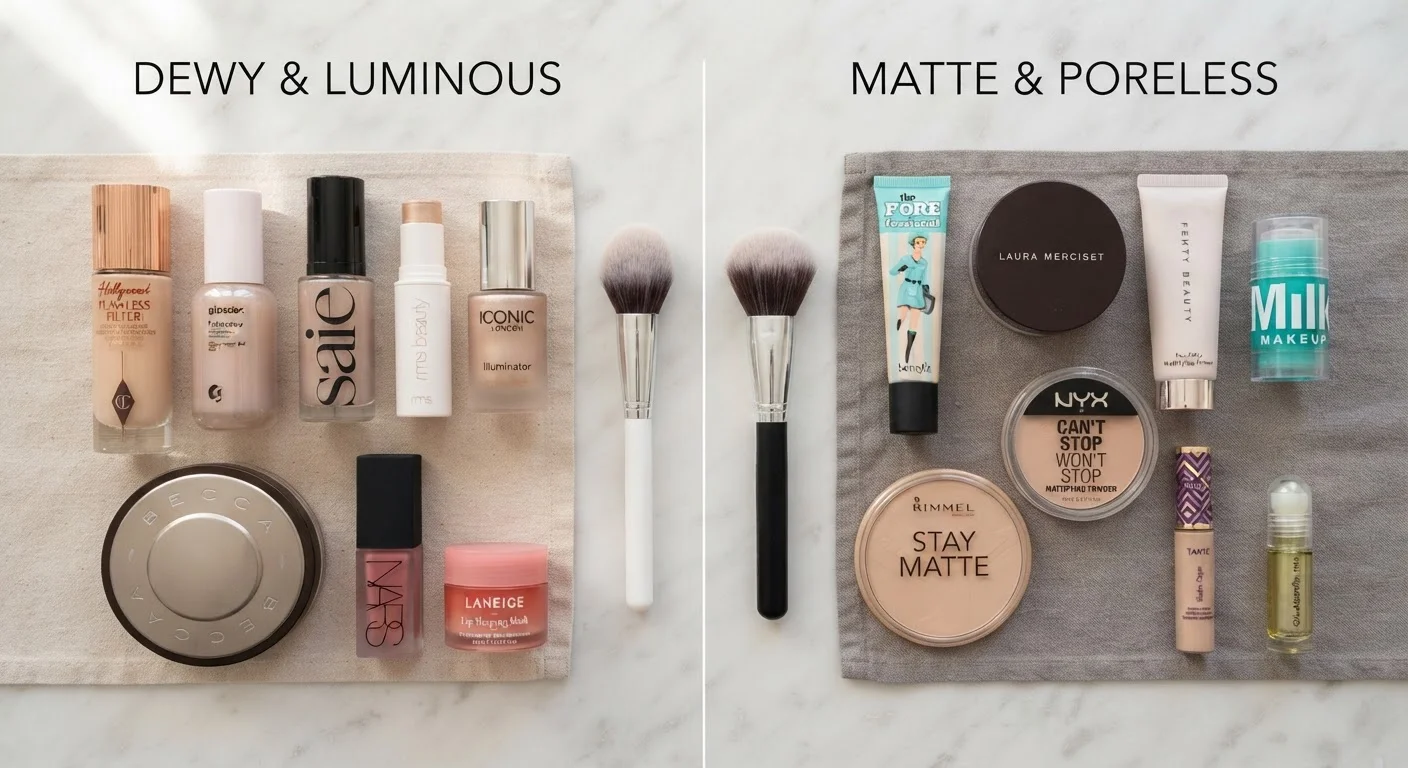
Key Takeaways
- Skin prep — not just makeup products — determines whether your finish reads dewy or matte.
- Hydrating toners, face oils, and luminous primers build the foundation for a glowy look.
- Mattifying primers, clay-based moisturizers, and setting powders are the backbone of a matte finish.
- Skin type influences which finish tends to be more sustainable throughout the day.
- Both looks can be adapted for any skin type with the right layering approach.
Our Verdict
Neither finish is inherently superior — the right choice depends on your skin type, the occasion, and how much wear time you need. A dewy finish suits those who want a skin-first, natural look and can tolerate a bit of mid-day shine, while a matte finish offers longevity and a polished, refined appearance. Many people find that a hybrid approach — matte where they tend to get oily, dewy everywhere else — gives the most flattering, balanced result.
| Best for | Recommended |
|---|---|
| Those with dry or dull skin wanting a radiant, fresh appearance | Dewy Finish |
| Those with oily or combination skin who need long-lasting wear | Matte Finish |
| Everyday minimal makeup wearers prioritizing a natural look | Dewy Finish |
| Long events or situations where touch-ups aren't practical | Matte Finish |
What Each Finish Actually Means
The terms dewy and matte describe how light interacts with your skin's surface once makeup is applied. A dewy finish reflects light, creating the appearance of hydration and luminosity — often described as that fresh-from-the-gym or just-moisturized glow. A matte finish absorbs light, producing a flat, even-toned surface with minimal shine.
Critically, neither finish is the product of a single step. Both are the cumulative result of your skincare preparation, primer choice, foundation formula, and setting method. Understanding the full pipeline — not just the makeup products — gives you far more control over the final result. For a broader look at how your skincare routine affects skin behavior throughout the day, see our piece on how AM and PM routines serve different skin needs.
Building a Dewy Finish: Skin Prep and Application
Dewy skin starts with hydration at every layer. A lightweight, water-based moisturizer or a few drops of facial oil applied before makeup creates a plump, reflective base. Hydrating toners — those containing ingredients like glycerin or hyaluronic acid (a moisture-binding humectant) — add another layer of glow-supporting prep. If these terms are unfamiliar, our skincare terms glossary covers them in plain language.
When it comes to primer, choose a formula labeled luminous, illuminating, or hydrating. These typically contain light-reflecting particles that enhance the glow underneath foundation. Foundation formulas for a dewy look are generally labeled satin, natural finish, or skin tint — they tend to be more fluid and translucent.
Setting is where many people inadvertently flatten a dewy look. If you want to lock in makeup without killing the glow, use a hydrating setting spray rather than a setting powder. Apply any powder sparingly and only where you truly need shine control.
Layer Glow Strategically
For a dewy look that doesn't slip or look greasy, concentrate luminous products on the high points of the face — tops of cheekbones, brow bone, and center of the nose — rather than applying them all over. This mimics where light naturally catches the face. A light powder on the T-zone can also help anchor the look without killing the glow everywhere else.
Building a Matte Finish: Skin Prep and Application
A matte finish requires controlling oil production and reducing surface reflection. Skin prep begins with a lightweight, non-comedogenic moisturizer (one that won't clog pores) or a gel-based formula that hydrates without adding slip or shine. Skipping moisturizer entirely often backfires — dry skin can overproduce oil, which eventually breaks through matte makeup.
A mattifying or pore-blurring primer is the next essential step. These formulas typically contain silicones or absorbent powders that create a smooth, shine-free canvas. Look for the words oil-control, mattifying, or pore-minimizing on the label.
Foundation for a matte finish is typically labeled full coverage, longwear, or matte, and tends to have a denser, less fluid texture. Setting with a loose or pressed powder — concentrating on the T-zone (forehead, nose, and chin) — seals in the matte effect and helps makeup last through the day.
| Dewy Finish | Matte Finish | |
|---|---|---|
| Skin Prep Emphasis | Hydration and luminosity layers | Oil control and smoothing |
| Ideal Moisturizer | Rich, hydrating, or oil-infused | Gel-based, lightweight, non-comedogenic |
| Primer Type | Illuminating or hydrating | Mattifying or pore-blurring |
| Foundation Formula | Satin, natural finish, or skin tint | Full coverage or longwear matte |
| Setting Method | Hydrating setting spray | Loose or pressed setting powder |
| Wear Longevity | May need midday touch-ups | Generally longer lasting |
| Best Skin Type Fit | Dry, normal, or dehydrated | Oily or combination |
Matching Finish to Skin Type and Occasion
Skin type plays a significant role in how sustainable each finish is in real life. Those with naturally oily skin may find that a dewy finish migrates into unwanted shine within a few hours, while those with dry skin often struggle to maintain a matte look without the skin looking flaky or dull.
That said, skin type isn't destiny. A person with oily skin can achieve a controlled dewy look by applying hydrating products sparingly and focusing luminosity on the high points of the face. Conversely, dry skin types can wear matte makeup successfully by doubling down on hydrating skin prep and using setting powder only where necessary.
Occasion matters too. For a quick, polished everyday look, a light dewy finish often reads as effortlessly put-together. For long events, photography, or high-heat environments, a matte finish typically holds up better and photographs with less distraction from shine.
If you're weighing how many products to layer into your prep routine, our piece on the trade-offs of multi-step skincare routines offers a balanced perspective on complexity versus simplicity.
~60%
Of makeup wearers mix both finishes
Industry surveys have consistently found that a majority of makeup users combine matte and luminous products in a single routine rather than committing to one approach entirely.
2–4 hrs
Typical wear before a matte finish needs touch-ups
Dermatologists and makeup artists note that sebum production — which breaks down matte formulas — varies significantly by skin type, climate, and diet.