

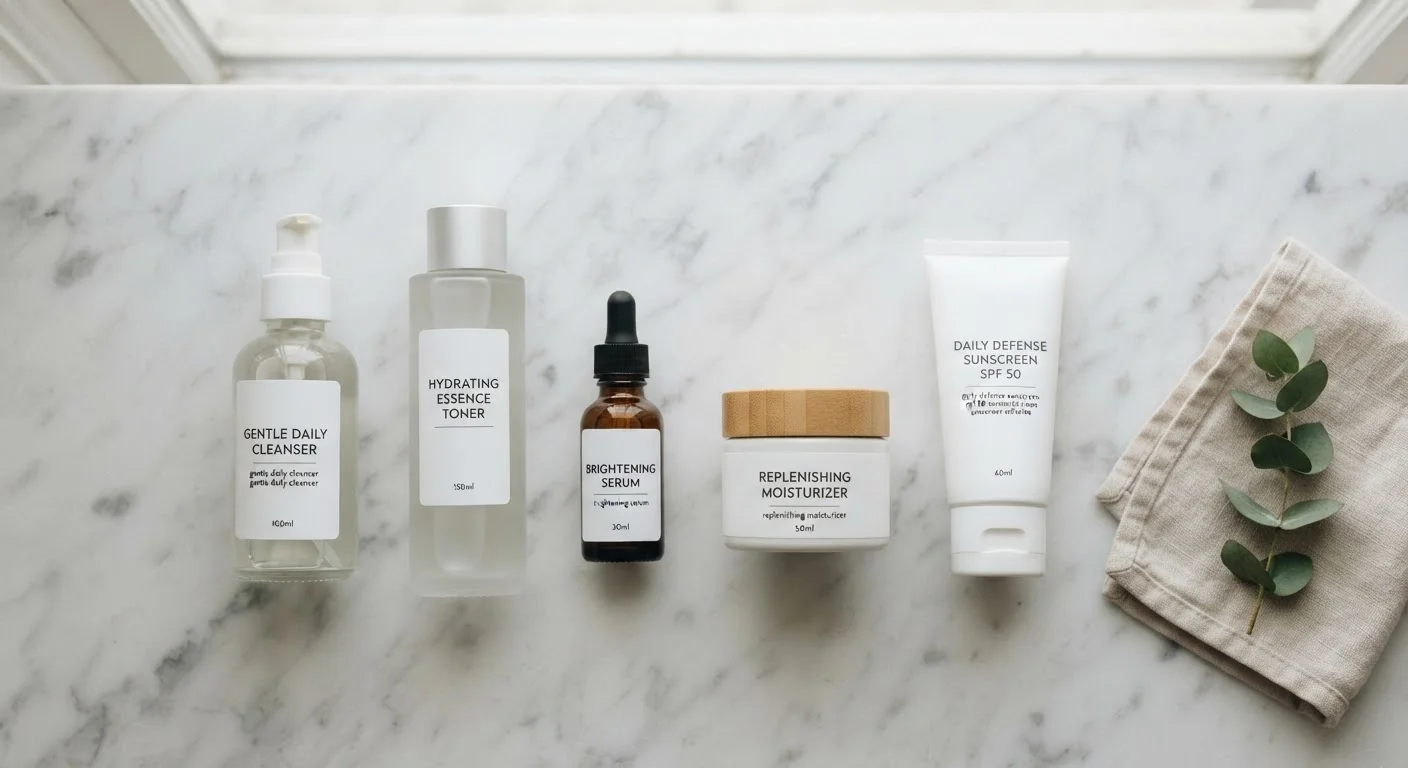
Key Takeaways
- Cleansing removes surface debris so subsequent products can penetrate more effectively.
- Toners restore the skin's pH balance and can deliver a first layer of hydration or active ingredients.
- Serums contain concentrated active ingredients targeted at specific skin concerns.
- Moisturizers seal hydration into the skin and support the protective skin barrier.
- Sunscreen is the most evidence-backed step for preventing premature skin aging and UV damage.
- Product order generally follows a thin-to-thick consistency rule for optimal absorption.
Skincare Routine
A skincare routine is a consistent sequence of products applied to the face — and sometimes neck and body — to cleanse, treat, and protect the skin. Each step targets a different skin function, from removing impurities to delivering active ingredients or locking in moisture. The order products are applied determines how well they're absorbed and how effectively they work.
Skincare formulations are designed with specific molecular weights and pH levels in mind; applying them out of sequence can reduce ingredient efficacy or cause irritation.
Step One: Cleansing — The Foundation Everything Else Depends On
Cleansing is the step that makes every other product work better. Its job is straightforward: remove makeup, sunscreen, sebum, pollutants, and dead skin cells that accumulate on the surface throughout the day or overnight. Without a clean canvas, active ingredients in serums and treatments struggle to penetrate the skin effectively.
The type of cleanser matters. Foaming cleansers tend to suit oily skin, while cream or gel formulas are generally better tolerated by dry or sensitive skin. One underappreciated issue is over-cleansing — washing too frequently or with formulas that are too harsh can disrupt the skin's natural moisture barrier. For a deeper look at habits that quietly undermine skin health, see common face-washing mistakes worth avoiding.
Gentle Cleansing Preserves the Skin Barrier
Using lukewarm water rather than hot water, and patting the skin dry rather than rubbing, reduces unnecessary friction and helps preserve the skin's natural protective layer. A cleanser that leaves your skin feeling tight or squeaky-clean after rinsing is likely too harsh for daily use.
Step Two: Toner and Essence — Rebalancing and Priming
After cleansing, the skin's pH can shift slightly. Toners are designed to restore that balance quickly and prepare the skin to absorb what comes next. Older alcohol-heavy toners were primarily astringents; today's versions are far more varied, delivering hydrating ingredients like hyaluronic acid, soothing agents like niacinamide, or gentle chemical exfoliants like glycolic acid.
Essences — lighter, watery formulas common in Korean skincare — function similarly, adding a thin layer of hydration and sometimes active ingredients before the serum stage. Neither toner nor essence is mandatory; whether they earn a place in your routine depends on what your skin needs and how it responds.
Toner Is Optional, Not a Mandatory Step
Many people maintain healthy, well-functioning skin without ever using a toner. If your cleanser is gentle and pH-balanced, you may find toner adds little noticeable benefit. It's worth experimenting to see whether your skin actually responds to it before making it a permanent fixture in your routine.
Step Three: Serum — Where Targeted Treatment Happens
Serums are concentrated formulas built to address specific concerns: hyperpigmentation, fine lines, dehydration, acne, uneven texture. Because they're formulated with smaller molecules and higher concentrations of active ingredients than moisturizers, they're designed to deliver those ingredients deeper into the skin.
Common serum ingredients include vitamin C (an antioxidant that can help brighten skin and defend against environmental damage), hyaluronic acid (a humectant that draws moisture to the skin), and retinoids (vitamin A derivatives associated with cell turnover and collagen support). Not all serums are interchangeable — pairing certain actives incorrectly, such as vitamin C with certain forms of niacinamide or acids with retinoids in the same application, can reduce efficacy or cause irritation.
90%+
Of premature skin aging attributed to UV exposure
Dermatological research consistently cites photoaging — aging caused by UV radiation — as responsible for the vast majority of visible skin aging, including wrinkles and dark spots.
SPF 30
Minimum recommended broad-spectrum sun protection
Most dermatology organizations, including the American Academy of Dermatology, recommend a broad-spectrum sunscreen of at least SPF 30 for daily use.
Step Four: Moisturizer and SPF — Sealing and Protecting
Moisturizers serve two related functions: they deliver hydrating ingredients to the skin and — crucially — create a barrier that slows moisture loss. This barrier function is particularly important because the skin's outermost layer, the stratum corneum, regulates how much water escapes the skin. Ingredients like ceramides, fatty acids, and occlusives like petrolatum help reinforce this layer.
Sunscreen, applied as the final morning step, is widely considered the most impactful single product for long-term skin health. Broad-spectrum SPF protects against both UVA rays (associated with premature aging) and UVB rays (associated with sunburn and skin damage). It should be applied after moisturizer and given a moment to settle before makeup.
If you're weighing how much of a routine is actually necessary, the trade-offs of a multi-step routine offers a balanced perspective. For those ready to build something sustainable from the ground up, building a routine from scratch is a useful starting point.
This article is for general informational purposes only and does not constitute medical or dermatological advice. Consult a qualified dermatologist or healthcare professional for guidance specific to your skin type, concerns, or any existing skin conditions.