

Key Takeaways
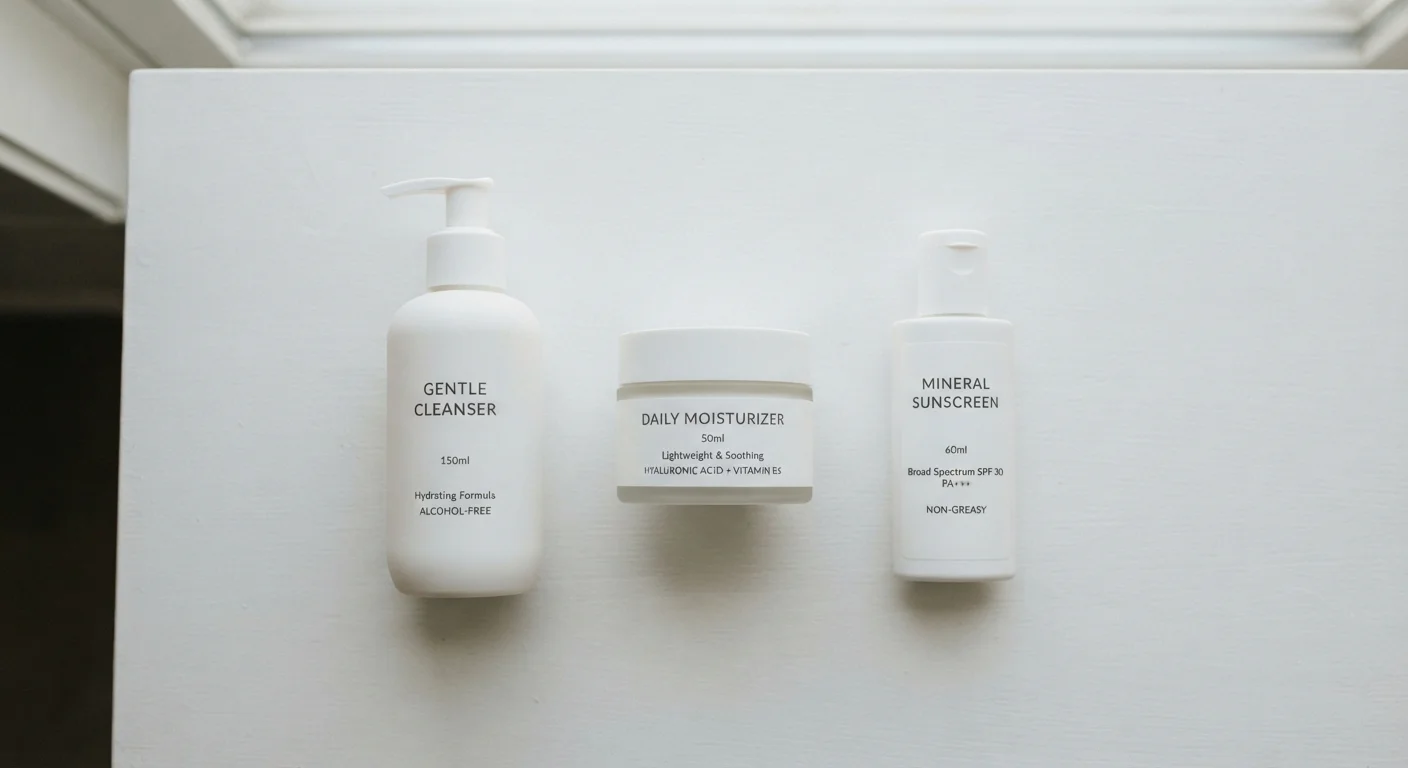
- A basic skincare routine only requires three products: a cleanser, a moisturizer, and a sunscreen.
- Knowing your skin type helps you choose products that work with your skin rather than against it.
- Consistency matters more than complexity — simple routines done daily outperform elaborate ones done occasionally.
- Sunscreen is the single most impactful step for protecting skin from long-term damage.
- Add new products one at a time so you can identify what helps and what causes reactions.
Start here
Why Skincare Feels Overwhelming (And Why It Doesn't Have to Be)
Next
Know Your Skin Type First
Then
The Three Non-Negotiables: Cleanse, Moisturize, Protect
Apply it
Building Morning and Evening Routines
When you're ready
When to Add More Steps (And When Not To)
Why Skincare Feels Overwhelming (And Why It Doesn't Have to Be)
Walk into any beauty aisle and the options multiply fast: essences, exfoliants, retinoids, acids, serums for brightness, serums for pores, moisturizers with SPF, moisturizers without. For anyone starting from zero, it is genuinely difficult to know where to look first. The skincare industry's language is dense, its product categories overlap, and marketing rarely makes the actual function of a product clear.
The good news is that the foundation of any effective skincare routine is simpler than the shelves suggest. You do not need ten products or a complicated regimen to start taking care of your skin. You need three, applied consistently. Everything else — the serums, the toners, the treatments — is optional layering that you can explore gradually once the basics feel manageable.
This guide is designed for readers who are starting with no products and no prior experience. It explains skin type basics, introduces the core three-step routine, and gives you a framework for deciding what to add when you feel ready. For a deeper look at what each individual step actually does, see The Anatomy of a Skincare Routine.
Moisture barrier
The outermost layer of skin that seals in water and keeps out irritants. Keeping it intact is a primary goal of basic skincare.
Humectant
An ingredient that draws water from the environment or deeper skin layers toward the surface, helping skin stay hydrated. Glycerin and hyaluronic acid are common examples.
Non-comedogenic
A term used to describe products formulated to avoid clogging pores. It is especially useful for people with oily or acne-prone skin.
Broad-spectrum SPF
A sunscreen rating that indicates protection against both UVA rays (linked to aging and skin damage) and UVB rays (the primary cause of sunburn).
Sebum
The natural oil your skin produces to stay lubricated and protected. Too much can lead to shine and breakouts; too little can leave skin dry.
Exfoliant
A product that removes dead skin cells from the surface. Chemical exfoliants use acids to dissolve the bonds holding dead cells together; physical exfoliants use texture to manually buff them away.
Know Your Skin Type First
Choosing the right products becomes much easier once you have a basic sense of your skin type. There are five general categories most people fall into: normal, dry, oily, combination, and sensitive. These are not rigid diagnoses — skin can shift with seasons, age, or stress — but they are a practical starting point.
- Normal: Generally balanced, neither noticeably oily nor tight or flaky. Products in most formulations tend to work well.
- Dry: Skin may feel tight, rough, or look dull. Prioritize richer, more hydrating formulas and avoid products with a high alcohol content, which can strip moisture.
- Oily: Skin produces excess sebum, leading to shine, enlarged pores, and a greater tendency toward breakouts. Lightweight, non-comedogenic (pore-clogging) formulas tend to work best.
- Combination: An oily T-zone (forehead, nose, chin) with drier cheeks. Often requires some product adjustments — for example, a lighter moisturizer applied all over, with additional hydration on drier areas only.
- Sensitive: Skin reacts easily — flushing, stinging, or breaking out in response to ingredients or environmental factors. Fragrance-free, minimal-ingredient formulas are generally a safer starting point.
A simple self-assessment: wash your face with a gentle cleanser, pat it dry, and wait 30 minutes without applying anything. How your skin looks and feels at that point is a reasonable indicator of your baseline type.
The Three Non-Negotiables: Cleanse, Moisturize, Protect
Every effective skincare routine, regardless of skin type or budget, is built on three steps. Think of these as the non-negotiable core.
1. Cleanser
Cleansing removes accumulated dirt, oil, sweat, and any makeup or sunscreen from the skin's surface. A gentle, low-irritation formula — often described as a gentle foaming or cream cleanser — suits most beginners. Avoid anything that leaves your face feeling tight or squeaky clean; that sensation usually signals that the skin's natural moisture barrier has been disrupted.
2. Moisturizer
Moisturizer helps the skin retain water and supports its protective outer layer, called the moisture barrier. Even oily skin benefits from a lightweight moisturizer. Look for ingredients like glycerin or hyaluronic acid (both are humectants, meaning they draw water into skin) in formulas suited to your skin type.
3. Sunscreen
Sunscreen is arguably the most evidence-supported step in any skincare routine. UV radiation is a primary driver of premature aging, uneven pigmentation, and skin cancer risk. Dermatologists broadly recommend a broad-spectrum SPF 30 or higher applied every morning, rain or shine. This step alone delivers more long-term skin benefit than most treatments combined.
Sunscreen Works Best Applied Generously
Most people apply far less sunscreen than the amount used in SPF testing, which significantly reduces its effectiveness. As a rough guide, about a quarter teaspoon is considered adequate for the face alone. Apply it as the last step in your morning routine, after moisturizer has had a moment to absorb.
Building Morning and Evening Routines
With your three core products selected, the practical routine is straightforward:
Morning
- Cleanse (or simply rinse with water if your skin is not oily)
- Moisturize
- Apply sunscreen
Evening
- Cleanse thoroughly, especially if you wore sunscreen or makeup during the day
- Moisturize
That is it — a complete, dermatologist-recommended baseline that takes under five minutes each session. The evening routine skips sunscreen (there is no UV exposure during sleep) and often uses a slightly richer moisturizer to support overnight skin recovery.
Consistency is the most underrated skincare principle. A simple routine followed daily produces better results than an elaborate one followed sporadically. For a no-fuss approach that stays manageable long-term, building a minimal skincare routine is a natural next step once you have the basics down.
Avoid Layering Too Many New Products at Once
Starting a skincare routine with multiple new products simultaneously makes it nearly impossible to identify which one is responsible if your skin reacts badly. Redness, breakouts, or stinging can all be signs of irritation. Introduce new products one at a time and wait at least a week before adding the next.
When to Add More Steps (And When Not To)
Once your three-step routine feels comfortable and your skin has adjusted — typically after four to six weeks — you can consider introducing additional products if you have specific concerns. Common additions include:
- Exfoliants: Help remove dead skin cells and can improve texture. Chemical exfoliants (like lactic acid or salicylic acid) are generally gentler than physical scrubs, but start slowly — once a week is enough for most beginners.
- Serums: Concentrated formulas targeting specific concerns such as dark spots, hydration, or fine lines. Because they are potent, introduce only one at a time.
- Eye cream: Optional for most people. The skin around the eyes is thinner and more delicate, so some people prefer a dedicated formula there, but a gentle moisturizer applied carefully works for many.
The key rule for adding anything new: one product at a time, with at least a week between introductions. This allows you to identify what is helping and what is causing any adverse reaction.
Multi-step routines can offer more targeted care, but they also come with trade-offs in time, cost, and the risk of ingredient interactions. Read more about those trade-offs before expanding your routine significantly. And for a comprehensive look at how ingredients, lifestyle habits, and skin changes over time all factor in, this in-depth guide covers the full picture.
This article is for general informational purposes only and does not constitute medical or dermatological advice. If you have a skin condition, persistent irritation, or concerns about a specific ingredient, consult a qualified dermatologist or healthcare professional.