
Everything That Shapes a Good Skincare Routine: Ingredients, Habits, Environment, and Skin Changes Over Time

Key Takeaways
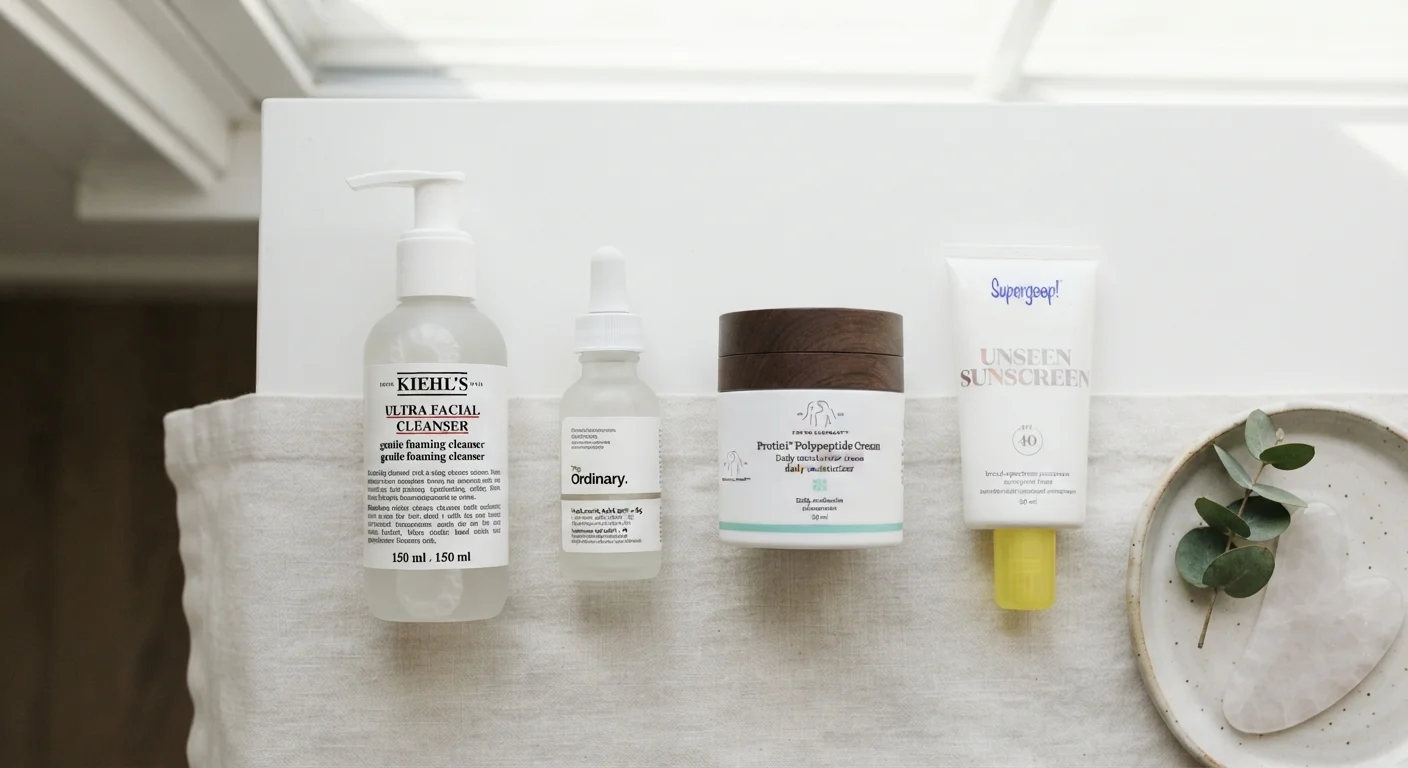
- Cleansing, moisturizing, and daily SPF form the non-negotiable foundation of any routine.
- Active ingredients like retinoids, vitamin C, and AHAs each target specific skin concerns.
- Climate, pollution, and seasonal shifts can alter how your skin behaves and what it needs.
- Skin physiology changes meaningfully with age, requiring routine adjustments over time.
- Sleep, hydration, and stress management influence skin health as much as topical products.
- Simpler routines are often more consistent and cause fewer irritation-related setbacks.
The Core Steps Every Routine Needs
At its most essential, a skincare routine has three jobs: remove what doesn't belong on skin, restore what it loses throughout the day, and shield it from external damage. Every other step is secondary to this foundation.
Cleansing removes dirt, excess sebum, pollutants, and makeup. Over-cleansing is as problematic as under-cleansing — stripping the skin's natural barrier triggers compensatory oil production and can worsen sensitivity. A gentle, pH-balanced cleanser used once or twice daily is sufficient for most people.
Moisturizing supports the skin barrier by reducing transepidermal water loss (TEWL) — the passive evaporation of water through the outer skin layers. Even oily skin types benefit; the goal is barrier function, not necessarily adding moisture. Ingredients like ceramides, glycerin, and hyaluronic acid are commonly used for this purpose.
Sunscreen is the single most evidence-supported step for preventing premature skin aging and UV-related damage. Dermatologists broadly recommend broad-spectrum SPF 30 or higher applied every morning, regardless of weather or skin tone. See our guide to minimal effective routines if you want to understand exactly where to start.
Key Ingredients and What They Actually Do
Understanding what active ingredients do — and how they interact — helps you make sense of product labels and avoid counterproductive combinations.
90%
Skin aging attributed to UV exposure
Research published in dermatology literature consistently attributes the majority of visible skin aging — including wrinkles and pigmentation — to cumulative UV damage rather than intrinsic aging.
~1%
Annual decline in collagen production after age 20
Studies on skin biology suggest collagen production decreases by roughly 1% per year beginning in early adulthood, contributing to gradual changes in skin firmness and texture over time.
28 days
Average skin cell turnover cycle
The outermost layer of skin renews itself approximately every four weeks in younger adults, though this cycle slows with age — which is why new skincare ingredients take weeks to show visible results.
- Retinoids (retinol, tretinoin): Derived from vitamin A, retinoids accelerate cell turnover and stimulate collagen production. They are among the most studied topical ingredients for fine lines and texture. Retinoids can cause initial dryness and sensitivity; gradual introduction matters.
- Vitamin C (L-ascorbic acid): An antioxidant that helps neutralize free radical damage from UV and pollution. It also plays a role in collagen synthesis and can contribute to a more even skin tone over time. Vitamin C is unstable and degrades with light and air exposure — packaging and storage affect effectiveness.
- AHAs and BHAs: Alpha hydroxy acids (like glycolic and lactic acid) exfoliate at the surface; beta hydroxy acid (salicylic acid) penetrates into pores and is particularly useful for acne-prone skin. Regular exfoliation supports cell turnover but daily use increases photosensitivity.
- Niacinamide: A form of vitamin B3 with a broad profile — it supports barrier function, helps regulate oil production, and may reduce the appearance of enlarged pores and uneven tone.
- Peptides: Short chains of amino acids that can signal skin to produce structural proteins. Research is still developing, but they are generally well-tolerated.
When introducing a new active ingredient, use it every third night for the first two weeks before increasing frequency. This reduces the likelihood of barrier disruption without sacrificing long-term results.
The skin's tolerance for potent actives like retinoids and AHAs builds gradually. Rushing the introduction phase is one of the most common reasons people experience unnecessary irritation and abandon effective ingredients.
Apply sunscreen as the final step of your morning routine — after moisturizer has absorbed — rather than mixing it into other products. Diluting SPF reduces its actual protective factor.
Sunscreen efficacy is tested at a specific application thickness and formulation. Mixing it with other products changes both its chemistry and the amount that reaches the skin surface.
One important note: combining certain actives — such as vitamin C with niacinamide, or retinoids with AHAs — can reduce efficacy or increase irritation for some people. Introduce new ingredients one at a time and observe how your skin responds before layering further.
How Environment Affects Your Skin
Skin doesn't exist in isolation — it responds continuously to the environment around it. Understanding these external influences helps explain why the same routine can produce different results in different seasons or locations.
Humidity and temperature: Cold, dry air draws moisture from the skin surface, weakening the barrier and increasing TEWL. Hot, humid conditions can increase sebum production and exacerbate congestion. Many people find their routine needs to shift seasonally — lighter formulas in summer, richer ones in winter.
UV radiation: UV exposure is cumulative and occurs even on overcast days. UVA rays penetrate glass and contribute to collagen breakdown over time; UVB rays cause sunburn. This is why daily SPF use — not just beach-day use — is consistently emphasized by dermatology communities.
Air pollution: Particulate matter and ozone generate oxidative stress on skin, which can break down collagen and contribute to uneven tone. Antioxidant-rich serums may help neutralize some of this effect, though thorough cleansing at the end of a day spent in polluted air is equally important.
Don't Overlook Environmental Triggers
Many people troubleshoot skincare products for months without recognizing that climate or seasonal changes are the actual driver of their skin issues. Before switching formulas, consider whether a change in environment — new city, new season, new home's air quality — coincides with the change in your skin. Adjusting routine weight and hydration level is often the more targeted fix.
Altitude and air travel: Cabin air on planes has very low humidity, which can leave skin feeling tight and dehydrated. Applying a barrier-supporting moisturizer before and during flights is a practical counterpoint to this.
How Skin Changes Over Time
Skin is not static. Its structure, behavior, and needs shift across different life stages, and a routine that worked well at 25 may not serve the same person at 45.
Teens and twenties: Hormonal fluctuations commonly drive excess sebum production and acne. Skin cell turnover is relatively fast at this stage, meaning recovery from breakouts tends to occur more quickly. The priority is usually a consistent, non-irritating routine rather than anti-aging actives.
Thirties: Cell turnover begins to slow, and collagen production starts a gradual decline. Dullness, early fine lines, and subtle changes in texture often become noticeable. This is typically when targeted actives like retinoids or vitamin C become particularly relevant.
Forties and beyond: Hormonal shifts — particularly around menopause — can significantly alter skin behavior. Estrogen decline is associated with reduced skin thickness, slower healing, and increased dryness. Routines often benefit from richer emollients and a continued focus on barrier support.
For a detailed look at the tradeoffs involved in expanding your routine as your needs grow, see the tradeoffs of a multi-step skincare routine.
Habits That Support Skin Health
Topical products operate within a larger context. Lifestyle factors influence skin in ways that no serum can fully compensate for.
Make Sleep Part of Your Skin Strategy
Aim to cleanse your skin before bed, not just in the morning. Overnight is when repair-focused products like retinoids and peptides tend to work most effectively, as skin is not simultaneously dealing with UV or environmental exposure. A clean surface also means active ingredients can penetrate without interference from the day's buildup.
Sleep: During sleep, the skin undergoes repair processes, including collagen synthesis and cell renewal. Chronic sleep deprivation is associated with increased inflammation and a compromised barrier — reflected visibly in dullness and puffiness.
Hydration: Systemic hydration supports overall skin function, though the relationship between water intake and visible skin plumpness is more nuanced than popular claims suggest. What is clear is that dehydration affects skin elasticity and surface texture.
Diet: A diet high in antioxidant-rich foods may support the skin's own defense mechanisms against oxidative stress. Highly processed, high-glycemic diets have been linked in some research to acne exacerbation, though individual responses vary considerably.
Stress: Chronic stress elevates cortisol, which can increase sebum production and trigger or worsen inflammatory skin conditions like eczema and psoriasis. Managing stress is a legitimate part of skin health management.
Building a Routine That Fits Your Life
The most sophisticated skincare routine is only as good as how consistently it gets used. Complexity introduces friction — and friction leads to abandonment.
A practical approach is to identify your primary skin concern, build a minimal foundation (cleanser, moisturizer, SPF), and add one targeted active at a time. Give each addition four to six weeks before evaluating its effect — skin turnover takes time, and quick judgments are often misleading.
Consistency Outperforms Complexity
Research on skincare efficacy consistently finds that regular, simple routines outperform elaborate ones that get used inconsistently. If your current routine feels burdensome, simplification is a legitimate strategy — not a compromise. A cleanser, moisturizer, and SPF used daily will deliver more benefit than a ten-step routine applied twice a week.
The personal care tips hub covers grooming and hygiene guidance across a range of everyday concerns, including routines for different skin types. It's a practical starting point for anyone refining their approach.
And just as skin chemistry shapes how topical products behave, it also affects how other products — like fragrance — interact with your body. Our article on how scent works on skin explores that chemistry in an approachable way.
This article is for general informational purposes only and is not a substitute for professional dermatological or medical advice. Consult a qualified dermatologist for concerns specific to your skin.