

Key Takeaways
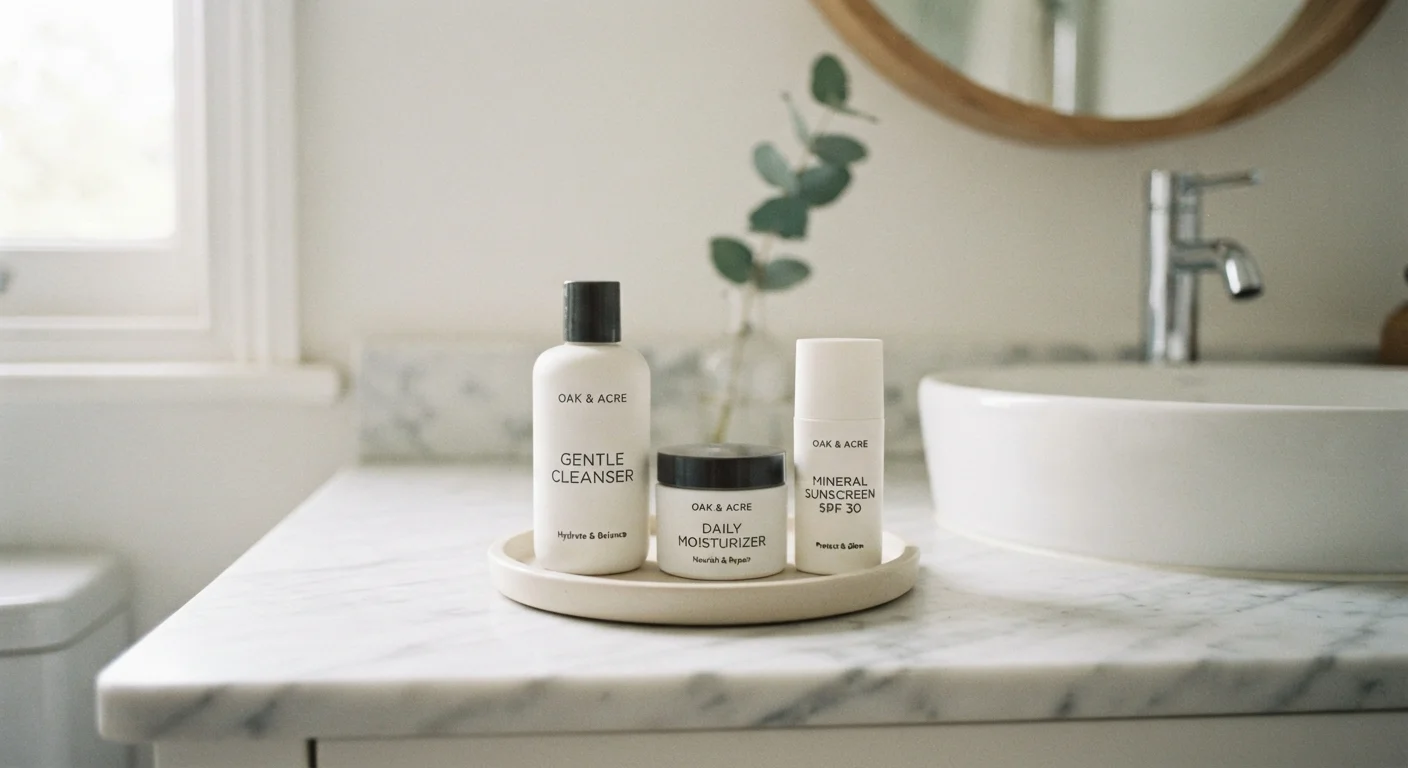
- A cleanser, moisturizer, and broad-spectrum SPF cover the core needs of most skin types.
- Using too many products at once makes it harder to identify what helps or irritates your skin.
- Consistency over weeks matters more than the number of products you use each day.
- Skin type and climate influence which product formulations work best for you.
- Adding extra steps is worth considering only after your foundational routine feels stable.
Start here
Why Fewer Products Can Deliver Better Results
Core knowledge
The Three Non-Negotiables of Any Routine
Personalize it
How to Adapt These Basics to Your Skin Type
Build consistency
Building the Habit: Morning vs. Evening
Next step
When to Add More — and When to Hold Back
Why Fewer Products Can Deliver Better Results
Walk through any beauty aisle and the message feels relentless: more steps, more serums, more results. In practice, piling on products introduces more variables — more chances for irritation, more confusion about what's actually working, and more money spent on steps that may be redundant.
Dermatologists and estheticians frequently note that many people with troubled skin have simply overwhelmed it. When the skin barrier — the outermost layer that keeps moisture in and irritants out — is consistently stressed by too many active ingredients or incompatible formulations, it can become reactive and harder to manage.
A minimal routine strips the approach back to basics: support the barrier, protect it from UV damage, and keep the process consistent. For a broader look at what makes routines more complicated without necessarily making them better, see the trade-offs of a multi-step skincare routine.
Skin barrier
The outermost layer of skin that locks in moisture and keeps out irritants, pollutants, and microbes. A healthy barrier is fundamental to calm, resilient skin.
Broad-spectrum SPF
A sunscreen rating indicating protection against both UVA rays (linked to long-term skin damage) and UVB rays (responsible for sunburn). SPF refers specifically to UVB protection strength.
Humectant
An ingredient that draws moisture from the environment or deeper skin layers to the surface. Hyaluronic acid and glycerin are common examples used in moisturizers.
Non-comedogenic
A label indicating a product is formulated to avoid clogging pores, making it a common consideration for people with oily or acne-prone skin.
Skin pH
A measure of how acidic or alkaline the skin's surface is. Healthy skin tends to be slightly acidic, and using cleansers that respect this balance helps maintain the skin barrier.
The Three Non-Negotiables of Any Routine
Regardless of skin type, most dermatologists agree on a three-step foundation that addresses the skin's basic daily needs.
1. Cleanser
A gentle, pH-balanced cleanser removes dirt, excess oil, pollutants, and sunscreen residue without stripping the skin's natural moisture. Harsh soaps or over-cleansing can disrupt the barrier just as much as skipping cleansing entirely. Once in the morning and once in the evening is a widely recommended frequency for most skin types.
2. Moisturizer
Moisturizer reinforces the skin barrier, reduces water loss, and keeps skin comfortable. The right formulation depends on your skin type — heavier creams for dry or mature skin, lighter gels or lotions for oily or combination skin. Applying moisturizer while skin is still slightly damp from cleansing can improve absorption.
3. Broad-Spectrum Sunscreen (AM only)
Daily SPF use is one of the most evidence-supported steps in skincare for reducing long-term UV-related skin damage. Broad-spectrum protection covers both UVA and UVB rays. SPF 30 or higher is a commonly cited minimum for everyday use. For a detailed breakdown of what sunscreen labels actually mean, see SPF in your routine.
Apply Sunscreen as Its Own Step
Many people skip sunscreen because their moisturizer claims SPF protection, but combining both functions in one product often means applying too little to achieve the labeled SPF. Using a dedicated sunscreen as your final morning step — after moisturizer has absorbed — gives you more reliable protection. Apply generously to all exposed skin.
How to Adapt These Basics to Your Skin Type
The same three steps apply universally, but the formulations that work best differ depending on how your skin naturally behaves.
- Dry skin: Prioritize cream-based cleansers that don't strip moisture, and reach for richer moisturizers containing humectants like hyaluronic acid alongside occlusive ingredients like ceramides or shea butter.
- Oily or acne-prone skin: Foaming or gel cleansers often work well. A lightweight, non-comedogenic moisturizer (one formulated not to clog pores) provides hydration without feeling heavy. A mineral or oil-free sunscreen may feel more comfortable day-to-day.
- Sensitive skin: Fragrance-free, dye-free formulations with minimal ingredients reduce the risk of irritation. Introduce any new product slowly, and consider using a patch test first. Our patch-test and introduction checklist walks through a methodical process.
- Combination skin: You may need to experiment — some people use different moisturizers on different facial zones, though simplicity often wins out here too.
Climate also matters. Humid environments may mean you need a lighter moisturizer, while cold or dry climates often call for more barrier support.
Building the Habit: Morning vs. Evening
Consistency is what converts a product lineup into a functioning routine. Tying skincare steps to existing habits — brushing your teeth, making coffee — reduces the mental load of remembering.
Morning routine: Cleanse (or simply rinse with water if skin is not oily), apply moisturizer, apply sunscreen. That's it. For a complete reference that integrates face care into your broader morning habits, see the morning personal care routine checklist.
Evening routine: Cleanse thoroughly to remove sunscreen, makeup, and the day's buildup, then apply moisturizer. The evening is when skin does much of its repair work, so this step supports that process.
If you also wear makeup, pairing a minimal skincare base with a streamlined makeup approach keeps the overall process manageable. See a minimal makeup routine for polished days for a complementary approach.
Water-Only Morning Cleansing
If your skin is not particularly oily overnight, rinsing with lukewarm water instead of cleansing with a product every morning is a widely accepted approach. Over-cleansing — even with a gentle formula — can remove beneficial oils and disrupt the skin barrier if done too frequently. Listen to how your skin feels, not just the instructions on the bottle.
When to Add More — and When to Hold Back
Once your three-step routine feels stable and your skin has had several weeks to adjust, you may want to address a specific concern — uneven texture, dullness, or persistent dryness, for example. This is the point at which targeted add-ons, such as a chemical exfoliant or a treatment serum, can make sense. Before adding anything, it helps to understand how layering order affects product effectiveness — see why layering order matters.
The key discipline is adding one product at a time and giving it at least four weeks before evaluating. If you add three things at once and your skin reacts, you won't know which one caused the issue.
Hold back if your skin feels tight, red, or reactive — that's a signal to simplify, not to add more. For a holistic view of everything that shapes a skincare routine over time, including ingredient science and how skin changes with age, the guide on everything that shapes a good skincare routine is a valuable next read.
Beauty Routines Hub
A practical starting point for building skincare and makeup habits. Covers everyday routines for confidence and self-care across skill levels.
Chemical Exfoliants vs. Physical Scrubs
When you're ready to add exfoliation as a next step, this article explains how AHAs, BHAs, and physical scrubs differ in mechanism and suitability.
This article is for general informational and educational purposes only and does not constitute medical or dermatological advice. For persistent skin concerns or conditions, consult a qualified healthcare professional or licensed dermatologist.