

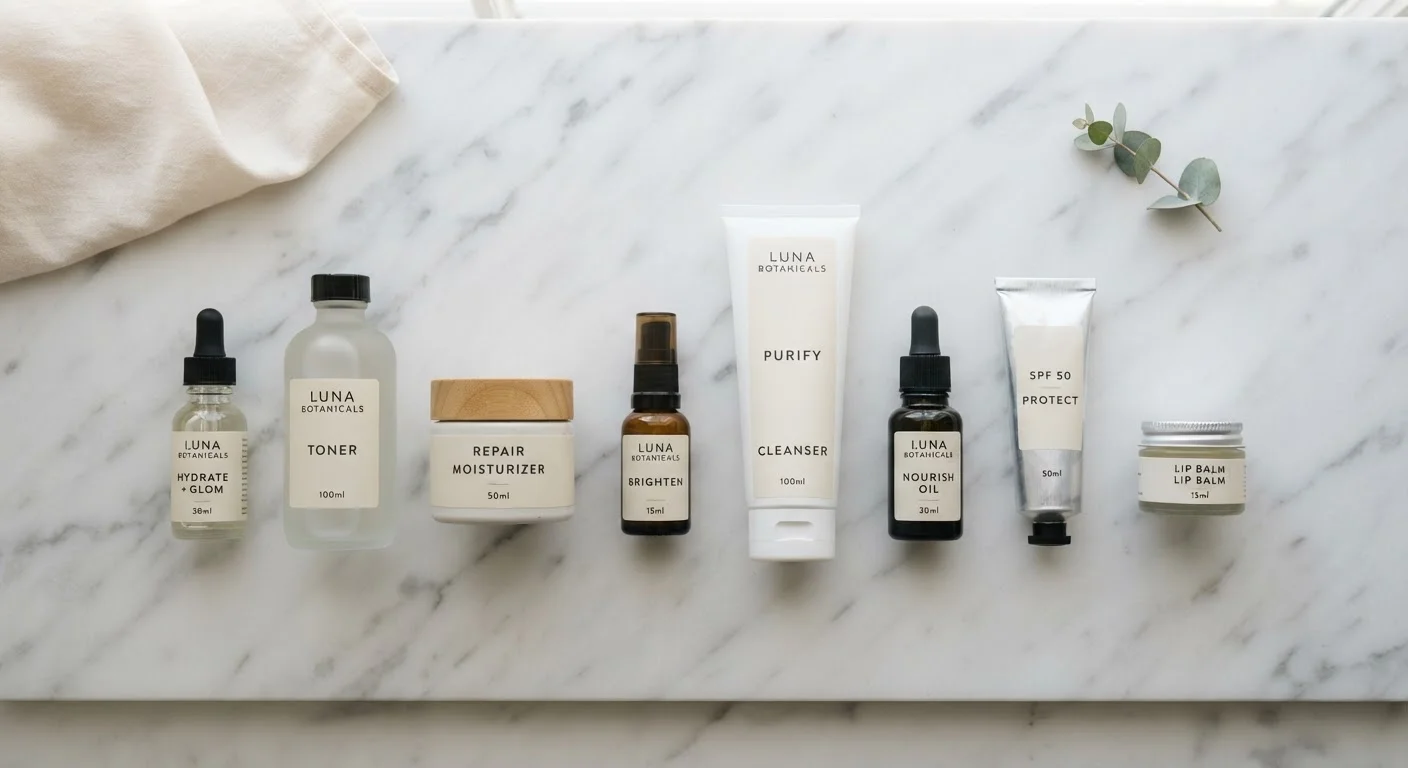
Key Takeaways
- Product layering order directly affects how well active ingredients absorb into skin.
- A general rule is to apply products from thinnest to thickest consistency.
- Heavier products applied first can physically block lighter ones from reaching skin cells.
- Certain ingredient combinations interact differently depending on application sequence.
- A consistent, correctly ordered routine often outperforms an expensive but poorly sequenced one.
Why Order Is More Than Just a Preference
Skincare products are formulated to work at specific skin depths. Water-based serums, for instance, are designed to penetrate quickly and deliver active ingredients like vitamin C or hyaluronic acid close to the skin's surface. When a thick moisturizer or facial oil is applied first, it creates a physical barrier that lighter formulas simply cannot pass through effectively.
This isn't a matter of preference or routine — it reflects how skin actually functions. The outermost layer of skin, the stratum corneum, is selectively permeable. It allows small, lightweight molecules through more readily than large, heavy ones. Applying a rich cream before a serum doesn't just slow absorption; it can essentially lock the serum out entirely.
For a grounded understanding of what each product in your lineup is actually doing, see The Anatomy of a Skincare Routine, which breaks down the purpose of every step from cleansers to SPF.
Applying a moisturizer or facial oil before a serum.
Why it happens: Many people assume richer products should anchor the routine, or they reach for hydration first out of habit.
Using a toner that raises skin pH immediately before a chemical exfoliant.
Why it happens: Toners are often used reflexively after cleansing without considering how they alter the skin's surface chemistry.
Applying spot treatments over moisturizer.
Why it happens: It feels intuitive to add targeted treatments at the end of a routine, as a finishing touch.
Layering SPF under other daytime products instead of last.
Why it happens: People often treat sunscreen as just another moisturizing step rather than a protective film that needs to sit on top.
Not allowing enough time between product layers for absorption.
Why it happens: Busy mornings lead to stacking products back-to-back, which can cause pilling and reduce how effectively each formula sets.
How Misordering Affects Your Results
Beyond simple absorption, incorrect sequencing can create unintended chemical interactions. Some pH-sensitive ingredients — like AHAs and BHAs — need to be applied to skin at a specific pH range to work effectively. Applying a moisturizer or toner that shifts the skin's surface pH before these acids can render them inactive before they even begin to work.
~7%
Skin surface covered by pores
Research published in dermatology literature suggests that only a small fraction of skin surface area consists of follicle openings, underscoring why product weight and molecule size affect penetration.
3.5–4.0
Optimal skin surface pH for AHA/BHA acids
Studies on topical exfoliants consistently show that alpha- and beta-hydroxy acids are most effective within a narrow acidic pH range, which can be disrupted by other products applied beforehand.
Oil-based products present a particular sequencing challenge. Because oils are occlusive — meaning they seal moisture in — they work best as a final step to lock everything underneath in place. Applying an oil mid-routine, particularly before a water-based product, means that subsequent product sits on top of the oil rather than the skin. This is one of the most common sequencing mistakes and one of the easiest to fix.
It's also worth understanding that some ingredient pairings are inherently problematic regardless of order. The guide to ingredients that shouldn't be mixed explores combinations that can irritate skin or cancel out benefits entirely — a useful companion to sequencing knowledge.
Don't Assume More Products Means Better Results
Adding more steps to a routine increases the risk of sequencing errors and ingredient conflicts. The trade-offs of a multi-step routine are real — more complexity can mean more room for things to go wrong. A correctly ordered five-step routine will generally outperform a ten-step one applied in the wrong sequence.
Practical Steps to Get the Order Right
The foundational rule is straightforward: move from thinnest to thickest. Cleanse first, then apply any toner or essence, followed by serums and treatments, then moisturizer, and finally any facial oil or SPF. This mirrors the logic of skin permeability — lighter products go on first because they need unobstructed access to skin.
A few nuances are worth noting. If you use a chemical exfoliant, it generally belongs after cleansing and before your serum, since it needs direct skin contact to work at the right pH. Spot treatments similarly benefit from early placement — applying them over moisturizer dramatically reduces their effectiveness.
If you're building or simplifying your routine, a minimal skincare routine approach can help reduce the sequencing variables you need to manage in the first place. Fewer products mean fewer opportunities to apply things in the wrong order. And if you're introducing something new, this patch-test and introduction checklist can help you identify what's working — and what isn't.
This article is for general informational purposes only and is not a substitute for advice from a qualified dermatologist or skincare professional. If you experience persistent skin irritation or reactions, consult a healthcare provider.