

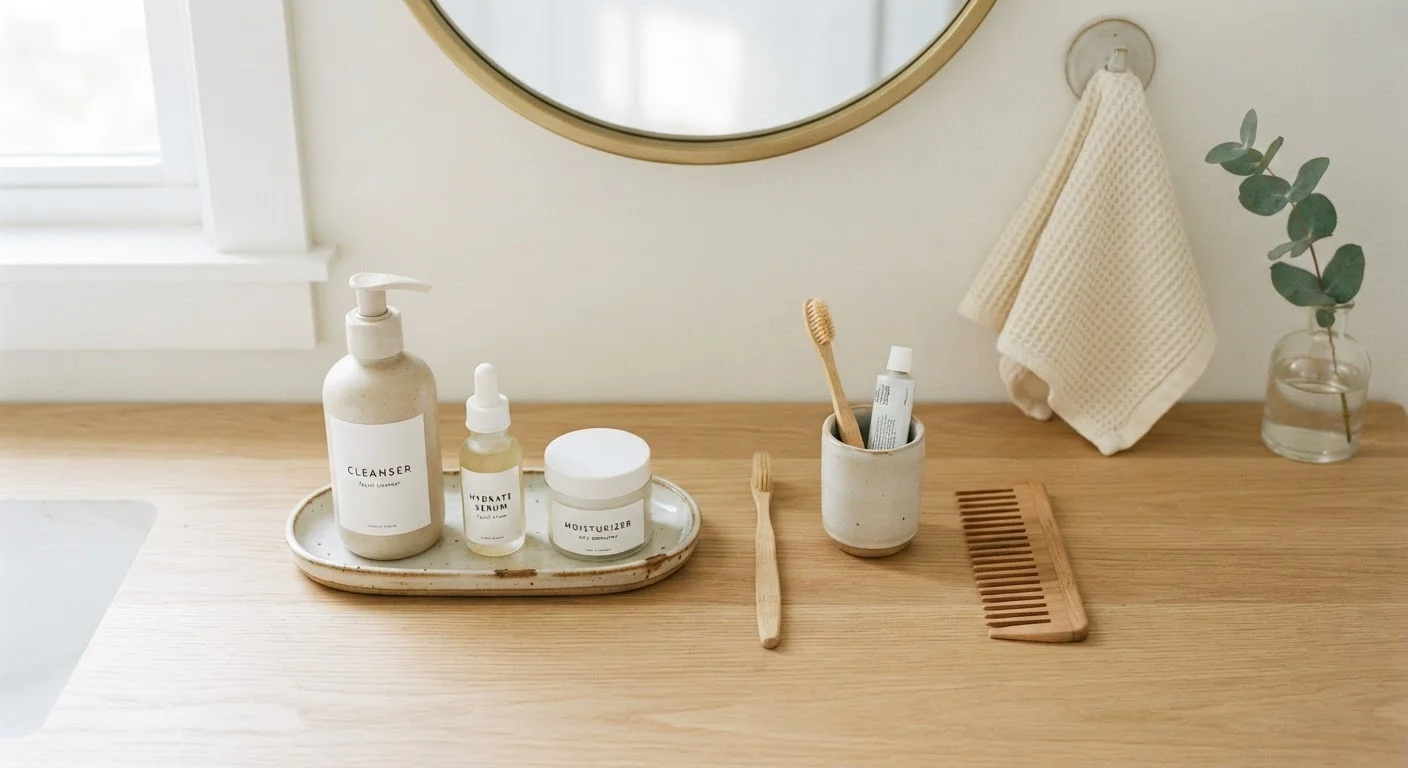
Key Takeaways
- Consistency matters more than complexity — a simple, repeatable routine delivers better long-term results.
- Morning skincare should prioritize cleansing, moisturizing, and SPF protection every day.
- Oral hygiene, hair care, and body care all play equal roles in a well-rounded morning routine.
- Layering products in the right order maximizes their effectiveness.
- A written or visual checklist reduces decision fatigue and helps anchor new habits.
Summary
22 items · 15–40 minutes
Why a Morning Routine Checklist Works
A morning personal care routine isn't about spending an hour in the bathroom — it's about building a sequence of small, intentional habits that protect your health and help you show up feeling your best. The challenge most people face isn't knowing what to do; it's doing it consistently.
That's where a checklist earns its keep. When each step is written down in a reliable order, you stop making micro-decisions under pressure and start following a path. Over time, the sequence becomes second nature. If you're also working on your broader well-being habits, you might find useful context in our guide to building a daily mental wellness routine — the habit-stacking principles translate directly.
Use this checklist as a working reference: print it, save it to your phone, or adapt it to match your specific needs and schedule.
Gentle Facial Cleanser
Removes overnight oil, sweat, and residue without stripping the skin's natural moisture barrier.
Broad-Spectrum SPF 30+ Sunscreen
Protects skin from UVA and UVB damage as the essential final step of your morning skincare.
Fluoride Toothpaste & Soft-Bristle Toothbrush
Core tools for daily plaque removal and enamel protection.
Wide-Tooth Comb or Detangling Brush
Safely detangles hair with minimal breakage, especially for textured or wet hair.
Heat Protectant Spray or Serum
Creates a barrier between hair and hot tools to reduce thermal damage.
Body Moisturizer or Lotion
Locks in hydration after showering to maintain soft, healthy skin throughout the day.
Tongue Scraper
Removes bacteria and debris from the tongue surface to support fresher breath.
How to Use This Checklist
Work through each group in order — skin first, then oral hygiene, then hair, then body. This sequence isn't arbitrary: starting with a clean face before applying any products, and finishing with body care before you dress, minimizes backtracking and product transfer.
Not every item will apply to every person every day. Mark optional steps clearly so you don't feel obligated to do everything on low-energy mornings. The goal is a sustainable baseline, not a rigid prescription.
For a deeper look at why morning and evening skin steps serve different purposes — and why your AM routine should focus on protection rather than repair — see our explainer on morning versus evening skincare differences.
Face & Skin Care
Oral Hygiene
Hair Care
Body Care
Final Checks
Getting the Most from Your Routine
A few principles separate routines that stick from ones that quietly fall apart:
- Order matters. Apply skincare from thinnest to thickest consistency — water-based serums before oils, oils before moisturizer, sunscreen last. Disrupting this order can reduce efficacy or cause pilling.
- Give products time to absorb. Rushing layering is one of the most common reasons people feel their skincare isn't working. A 30–60 second pause between steps is usually enough.
- Less is often more. If your routine feels overwhelming or your skin is reacting poorly, simplify. Our guide to a minimal skincare routine is a good place to recalibrate.
- Don't forget your hands. Hands are exposed to water, friction, and environmental stress every morning. Quick moisturization after washing makes a real difference — explore what good hand care actually involves beyond basic handwashing.
Don't Skip Sunscreen on Cloudy Days
UV radiation penetrates cloud cover and glass, meaning indoor and overcast-day exposure still contributes to cumulative skin damage. Dermatologists broadly agree that daily SPF application — regardless of weather or season — is among the most impactful habits for long-term skin health. Make it a non-negotiable last step, not a fair-weather choice.
This checklist is intended as general personal care guidance only, not medical or dermatological advice. If you have a skin condition, scalp issue, or oral health concern, consult a qualified healthcare professional before changing your routine.