

| Total warning light colors | 3 primary (red, amber, green/blue) |
| Red light response | Stop driving as soon as safely possible |
| OBD-II standard adopted (U.S.) | Mandatory for vehicles model year 1996 and later (U.S. Environmental Protection Agency) |
| TPMS federally required | All new passenger vehicles since 2008 (NHTSA TPMS Final Rule) |
| Check engine light trigger | Can range from loose gas cap to major engine fault |
| Free code reading available | Most national auto parts retailers offer this service |
The Color Code: What Light Colors Signal
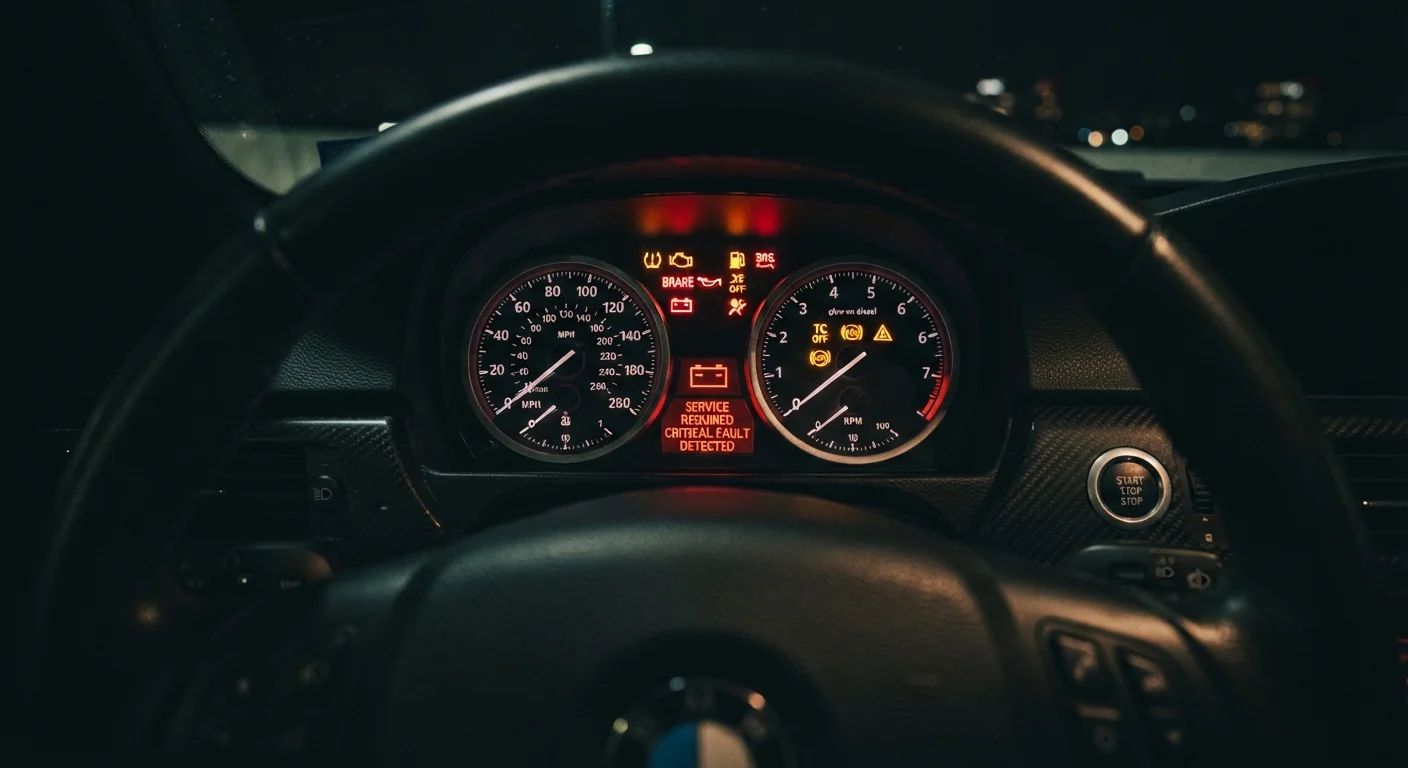
Before diving into individual symbols, understand the color hierarchy your vehicle uses to communicate urgency. Warning lights generally follow a traffic-light logic:
- Red: Requires immediate attention. Stop driving as soon as it is safe to do so. Ignoring a red warning can result in serious vehicle damage or a safety hazard.
- Amber/Yellow: Investigate soon. Something needs attention, but you typically have time to schedule a service appointment rather than pull over immediately.
- Green or Blue: Informational only. These confirm that a system — such as high beams or cruise control — is active. No action required.
Color coding is standardized across most modern vehicles sold in the U.S., though exact symbols vary by manufacturer. When in doubt, your owner's manual is the authoritative source — see how to navigate it in our guide on reading your owner's manual.
| Total warning light colors | 3 primary (red, amber, green/blue) |
| Red light response | Stop driving as soon as safely possible |
| OBD-II standard adopted (U.S.) | Mandatory for vehicles model year 1996 and later (U.S. Environmental Protection Agency) |
| TPMS federally required | All new passenger vehicles since 2008 (NHTSA TPMS Final Rule) |
| Check engine light trigger | Can range from loose gas cap to major engine fault |
| Free code reading available | Most national auto parts retailers offer this service |
Red Lights: Stop and Act
Red warning lights demand the most urgent response. Here are the most common ones and what they indicate:
OBD-II
On-Board Diagnostics II is a standardized system used in most vehicles sold in the U.S. after 1996. It monitors engine and emissions systems and stores fault codes readable by a diagnostic scanner.
TPMS
Tire Pressure Monitoring System — a sensor-based system that alerts the driver when one or more tires drop significantly below the recommended inflation pressure.
Catalytic Converter
An emissions control device in the exhaust system that converts harmful combustion byproducts into less harmful gases. A failing converter often triggers the check engine light.
Alternator
A generator driven by the engine that recharges the battery and powers the vehicle's electrical systems while the engine is running. A failing alternator causes the battery warning light to illuminate.
Fault Code
A standardized numeric code stored by the OBD-II system when a sensor detects an out-of-range reading. Fault codes help mechanics identify the specific system or component involved in a problem.
- Oil Pressure Warning (oil can icon): Engine oil pressure has dropped to a dangerous level. Pull over safely and turn off the engine immediately. Continuing to drive risks catastrophic engine damage within minutes.
- Engine Temperature (thermometer in water): The engine is overheating. Pull over, turn off the engine, and allow it to cool before checking coolant levels. Never open a hot radiator cap.
- Battery Warning (battery icon): The charging system is failing. This often means the alternator or battery is at fault. Signs your battery is nearing its end can help you recognize early decline before this light appears. Drive cautiously to the nearest service point — your car is running on reserve power.
- Brake Warning (circle with exclamation): Could indicate low brake fluid, a fault in the brake system, or an engaged parking brake. Verify the parking brake is fully released first; if the light persists, do not drive.
Amber Lights: Schedule Service Soon
Amber lights signal that something needs attention but rarely require you to stop immediately. Still, don't ignore them for weeks on end.
- Check Engine (engine silhouette): One of the most misunderstood lights. It can mean anything from a loose gas cap to a failing catalytic converter. A steady amber light warrants a diagnostic scan at your next opportunity; a flashing check engine light indicates a more serious misfire and deserves prompt attention.
- TPMS (tire with exclamation point): Tire Pressure Monitoring System has detected one or more tires below the recommended pressure. Check and inflate tires before your next long trip. Driving on underinflated tires reduces fuel efficiency and handling.
- Traction Control / Stability Control: If flashing, the system is actively working to stabilize the vehicle — ease off the accelerator. If illuminated steadily, the system may be disabled or faulted.
- Transmission Temperature: Transmission fluid is overheating. Reduce load or speed. If it persists, stop and let the vehicle cool.
Maintaining awareness of these lights ties directly to overall road safety. The Safe Driving complete guide covers how vehicle condition connects to road confidence.
1 in 3
Drivers who ignore the check engine light for over a month
According to CarMD's Vehicle Health Index data, a significant share of drivers delay addressing illuminated check engine warnings.
~$400
Average check engine repair cost in the U.S.
CarMD Vehicle Health Index reports the average repair cost associated with a check engine light, underscoring the value of early diagnosis.
What to Do When a Light Comes On
A clear action plan prevents panic and poor decisions:
- Note what you see and feel: Is the light red or amber? Is the car behaving differently — unusual sounds, vibrations, or reduced power?
- Check the owner's manual: Every light has an exact definition in your vehicle's documentation. Symbols are not universal, and manufacturer variations exist.
- Don't assume it's minor: Even familiar lights can indicate a new, more serious problem. When in doubt, consult a qualified mechanic.
- Use an OBD-II scanner: Most auto parts retailers allow free code reading. This translates a check engine light into a specific diagnostic fault code, giving your mechanic a starting point.
Safe, informed driving means responding to your vehicle's signals before small issues become expensive repairs — or worse, roadside emergencies. Pairing this knowledge with defensive driving principles gives you a more complete picture of how to stay safe on modern roads.
This article is for general informational purposes only and does not constitute professional mechanical advice. Always consult a qualified mechanic for diagnosis and repair of your specific vehicle.