
Lip Care Through the Seasons: Why Your Lips Need More Attention Than You Give Them

Key Takeaways
- Lips have no oil glands, making them reliant entirely on external moisture sources.
- Seasonal changes — heat, cold, wind, and low humidity — each create distinct lip challenges.
- Licking your lips worsens dryness rather than relieving it.
- SPF protection on the lips is often overlooked but genuinely important year-round.
- A consistent morning and evening lip routine takes under two minutes daily.
What you will need
Why Lips Are Uniquely Vulnerable
Lips are structurally different from the rest of your skin in ways that make them consistently prone to dryness and damage. Unlike facial skin, lip tissue contains no sebaceous (oil) glands, so it produces zero natural moisturizing oils. The outer layer — the stratum corneum — is also significantly thinner here, which means moisture escapes faster and environmental stressors penetrate more easily.
As part of the broader picture covered in our comprehensive skincare resource, lips also lose collagen and volume gradually with age, making consistent care increasingly worthwhile over time. The pinkish-red color of lips comes from blood vessels visible through that thin skin — and that same thinness is what makes them chap, crack, and react so readily to cold air, sun exposure, dehydration, and dry indoor heating.
The Lip-Licking Loop to Break
Licking your lips feels instinctively soothing but reliably makes dryness worse. Saliva's digestive enzymes degrade the thin surface layer of lip skin, and as saliva evaporates it draws additional moisture with it. Replacing this habit with an immediate reach for a balm is one of the highest-impact changes you can make.
One of the most counterproductive habits many people have is licking their lips when they feel dry. Saliva contains digestive enzymes that actually break down the delicate skin barrier further, leaving lips drier than before. Reaching for a balm is always the better reflex.
How Each Season Affects Your Lips Differently
Just as environmental shifts affect the broader skin barrier, seasonal changes create specific lip challenges worth understanding before building your routine.
- Winter: Cold air holds less moisture, and indoor heating further strips humidity from the environment. This combination accelerates transepidermal water loss from lip tissue, leading to cracking and peeling.
- Spring: Wind is the primary culprit. Gusts pull surface moisture rapidly from the lips, and people often underestimate sun exposure on partly cloudy spring days.
- Summer: UV radiation is the main threat. Lips have minimal natural melanin protection and can sunburn, which repeated over years contributes to visible aging of the lip border.
- Autumn: A transitional season where indoor heating begins, humidity drops, and many people are caught without an updated routine.
Staying generally well-hydrated supports lip health from within — the Nutrition & Diet hub offers practical guidance on everyday hydration habits.
Building a Year-Round Lip Care Routine
A solid lip routine doesn't require many products or much time. The steps below work across all seasons, with seasonal adjustments noted where relevant. For context on how morning and evening routines serve different purposes for your skin overall, see our guide on AM vs. PM skincare.
Remove dead skin gently before moisturizing
Once or twice a week, lightly exfoliate lips to clear away dry, flaking skin that prevents balm from absorbing effectively. A soft damp washcloth buffed in gentle circular motions works well. Purpose-made lip scrubs are also an option — look for ones with fine, non-abrasive particles and minimal fragrance.
Apply a barrier-forming lip balm as your base
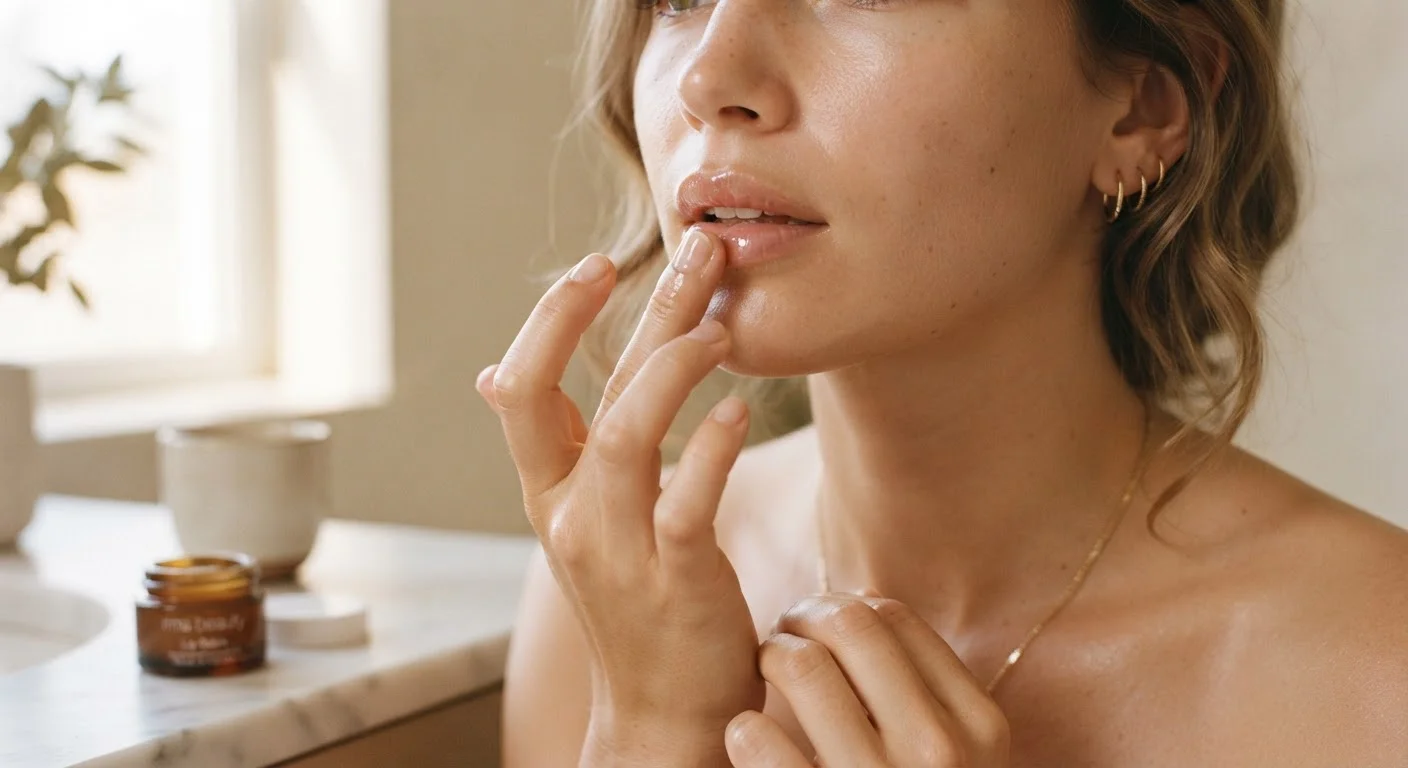
After exfoliating — or on any morning — apply a lip balm that contains occlusive ingredients such as petrolatum, beeswax, or shea butter. These form a physical barrier that slows moisture loss rather than simply sitting on the surface. In winter, a thicker ointment-style formula offers stronger protection than a standard stick.
Add SPF protection during daylight hours
Each morning, use a lip product that provides broad-spectrum SPF 15 or higher. This can be a separate SPF lip balm applied over your moisturizing base, or a single product that combines both. Reapply after eating or drinking, or every two hours during extended outdoor time.
Adjust product weight by season
In summer, a lighter balm with SPF is typically sufficient. As temperatures drop in autumn and winter, switch to a richer, more occlusive formula. In particularly dry or cold conditions, applying a thin layer of plain petrolatum over your regular balm at bedtime provides extra overnight protection.
Support lip health from the inside
Dehydration shows up on the lips quickly. Adequate daily fluid intake, along with a diet that includes sufficient essential fatty acids, supports the skin barrier from within. If your lips are persistently dry despite a consistent external routine, it's worth considering overall hydration levels and speaking with a healthcare professional if dryness is severe or accompanied by other symptoms.
When Persistent Dryness Needs Attention
Lips that remain cracked, peeling, or inflamed despite a consistent care routine may signal an underlying issue — such as a contact allergy to a product ingredient, a nutritional deficiency, or a condition like angular cheilitis. If your symptoms are persistent, recurring, or accompanied by pain or swelling, consult a dermatologist or healthcare provider rather than managing it with balm alone.
Common Mistakes That Set Your Routine Back
Even with the right products in hand, a few common habits undermine lip care. Picking or peeling flaking skin is one of the most frequent — it removes cells that weren't ready to shed and can cause small breaks that sting and heal slowly. Exfoliating too aggressively or too often (more than once or twice a week) produces the same effect.
Using heavily fragranced lip products is another issue worth flagging. Fragrance ingredients can be sensitizing on such thin, porous tissue. If your lips feel irritated after using a new product, fragrance or flavoring is often the first thing to consider. This principle mirrors broader personal care logic discussed in our hand care guide: gentleness and consistency outperform intensity.
Finally, neglecting SPF on the lips remains widespread. A lip balm with broad-spectrum SPF 15 or higher, worn daily — not just at the beach — provides meaningful protection against UV-related damage.