

Key Takeaways
- Loss leaders are priced below cost deliberately — the store absorbs that loss to generate larger overall sales.
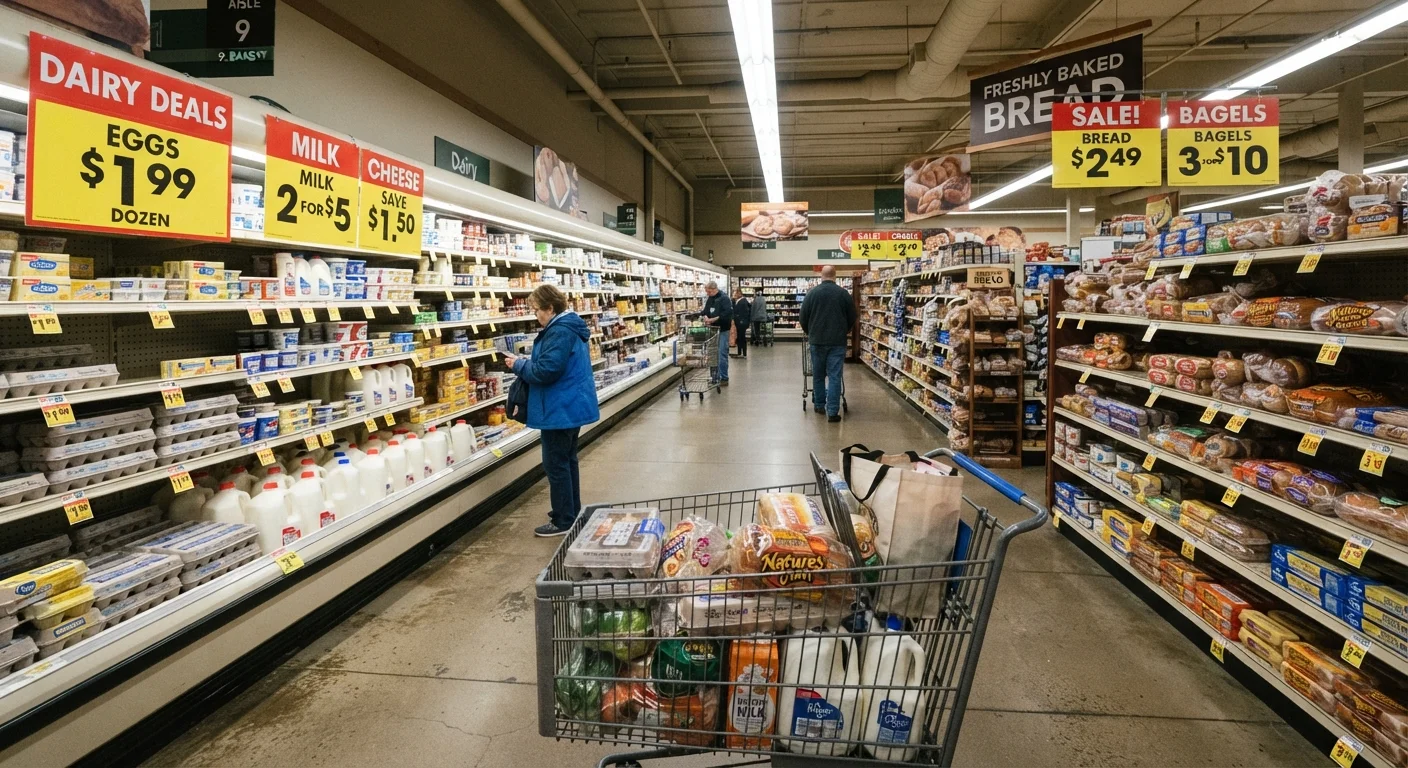
- Common loss leaders include eggs, milk, bread, rotisserie chicken, and loss-priced electronics during seasonal events.
- The strategy works because shoppers who come in for a deal almost always buy additional items at normal or high margins.
- Recognizing loss leaders helps you separate genuine savings from a tactic designed to increase your total spend.
- You can capture the deal without falling for the basket-building effect — but it requires a deliberate shopping list.
Loss Leader
A loss leader is a product that a retailer intentionally sells at or below its own cost in order to attract customers into the store. The goal is not to make money on that item — it's to get shoppers through the door so they fill their baskets with higher-margin goods. The "loss" on the lead product is treated as a marketing expense.
In pricing theory, loss leading is a form of below-cost selling used to maximize total basket revenue rather than per-unit margin. It is legal under federal law in the U.S., though a handful of states have below-cost selling statutes that restrict the practice in certain retail categories.
The Basic Mechanics: Why a Store Would Sell at a Loss
Retail margin logic seems straightforward: buy low, sell high, profit. So why would any store deliberately sell a product for less than it paid? Because the store isn't really in the business of selling individual items — it's in the business of capturing total basket value.
When a supermarket prices a dozen eggs below cost, it isn't making an accounting error. It's making a calculated bet that the shopper coming in for the eggs will also pick up produce, beverages, snacks, and household supplies — many of which carry margins of 30%, 40%, or more. The loss on the eggs is more than offset by the profit on everything else in the cart.
This is why loss leaders are almost always everyday staples: items you need regularly, can easily compare against competitors, and are conditioned to notice when priced low. A compelling price on milk or bread triggers the perception that this store is a good value overall — even if that perception doesn't hold up across the full weekly shop.
~30–40%
Typical gross margin on grocery center-aisle packaged goods
Industry analysis from food retail associations consistently places average grocery margins in this range, illustrating how much room stores have to absorb losses on select staples.
~12 states
U.S. states with below-cost selling restrictions
Legal researchers and retail industry observers note that roughly a dozen states have some form of below-cost selling statute, though enforcement and scope vary widely.
1–3%
Net profit margin for large grocery retailers
Grocery industry financial reporting shows that despite high sales volumes, net margins in food retail are thin — making loss leader strategy a precision calculation, not casual discounting.
How Stores Design the Experience Around the Lead Product
The placement of loss leaders is rarely random. Grocery staples — milk, eggs, butter — are almost universally placed at the back or far corners of the store. You have to walk past hundreds of full-margin products to reach them. That path is engineered, not incidental.
End-cap displays (the shelves at the end of each aisle) are prime real estate often occupied by items that appear promotional but may simply be featured at normal price. Signage using words like "special," "value," or "featured" doesn't necessarily mean the item is discounted — it may just mean the brand paid for that placement. Understanding how retail price tags are structured can help you separate actual markdowns from visual noise.
Seasonal loss leaders — think electronics doorbuster items during major shopping events — use the same logic at scale. A heavily advertised device at a sharp price point generates store traffic and media buzz, while the bulk of purchases that day happen at standard margins.
Track Your Staple Prices Before Trusting a Deal
Keep a simple running note — on your phone or a scrap of paper — of what you normally pay for the 10 or 15 items you buy most often. When a loss leader promotion appears, you'll immediately know whether the price is genuinely below average or just marketed to look that way. This small habit is one of the most reliable defenses against pricing theater.
What Loss Leaders Reveal About the Psychology of Saving
Loss leaders work partly because of how humans evaluate deals. When we encounter a price that seems unusually low on a familiar item, we anchor our perception of the entire store to that signal. One genuine bargain can make an entire shopping environment feel generous — even when most prices are average or above average.
This is closely related to anchor pricing tactics, where a reference point (a previous price, a competitor's price, or a crossed-out number) shapes how we judge the current price. Loss leaders function as a live anchor: the real low price on one item anchors your sense of value for everything around it.
Retailers also rely on a well-documented behavioral pattern: shoppers who feel they've "won" on one item are more relaxed and less price-vigilant for the rest of the trip. That's the strategic payoff. As the shopping habits that feel smart but cost more research suggests, the feeling of saving can easily coexist with actually spending more.
Shopping Smarter: Capturing the Deal Without the Basket Trap
Understanding the loss leader strategy doesn't mean you should avoid these deals — it means you should approach them deliberately. A genuinely below-cost item is real savings on that item. The question is whether you let the visit extend into unplanned spending.
A few practical approaches:
- Shop with a written list and stick to it. The basket-building effect depends on browsing. A fixed list removes much of the exposure to high-margin impulse zones.
- Know the real price of your staples. If you track what you normally pay for eggs, milk, or bread, you'll immediately recognize a genuine loss leader versus a modest markdown dressed up with signage.
- Compare total basket cost, not headline items. A store with the cheapest eggs may have higher prices on everything else. Price versus value thinking applies to grocery trips the same way it applies to any purchase.
- Watch for "up to" and vague discount language. Not every promoted item is genuinely discounted. Elastic discount claims are common in retail promotions and can obscure how little is actually on sale.
Loss leaders are a legitimate retail tool, and being aware of how they function is itself a form of consumer empowerment. The goal isn't to be suspicious of every discount — it's to know which discounts are designed to benefit you and which ones are designed to benefit the store's overall margin.
“The purpose of a loss leader is not charity — it's a precise investment in customer acquisition and basket size. Retailers who do it well understand exactly how much they can afford to lose on one item to gain on twenty others.”
— Phil Lempert, Food industry analyst and consumer trend commentator